In an offshore project, a new request may emerge after a demo or when users reconsider how they work. The question is how to incorporate it into the plan. TECHNEST proposes comparing scope swaps, staged delivery and scope extensions before committing to implementation. This creates a concrete basis for discussion between business owners, SIers and development teams.
Clarify the request and the current agreement
First record who will use the change, the problem it addresses and when the result is needed. Compare it with requirements, acceptance criteria and previous decisions to clarify what is being requested. Do not automatically classify every response as extra work, or assume everything is already included. If interpretations differ, document the questions and reference materials before evaluating options.
Assess impact across all related work
Identify which screens, data, processing, checks and documents need review. Include revisions to completed work, prerequisites from connected systems and the time customers need to confirm results. Where information is missing, state assumptions and areas requiring further investigation. Coding effort is only one component; the plan also needs to reflect coordination and review work.
Compare the options side by side
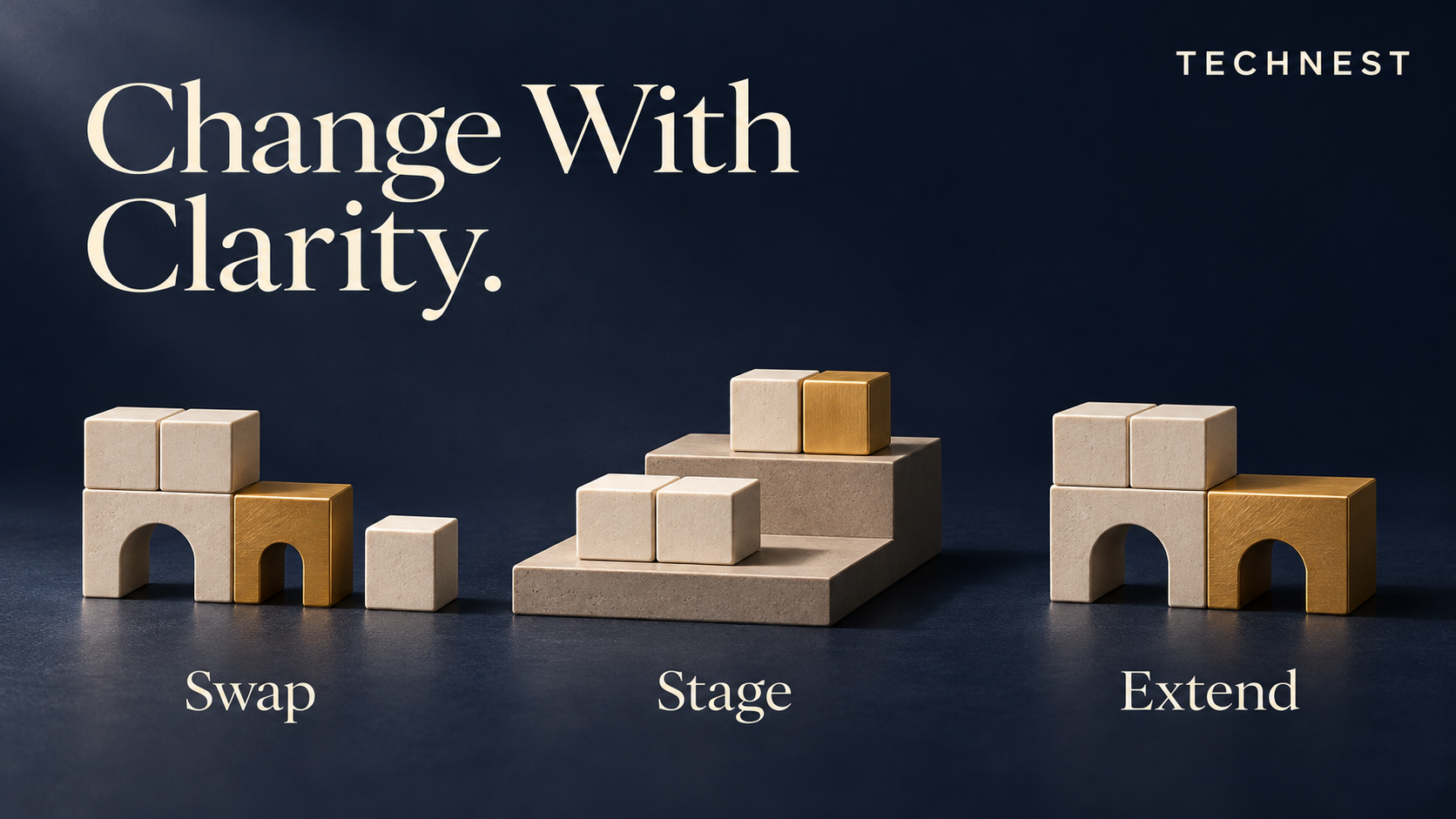
Swapping means bringing in the new request while deferring or removing another task after checking dependencies. Staging means implementing the part that meets the immediate objective first, with a clear boundary for the remaining work at a later milestone. Extending means adding scope and reassessing effort, budget and delivery dates. None automatically preserves the original date. For each option, record what is gained, what moves later and which conditions remain unresolved.
Record the decision in the shared plan
After comparison, authorized representatives on both sides agree on an option and when it takes effect. Record the rationale, updated scope, confirmation criteria, implementers and milestones to track. Link the decision to the relevant plan version so the Japanese contact and Vietnamese team can consult the same record. Unresolved items remain pending; silence or preliminary discussion should not become an instruction to implement.
Hypothetical example: adding a data export function
A Japanese SIer and a Vietnamese team are developing a search screen. After the demo, users request a file export of search results. Both sides clarify the purpose and examine effects on data, usage permissions and checks. They compare swapping out a lower-priority display feature, staging basic export and customization, or adding the full scope. Suppose the customer chooses staged delivery. The plan and confirmation criteria are updated accordingly. This is an illustrative scenario, not an actual project result.
Discuss concrete change options with TECHNEST
Drawing on years of serving the Japanese market, business system design and legacy modernization, TECHNEST regards clear impact and responsibilities as part of delivery collaboration. Start with the requested change, your current plan and the objective that takes priority. Explore our DELIVERY service or contact TECHNEST to discuss a suitable approach.