With a dedicated offshore team, Japanese businesses expect long-term collaboration and growing product knowledge. Yet leave, reassignment and resignation can still occur. When selecting a partner, ask: if one person is unavailable, which work will wait, and who can continue it?
Continuity should be prepared throughout the engagement. Waiting until a replacement is announced to gather documentation leaves both the Japanese and Vietnamese teams reacting under time pressure.
1. Identify where knowledge is concentrated
Review critical business processes, external integrations and recurring operational tasks. For each, identify the primary owner, someone who can provide support and the available documentation.
Where only one person can explain why the system behaves in a particular way, more knowledge sharing is needed. A backup does not need to match every skill of the primary owner, but should know their limits and where to find information.
2. Record the reasoning, not just the procedure
Screen inventories and operating instructions do not fully explain past decisions. Keep a brief record of the business problem, chosen approach, rationale, person who confirmed it and conditions that would require reconsideration.
Link that record to the relevant requirement, design or task. This allows a newcomer to understand the context before asking questions, rather than asking the Japanese team to explain previous agreements from the beginning.
3. Involve backup owners before they are needed
Hypothetical example: a dedicated team maintains an order management system. The engineer responsible for warehouse integration is due to move to another project. The replacement has read the API documentation but does not understand how to respond when the warehouse system is slow to return a result.
Before transferring responsibility, the two engineers review a past incident. The replacement explains the response, escalation conditions and contacts. This reveals gaps in the records while someone who understands the context is still available to fill them.
4. Include the transition in the plan
Agree on notification timing, who proposes replacements, how the customer assesses suitability and any period when both people work together. Clarify priority tasks, work to defer and who makes decisions when issues arise.
Discuss the costs of familiarization, knowledge sharing and review transparently. Sudden departures also need a contingency plan with realistic limits. A comparable résumé should not be treated as evidence of immediately equivalent productivity.
5. Verify readiness before transferring responsibility
Before a replacement becomes the primary owner, check that they can locate documentation, explain the business workflow and report issues beyond their remit. Record what has been transferred and what still needs support.
Update access permissions to reflect agreed roles. Do not share accounts to shorten the familiarization period.
Plan long-term collaboration with TECHNEST
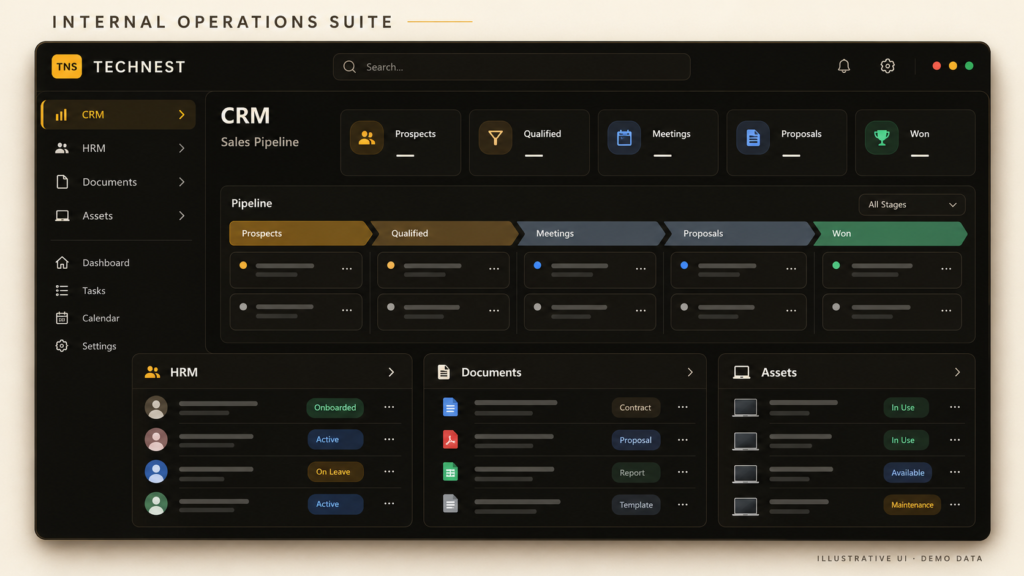
TECHNEST has years of experience working with the Japanese market and designing and developing business systems. It has also standardized internal processes using its own CRM, HRM, document management and asset management tools.
When discussing a dedicated team, clarify knowledge retention, backup responsibilities and staff transitions from the outset. Explore our software outsourcing services or contact TECHNEST to discuss a suitable team structure.