


IoT with Raspberry Pi offers smart solutions for a wide range of practical applications in both daily life and industry. From remote monitoring, environmental tracking, automated agriculture management to surveillance camera systems and attendance management, Raspberry Pi integrates sensors and Internet connectivity to efficiently collect, process data, and control devices. This article provides guidance on implementing IoT projects with Raspberry Pi, covering programming, real-world applications, and future potential.
What is IoT with Raspberry Pi?
The Internet of Things (IoT) refers to a network of smart devices connected to the Internet to collect, analyze, and share data, enabling process automation and improving operational efficiency. When combined with Raspberry Pi – a compact, low-cost yet powerful mini-computer – IoT becomes more accessible than ever before.

Raspberry Pi allows users – from students and researchers to engineers – to implement IoT projects ranging from basic to advanced levels without the need for expensive equipment or complex systems. This combination enables the creation of smart systems, from smart homes and automated agriculture to environmental monitoring, while also opening up numerous creative opportunities for both individuals and businesses.
Why is Raspberry Pi used in IoT projects?
Raspberry Pi has become a popular choice for IoT projects due to its many outstanding advantages. These features not only help reduce costs but also improve project implementation efficiency and scalability.
Affordable Price
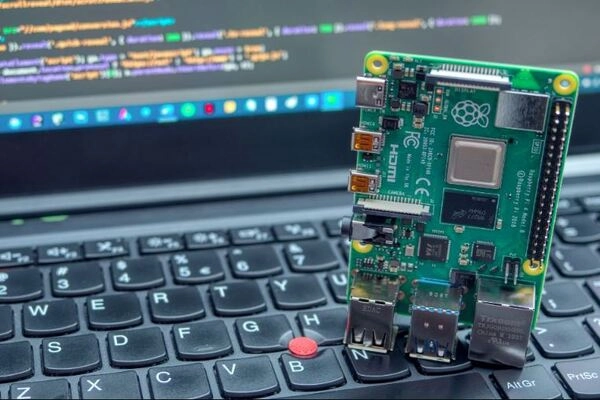
Raspberry Pi is very affordable compared to other mini-computers or industrial controllers. This makes it easy for users, especially students and beginners, to access IoT technology without financial barriers. As a result, many creative ideas can be tested and implemented without requiring a large investment.
Flexible and Easy to Program
Raspberry Pi supports many popular programming languages such as Python, C/C++, Java, and Scratch. This flexibility allows users to easily write programs to collect data from sensors, control devices, and implement automation functions. Particularly with Python, programming IoT projects on Raspberry Pi becomes quick and efficient, suitable for both beginners and professional developers.
Powerful Performance
Despite its small size, Raspberry Pi features a multi-core processor and sufficient RAM to handle complex tasks such as analyzing data from multiple sensors, processing real-time signals, and running lightweight web applications. This performance enables Raspberry Pi to meet the demands of IoT projects that require continuous and precise data processing.
Versatile Connectivity
Raspberry Pi supports multiple connection protocols such as Wi-Fi, Bluetooth, Ethernet, and USB. This allows the device to easily connect to the Internet or local networks while communicating with various IoT devices. Its versatile connectivity makes projects more flexible and easier to expand according to real-world usage needs.
Convenient GPIO Ports
The General Purpose Input/Output (GPIO) ports are one of Raspberry Pi’s most notable features. They allow direct connection to sensors, motors, LEDs, and expansion modules without complex intermediate circuits. This enables rapid IoT prototyping, cost-effective development, and easy testing of new ideas.
Large Supportive Community
Raspberry Pi has a large global user community, offering thousands of tutorials, sample projects, discussion forums, and open-source libraries. This support helps quickly solve technical issues, learn from others’ projects, and provide inspiration for new IoT initiatives.
Compatibility with Multiple Devices
Raspberry Pi is compatible with a wide range of sensors, modules, and hardware expansions, from cameras and temperature, humidity, or pressure sensors to communication modules. Its high compatibility allows users to easily expand or upgrade projects without changing the main platform, providing flexibility and diversity for IoT applications, from education and research to practical deployment in agriculture and industry.
Practical Applications of IoT with Raspberry Pi
IoT with Raspberry Pi is not just a concept; it delivers numerous practical applications in daily life and industry. With its connectivity, data processing, and device control capabilities, Raspberry Pi helps build smart systems, optimize workflows, and enhance operational efficiency.
Remote Monitoring and Alert Systems
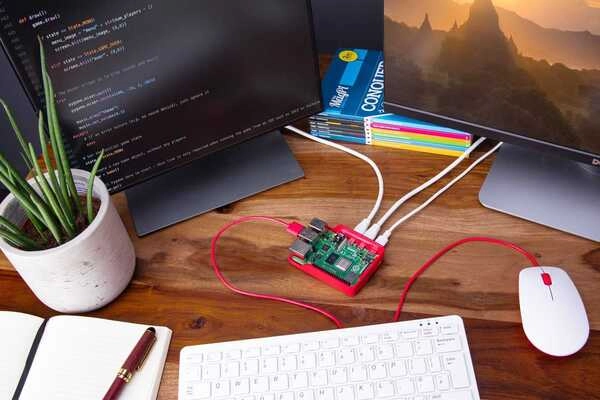
Raspberry Pi can be connected to motion sensors, smoke detectors, and gas sensors to build remote monitoring systems. When an issue is detected, the system sends alerts to the user’s phone or computer. This is particularly useful for monitoring homes, offices, or warehouses, enhancing security and preventing potential risks.
Animal and Environmental Tracking
Combined with GPS, environmental sensors, and measurement devices, Raspberry Pi can track animal locations, environmental conditions, temperature, humidity, and other important indicators. This application is suitable for ecological research, farm management, or nature conservation projects, enabling accurate and continuous data collection.
Temperature and Weather Sensors
IoT projects with Raspberry Pi can monitor temperature, humidity, air pressure, and other weather factors. The collected data can be displayed on a web interface or mobile app, supporting weather forecasting, agricultural planning, and outdoor activities.
Smart Irrigation and Agriculture
Raspberry Pi can control automatic irrigation systems based on data from soil moisture sensors and weather conditions. This helps save water, optimize crop care, and improve agricultural productivity. These automation features provide a smart farming solution, minimizing manual intervention.
Surveillance Cameras and Automated Attendance
By combining Raspberry Pi with cameras and facial recognition software, users can build monitoring systems, automated attendance tracking, or access control solutions. This setup enhances security and workforce management efficiency while reducing operational costs compared to traditional methods.
Programming and Running IoT Projects on Raspberry Pi
To implement an IoT project with Raspberry Pi, users need hardware such as a Raspberry Pi, sensors, connectivity modules, and the Raspberry Pi OS. Programming is commonly done using Python, Node-RED, or other languages, and involves steps such as connecting devices via GPIO, reading sensor data, processing data, and controlling peripheral devices.
Data can be stored locally or sent to the cloud for analysis and visualization. With the support of the community and open-source libraries, programming and running IoT projects becomes easier and more efficient.
The Future of IoT with Raspberry Pi
IoT with Raspberry Pi is rapidly developing and will continue to play a key role in smart systems. With advancements in artificial intelligence, edge computing, and 5G connectivity, Raspberry Pi is poised to become an ideal platform for building smart home applications, automated agriculture, robotics, and industrial systems.
Its easy accessibility, low cost, and large supportive community will continue to enable Raspberry Pi to open up numerous opportunities for creativity, practical applications, and research in the future, for individuals, businesses, and research organizations.
With its affordable price, powerful performance, versatile connectivity, convenient GPIO ports, strong community support, and compatibility with a wide range of devices, Raspberry Pi has proven to be an ideal platform for IoT projects. It not only allows users to easily access IoT technology but also creates opportunities to develop smart systems, from smart homes and automated agriculture to industrial applications, delivering significant practical value for modern life.
