



In the context of increasingly sophisticated and unpredictable cybersecurity threats, organizations and enterprises are under more pressure than ever to build comprehensive and effective IT security monitoring systems. One of the widely trusted solutions in the technical community is the Elastic Stack (ELK)-a powerful open-source suite of tools designed to collect, analyze, and visualize system log data in real time. This article will help you clearly understand what the Elastic Stack is, why it is useful, its core components, its outstanding advantages, and how it operates in practical IT security monitoring.
What is the Elastic Stack (ELK)?
The Elastic Stack, also familiarly known as the ELK Stack, is a collection of open-source tools developed by Elastic N.V., designed to collect, store, search, analyze, and visualize data from various sources in real time. The name “ELK” originates from its initial three core components: Elasticsearch, Logstash, and Kibana. Later on, Elastic added Beats-a family of lightweight data shippers-and renamed the entire ecosystem to “Elastic Stack” to more accurately reflect the scope and capabilities of the toolkit.

In the field of IT security, the Elastic Stack functions as a SIEM (Security Information and Event Management) platform, helping Security Operations Centers (SOC) centralize logs from hundreds of different data sources such as servers, firewalls, network devices, applications, and endpoints. Instead of having to manually check each individual system, the Elastic Stack provides a single centralized place to analyze all security data, thereby detecting anomalous behaviors, signs of intrusion, and security incidents quickly and accurately.
Why is the Elastic Stack Useful?
There are currently many system monitoring solutions on the market; however, the Elastic Stack remains highly regarded due to its big data processing capabilities, flexibility, and scalability.
In a modern enterprise, millions to billions of log lines can be generated every day from firewalls, routers, servers, web applications, operating systems, and endpoints. Without the right tools, searching and analyzing this data is nearly impossible.
The Elastic Stack helps solve this problem by:
- Collecting centralized data from multiple different sources
- Analyzing logs in real time
- Searching data extremely fast
- Detecting anomalous events
- Creating visual dashboards for the SOC team
- Supporting automated alerts when there are signs of an attack
In particular, the Elastic Stack possesses powerful scalability thanks to its distributed architecture. As data volume grows, businesses only need to add more nodes to scale the system without affecting ongoing operations.
Furthermore, supporting deployment in both on-premises and cloud environments makes the Elastic Stack suitable for various business models.
Key Components of the Elastic Stack
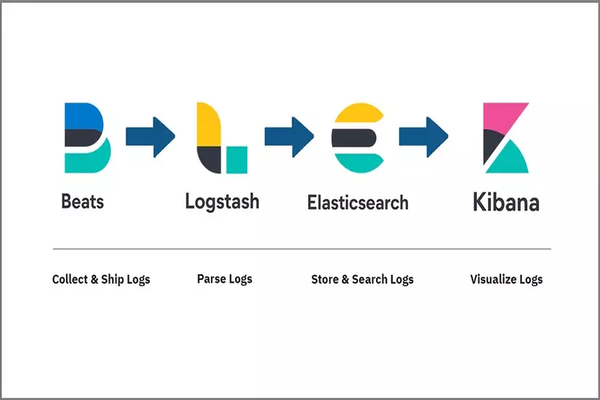
The Elastic Stack is composed of four main components, each fulfilling a specific role in the data processing lifecycle. The seamless coordination among these components creates a complete security monitoring system, spanning from the collection of raw data to the presentation of meaningful information on the security analyst’s screen.
Elasticsearch
Elasticsearch is the heart of the entire Elastic Stack-a distributed search and analytics engine built on top of Apache Lucene. This is where all log data is stored, indexed, and queried. Elasticsearch uses the JSON data format and provides a simple RESTful API, allowing other applications to interact with it easily.
A particular strength of Elasticsearch in IT security is its capability to perform full-text searches extremely fast, even when processing billions of log records. Furthermore, Elasticsearch supports complex searches with multiple filtering conditions, enabling security analysts to quickly find relevant events within a massive sea of data.
Logstash
Logstash is the central data processing engine of the Elastic Stack, functioning as a powerful ETL (Extract, Transform, Load) pipeline. Logstash is capable of receiving input data from hundreds of different sources-including syslog, SNMP, Kafka, databases, APIs, and many more-then cleaning, transforming, and normalizing the data before shipping it to Elasticsearch.
In IT security, this functionality is especially critical because log data from different sources usually comes in completely different formats. Logstash helps unify all these formats into a common standard, making event correlation analysis more accurate and effective. Thanks to its rich plugin ecosystem, Logstash can handle almost all popular types of security data.
Kibana
Kibana is the visualization interface of the Elastic Stack, providing an intuitive web dashboard that helps users explore, analyze, and present data stored in Elasticsearch. For the IT security team, Kibana is an indispensable tool in their daily work.
Analysts can create time-series charts, geographical maps, correlation graphs, and many other types of visualizations to monitor the overall security posture of the system. Additionally, Kibana integrates Elastic SIEM features (now Elastic Security), offering specialized tools for threat detection, incident investigation, and security event response management.
Beats
Beats is a collection of lightweight data shippers installed directly on servers, endpoints, or network infrastructure to send data to Logstash or directly to Elasticsearch.
Each type of Beat is designed for a specific data type: Filebeat collects and ships file logs, Metricbeat monitors system performance metrics, Packetbeat analyzes network traffic, and Auditbeat tracks user activity and system file changes. In a security context, Beats act as the “eyes and ears” of the Elastic Stack, continuously observing and sending back signals from thousands of points across the IT infrastructure, ensuring that no security event is missed.
Advantages of the Elastic Stack
The Elastic Stack possesses many outstanding advantages that enable it to outperform traditional security monitoring solutions, particularly in medium to large enterprise environments with complex infrastructures. Two of the most critical advantages-flexibility and the open-source model-have contributed to making the Elastic Stack the preferred choice for thousands of organizations worldwide.
Flexible and Scalable
One of the greatest advantages of the Elastic Stack is its distributed architecture, which allows it to scale flexibly based on actual needs. As data volume grows, businesses can easily add new nodes to the Elasticsearch cluster without downtime or any complex architectural changes.
This scalability is particularly valuable in the context of IT security, where event volumes can spike abruptly during an incident or an attack. Additionally, the Elastic Stack is highly compatible with almost all operating systems and cloud platforms (AWS, Azure, GCP), and can be deployed on-premises, in the cloud, or in a hybrid model, providing maximum flexibility for organizations with diverse infrastructure strategies.
Open Source
The Elastic Stack is developed under an open-source model, which brings many practical benefits to users in the IT security field. First and foremost, the initial deployment costs are significantly lower compared to proprietary commercial SIEM solutions. Businesses can download and use the core components of the Elastic Stack completely free of charge, paying only when they need to utilize advanced features included in commercial packages.
More importantly, open source means transparency-the global community of developers and security experts can continuously audit, contribute to, and improve the source code. This helps the Elastic Stack receive rapid updates against emerging threats and seamlessly integrate with thousands of other security tools in the open-source ecosystem.
How Does the Elastic Stack Work?
Imagine the Elastic Stack as a smart security camera system for your enterprise’s entire IT infrastructure.
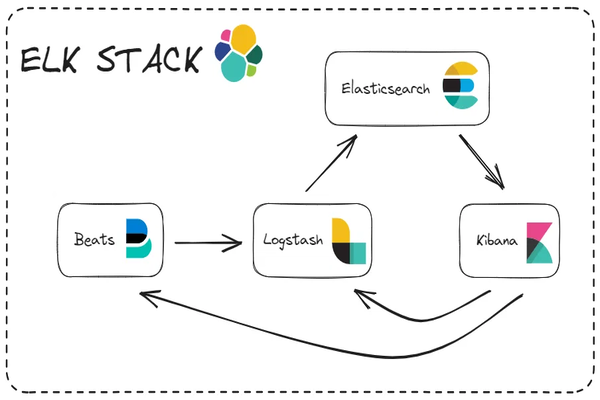
First, Beats act as “cameras” installed everywhere-on servers, computers, and network devices-to continuously record all activities and send the data back to the central hub. This raw data is then “translated” by Logstash into a common language, removing redundant information and adding useful context, such as the geographical location of an IP address or the severity level of a threat. All processed data is stored in Elasticsearch-a massive storage repository capable of lightning-fast searches.
On the user side, the security team uses Kibana to view the entire security posture through visual dashboards. When the system detects an anomaly-for instance, an account failing to log in thousands of times within just a few minutes-an alert is immediately sent to the SOC team for timely remediation.
This entire process runs automatically 24/7, helping enterprises detect and respond to threats rapidly without requiring manual intervention.
The Elastic Stack (ELK) has proven its outstanding value in IT security monitoring thanks to its large-scale data processing capabilities, real-time analysis speed, and high flexibility. Whether you are building a system from scratch or upgrading an existing infrastructure, ELK is a platform worth investing in to protect your organization against increasingly sophisticated threats.
