


In the midst of the ongoing digital transformation, connecting disparate software systems into a unified ecosystem has become a top priority for every business. Behind the seamless experiences of booking a ride on Grab, making payments via MoMo, or logging into apps using a Google account, lies the result of the API development process. This article provides an in-depth and comprehensive look at APIs, helping you master everything from basic concepts to real-world industry challenges.
What is API Development?
API development (Application Programming Interface) is the process of building and deploying sets of rules, protocols, and tools that allow different software to interact with one another. Simply put, an API acts as a “translator” between two systems that do not naturally speak the same language. When you request a feature from an application, the API receives the command, sends it to the server for processing, and returns the response to you.
Developing an API involves more than just writing source code; it encompasses architectural design, lifecycle management, and ensuring data consistency. It enables developers to extend an application’s capabilities by leveraging resources from other services without needing to know the intricate details of how those services were built internally.
Applications of APIs
The importance of APIs is clearly reflected in their presence in every corner of digital life. Thanks to APIs, businesses can create versatile integrated services that offer maximum convenience to users. For instance, e-commerce websites utilize banking APIs to process payments, while news sites use social media APIs to display the latest posts.
Furthermore, APIs are the foundation of the sharing economy and the Internet of Things (IoT). Smart devices—such as watches, refrigerators, or cars—all require APIs to send data to a control center and receive commands from users. It can be said that without APIs, the internet would merely be a collection of isolated and fragmented “data islands.”
What is a Web API?
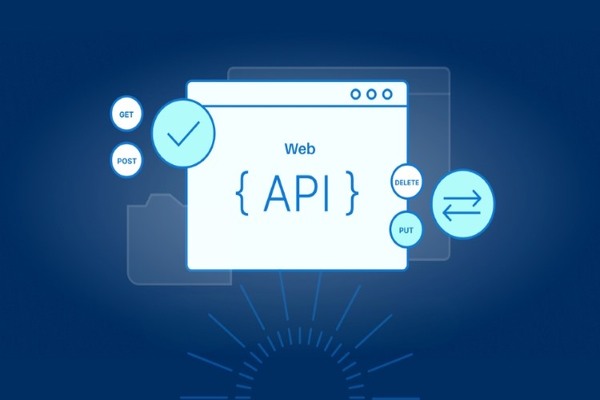
A Web API is a specific type of API implemented on web platforms via the HTTP protocol. This is currently the most popular format due to its high compatibility with any internet-connected device, from desktop browsers to mobile applications. Web API development allows servers to provide data (typically in JSON or XML format) to clients quickly and securely.
The biggest difference between a Web API and system APIs is its language-agnostic nature. A Web API written in Java can easily serve a frontend application written in JavaScript or a mobile app written in Swift, creating absolute flexibility in software development.
API Protocols
In the process of API development, choosing a transmission protocol is akin to selecting an official communication language between systems. Each protocol possesses its own characteristics regarding structure, speed, and security levels. To build an optimal system, developers must clearly understand the following popular options:
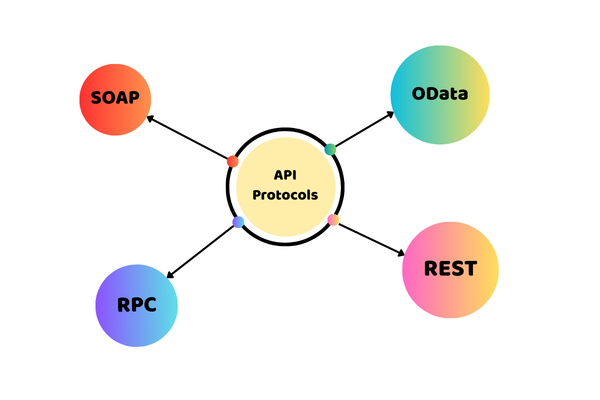
SOAP (Simple Object Access Protocol)
SOAP is a standardized protocol based on XML with extremely strict rules. It is renowned for its high security and robust transactional capabilities. SOAP is often preferred in banking systems or large enterprises where data integrity is vital, despite its higher latency and more complex structure compared to modern protocols.
RPC (Remote Procedure Call)
RPC is a protocol that allows a computer program to execute a procedure on another computer (server) as if it were running on its own. While XML-RPC uses XML to encode function calls, a more modern variant called gRPC (developed by Google) is becoming increasingly popular due to its superior speed in microservices architecture.
REST (Representational State Transfer)
REST is not strictly a protocol but rather an architectural style based on HTTP methods (GET, POST, PUT, DELETE). In API development, REST is the top choice thanks to its lightweight nature, scalability, and ability to handle various data formats. Most web and mobile applications today are built upon this RESTful architecture.
OData (Open Data Protocol)
OData is an open standard that allows the creation and consumption of RESTful APIs with powerful data querying capabilities. You can think of OData as “SQL for the Web,” where users can filter, sort, and retrieve specific data attributes directly via the URL without the need for developers to write additional source code for each individual query request.
Types of APIs
Depending on the purpose of use and the target audience, API development is clearly categorized to optimize control and security. Identifying the correct type of API helps businesses shape their business models and data-sharing strategies effectively.
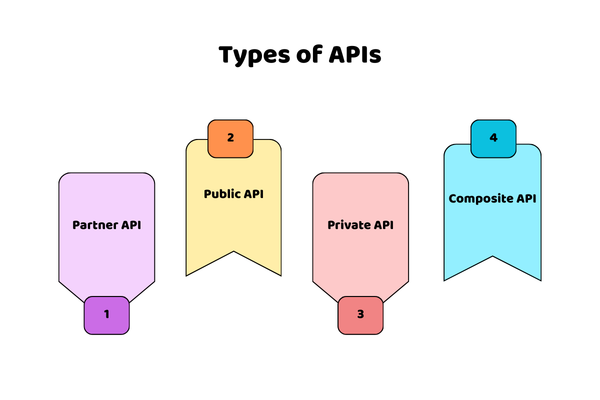
Partner API
These APIs are specifically designed for strategic partners. They are not publicly available and require special access permissions (usually through a dedicated API key). Partner APIs help businesses expand their ecosystem by allowing trusted third parties to integrate deeply into their systems, creating added value for both parties.
Public API
A Public API (also known as an Open API) is available to all developers. Its goal is to foster innovation and create an application community around the original platform. For example, the Google Maps API allows millions of websites to embed maps, thereby reinforcing Google’s leadership in location data.
Private API
A Private API (or Internal API) is used exclusively within an organization. it serves as a bridge connecting different departments, ensuring smooth data flow between HR, accounting, and sales. This type of API focuses on performance and streamlining, as it does not have to deal with external requests.
Composite API
Composite APIs allow developers to bundle multiple API requests into a single call. This is particularly useful in complex systems where a single user action (such as placing an order) requires simultaneous calls to inventory, payment, and shipping APIs, thereby reducing network load and increasing response speed.
Highlights of Web APIs
Why have Web APIs become the “backbone” of the modern internet? The advantages they offer go far beyond mere data transmission. When API development is executed correctly, businesses reap immense value in terms of operational efficiency and user experience.
- Product Automation: APIs completely eliminate manual data entry between systems. When a change occurs on the source server, the API automatically pushes data to linked applications, making workflows seamless and minimizing human error.
- Flexible Integration: The “plug-and-play” capability is the greatest strength of APIs. Businesses can easily add or remove features by connecting to different service APIs. This allows startups to build complex applications in a short time by leveraging existing modular building blocks.
- Real-time Updates: In the information age, speed is gold. Web APIs enable real-time data synchronization. Whether it is stock price fluctuations or the location of a ride-hailing vehicle, users always receive the latest information at the exact moment it arises.
- Universal Standards and Ease of Use: Web APIs follow international standards, making learning and deployment incredibly easy. A developer in Vietnam can easily use an API developed in the US, thanks to standardized documentation and familiar HTTP methods.
API Development Process
A professional API development process typically undergoes six rigorous stages to ensure quality:
- Requirement Analysis: Define goals, the data to be shared, and the target user audience.
- Architectural Design: Select protocols (REST, SOAP), define Endpoints, and determine the structure of the returned data.
- Development (Coding): Write the source code, establish processing logic, and connect to the database.
- Testing: Use tools like Postman to verify data accuracy and load-bearing capacity.
- Documentation: Write detailed guides so that other developers know how to call the API.
- Maintenance and Monitoring: Track real-world performance and update new versions (Versioning).
How Web APIs Work
The operation of a Web API follows the Request-Response model.
- Step 1 – Request: When you perform an action on an application (such as clicking a “Search” button), the app sends a request to the server. This request includes the address (URL), an action (such as retrieving or sending data), and accompanying information.
- Step 2 – Server-side Processing: The server receives the request, verifies its validity, and accesses the database to retrieve or store information according to your request.
- Step 3 – Response: The server sends the result back to the application. This result is always accompanied by a “status code” (e.g., 200 means Success, 404 means Data Not Found).
- Step 4 – Rendering: The application receives the data from the server and displays it on your phone or computer screen so you can see the final result.
Pros and Cons of Web APIs
Despite the numerous benefits, API development comes with certain hurdles and risks. Understanding both sides of the coin helps project managers develop safer and more effective deployment strategies.
Advantages
Web APIs are extremely lightweight, easy to deploy, and offer excellent scalability. They support Microservices architecture, allowing development teams to work independently on different parts of the system. Additionally, they help reduce infrastructure costs by leveraging the computing power of third-party cloud services.
Disadvantages
Dependency is the biggest drawback. If a third-party API encounters an issue, your application will be affected as well. Furthermore, managing multiple API versions (Versioning) and ensuring security against cyberattacks requires human resources with high-level technical expertise.
How to Use an API
To use an API effectively, developers need to follow these steps: research the documentation, register an account to receive security credentials (API Key or Token), and finally, use programming tools to execute API calls. Error Handling is also crucial when using APIs to ensure the application does not “freeze” during network outages.
API Security
In API development, security is not an add-on feature but the core of the system. Since APIs open a gateway to corporate data, measures such as HTTPS encryption, Multi-Factor Authentication (MFA), Rate Limiting, and using an API Gateway are mandatory. A minor security flaw in an API can lead to data leaks affecting millions of users.
Challenges in API Development
The greatest challenge today is the balance between functionality and security. Additionally, maintaining stable performance during sudden traffic spikes is a difficult problem to solve. Developers also face the task of documenting APIs to be both intuitive and comprehensive, as well as managing changes so as not to break applications using older API versions.
API development is a journey that blends art with technology. It requires not only superior programming skills but also a strategic vision for data and systems. We hope this article has provided you with the deep insights needed to start your own API project effectively.
