


In the era of digital transformation, software is no longer just a supporting tool; it has become the core of every business. To create high-quality technology products without exceeding budgets or missing deadlines, development teams must adhere to a scientific process. This is why the concept of the Software Development Lifecycle has become more important than ever.
What is the Software Development Lifecycle (SDLC)?
The Software Development Lifecycle, abbreviated as SDLC, is a structured process used by the software industry to design, develop, and test high-quality software. The goal of SDLC is to produce a product that meets or exceeds customer expectations while achieving efficiency in terms of cost and deployment time.
Simply put, just as building a house requires architectural blueprints, construction plans, and final inspections, SDLC serves as the “master blueprint” for a technology project. This process provides a common framework that helps developers, managers, and clients clearly understand where they are in the project roadmap.
Why is the Software Development Lifecycle Important?
Adopting a software development lifecycle is not a cumbersome administrative procedure, but a vital strategy for technology companies. Without a standard process, projects easily fall into “feature creep” (uncontrolled expansion of features), waste resources, or worse, result in a product that is unusable upon release.
SDLC provides specific benefits such as:
- Enhanced Predictability: Helps accurately estimate resources, costs, and completion timelines.
- Improved Quality: Integrated testing phases help detect bugs early.
- Effective Communication: Creates a common language between departments (Design, Dev, QA).
- Easier Maintenance: With standard documentation and processes, upgrading the software later becomes much simpler.
Stages of the Software Development Lifecycle
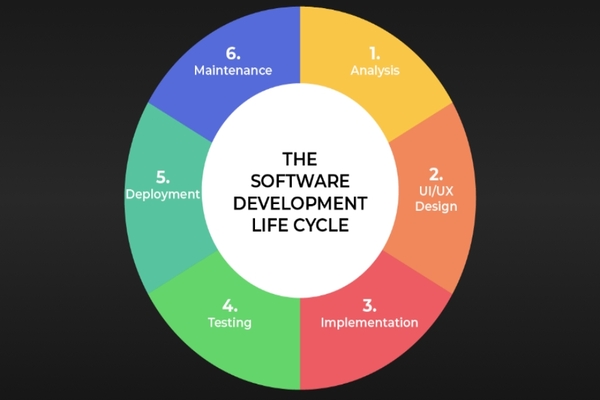
A standard SDLC process typically consists of 6 to 7 sequential stages. Each stage acts as a link in a chain, where the output of one step serves as the input for the next. Below is a detailed look at each step in the product development roadmap.
Planning and Analysis
This is the most critical stage in the Software Development Lifecycle. Here, stakeholders define the project goals, scope of work, and feasibility. Questions that need to be answered include: What problem does this software solve? Do we have enough budget and the right technology to implement it? The result of this step is a detailed project plan.
Defining Requirements
Once the plan is in place, the Business Analysis (BA) team works with the client to gather specific requirements. All desired features, performance metrics, and interfaces are documented in the SRS (Software Requirement Specification). This document serves as the “compass” for the technical team to follow throughout the execution process.
Design
Based on the SRS, software architects design the system structure. This stage includes High-level Design (HLD) and Low-level Design (LLD). Not only is the User Interface (UI/UX) created, but the database structure and data flows are also defined here.
Product Development
This is the stage where developers begin coding. Following the design specifications, they use programming languages such as Java, Python, or C# to build the software modules. This phase usually consumes the most time and resources in the Software Development Lifecycle.
Testing and Integration
The source code cannot be delivered immediately after being written. Quality Assurance (QA) specialists and testers perform various tests to find bugs. They verify if the software functions according to requirements, is secure, and is compatible with other systems. Errors are sent back to the developers for fixing and re-testing until standards are met.
Deployment and Maintenance
Once the software is stable, it is deployed to a real-world environment for users. However, the SDLC does not end there. The maintenance phase includes fixing bugs that arise in production, updating new features, and optimizing performance to ensure the software continues to function well over time.
Popular Software Development Lifecycle Models
Depending on the project scale, the nature of the work, and client requirements, businesses will choose different implementation models. Each model has its own unique approach to the various stages of the Software Development Lifecycle.
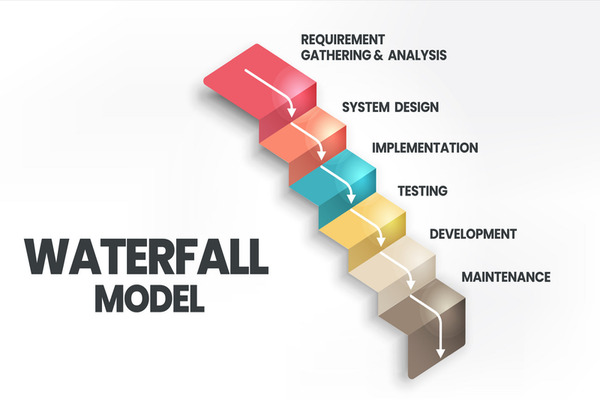
Waterfall Model
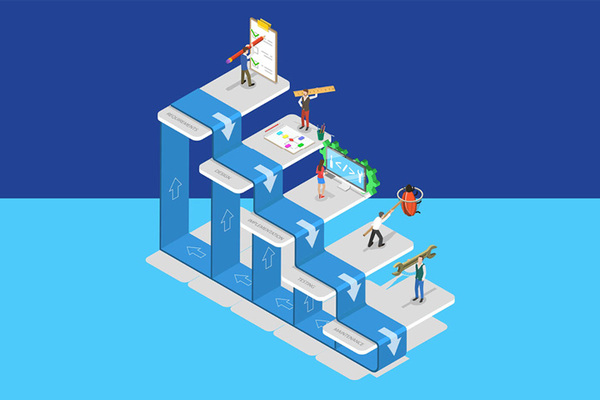
This is the most traditional and simplest model. In the Waterfall model, stages occur sequentially like a waterfall: one phase must be completed before the next can begin. It is suitable for projects with extremely clear requirements from the outset and minimal changes. However, the downside is its lack of flexibility, and the final product is only visible at the very end of the cycle.
V-shaped Model
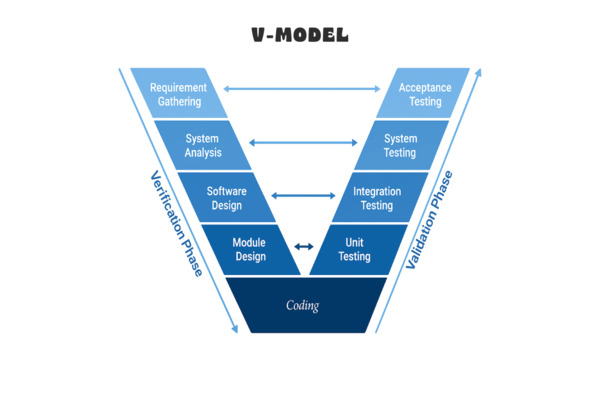
As a variation of the Waterfall model, the V-model emphasizes the relationship between each development stage and its corresponding testing phase. Every development step is paired with an immediate verification step. This ensures exceptionally high quality, making it commonly used in medical or aviation systems.
Iterative Model
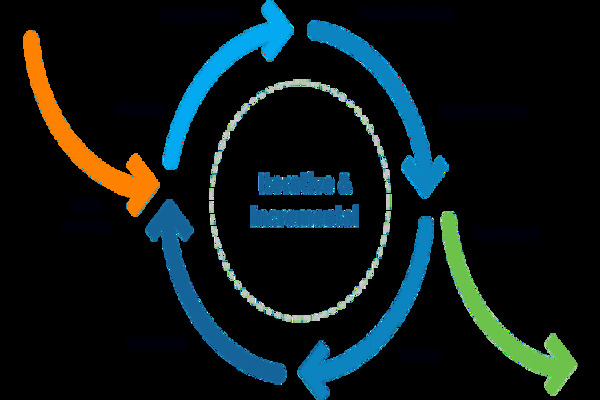
Instead of attempting to complete the entire software at once, the Iterative model breaks the project into smaller parts. Each iteration goes through all the steps of the Software Development Lifecycle to create an enhanced version of the product. This approach helps minimize risks and allows for gradual changes.
Spiral Model
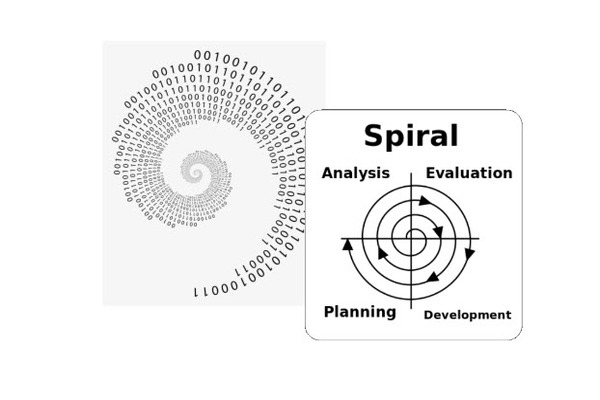
The Spiral model combines the iterative nature of development with the controlled aspects of the Waterfall model. The most distinctive feature here is that risk analysis is performed repeatedly through each spiral cycle. It is highly suitable for large, complex, and high-risk projects.
Agile Model
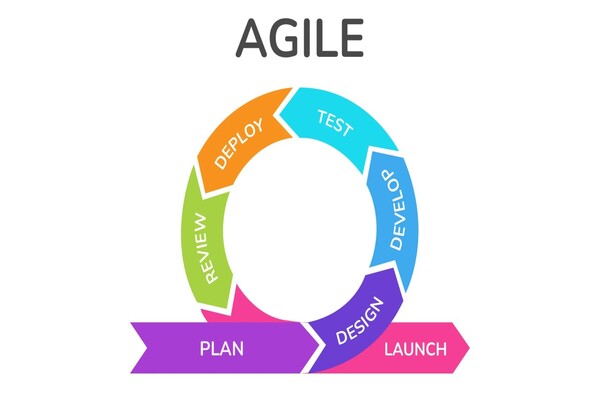
Currently, Agile is the most popular model. Agile breaks projects down into short phases called “Sprints.” It prioritizes interaction, customer feedback, and the ability to adapt quickly to changes. Scrum and Kanban are well-known frameworks based on this Agile philosophy.
SDLC and Software Security
In the context of rising cybercrime, security is no longer just a final step but must be an integral part throughout the Software Development Lifecycle. The concept of DevSecOps emerged to integrate security into every phase: from requirements analysis (risk identification) and design (secure architecture) to testing (vulnerability scanning). Prioritizing security from the start helps businesses avoid costly data breach disasters.
Comparing SDLC with Other Lifecycle Management Methods
Many people often confuse SDLC with concepts such as STLC (Software Testing Life Cycle) or ALM (Application Lifecycle Management).
| Concept | Full Name | Focus Scope | Relationship |
|---|---|---|---|
| SDLC | Software Development Life Cycle | Focuses on the entire process of building and forming a software product. | The primary framework for the development project. |
| STLC | Software Testing Life Cycle | Specializes in quality assurance and finding bugs. | A subset within the SDLC. |
| ALM | Application Lifecycle Management | Covers everything from the initial business idea until the software is retired. | The broadest concept, encompassing SDLC and other management activities. |
How to Choose the Right SDLC Model
No single software development lifecycle model is perfect for every situation. To choose the right one, you need to consider several factors:
- Project Scale: Large projects require rigor (Waterfall, Spiral), while small projects require speed (Agile).
- Clarity of Requirements: If requirements change frequently, choose Agile. If requirements are fixed, Waterfall will be more effective.
- Team Expertise: Teams with strong self-management experience are well-suited for Agile.
- Budget and Timeline: If you need to launch a product quickly (MVP), the Iterative model is the optimal choice.
Future Trends of the Software Development Lifecycle
The future of the software development lifecycle is shifting dramatically thanks to the support of Artificial Intelligence (AI) and automation. We are witnessing the rise of AI-powered SDLC, where AI can automatically write code, predict errors, and even autonomously optimize system performance. Additionally, the “Low-code/No-code” trend is changing how we perceive the development phase, significantly shortening the time-to-market for products.
Understanding and correctly applying the Software Development Lifecycle is the key to success in any technology project. Whether you are a manager or a developer, mastering SDLC will help you work more professionally and effectively.
