


Amidst the robust progression of Industry 4.0, the concept of Smart Manufacturing has evolved from a strategic option into a vital necessity for manufacturing enterprises. Transitioning from traditional models to digital ecosystems enables businesses to optimize resources, enhance productivity, and respond flexibly to the volatile demands of the global market.
1. What is Smart Manufacturing?
Smart Manufacturing is a modern production approach where networked machinery integrates advanced technologies such as Artificial Intelligence (AI), the Internet of Things (IoT), and Big Data analytics. Its core objective is to create a production process capable of self-learning, self-adapting, and optimizing based on real-time data.
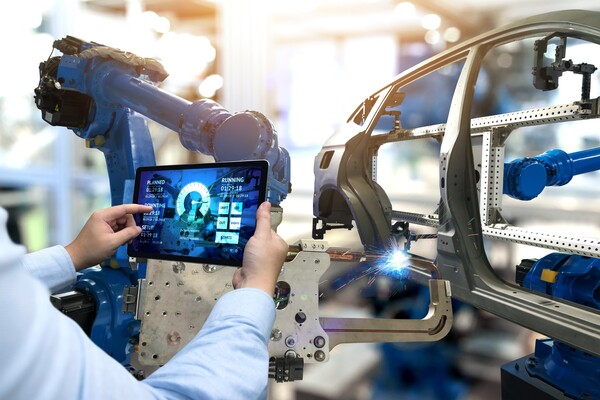
Unlike conventional automation—where machines merely repeat pre-programmed commands—smart manufacturing allows systems to “communicate” with each other. For instance, if a component on the assembly line encounters an issue, the system can automatically adjust the speed of other sections to prevent bottlenecks or trigger predictive maintenance alerts before an actual breakdown occurs.
2. Differentiating Smart Manufacturing and Smart Factory
Although often used interchangeably, there is a subtle distinction between these two concepts:
| Feature | Smart Factory | Smart Manufacturing |
|---|---|---|
| Scope | Focuses on the physical space within the plant. | Encompasses the entire ecosystem and value chain. |
| Focus | Production lines, robotics, and IoT sensors. | Design, planning, production, logistics, and after-sales. |
| Relationship | A core component or subset. | The overarching, holistic system. |
| Main Goal | Automating and optimizing the fabrication process. | Transforming operations, decision-making, and value creation. |
3. Benefits of Smart Manufacturing
Implementing smart solutions delivers breakthrough improvements in both economic and operational efficiency:
- Increased Productivity: Machinery operates continuously with high precision, minimizing unscheduled downtime.
- Cost Savings: Reduced raw material waste and energy consumption through rigorous sensor-based monitoring.
- Enhanced Quality: Computer Vision inspection systems detect microscopic defects that are nearly invisible to the human eye.
- Product Personalization: The ability to rapidly reconfigure production lines allows businesses to fulfill custom orders without excessive cost increases.
4. Core Technologies in Smart Manufacturing
To realize this model, a collaborative ecosystem of technologies is essential. Below are the primary technological pillars driving this transformation:
Data Processing
Data is often referred to as the “oil” of the digital age; however, without refinement, it remains nothing more than lifeless figures. In Smart Manufacturing, the true power lies in Big Data analytics and Artificial Intelligence (AI). Rather than merely collecting information passively, AI analyzes complex variables to forecast trends, identify potential bottlenecks, and empower leadership to make data-driven decisions rather than relying on intuition.
Advanced Robotics
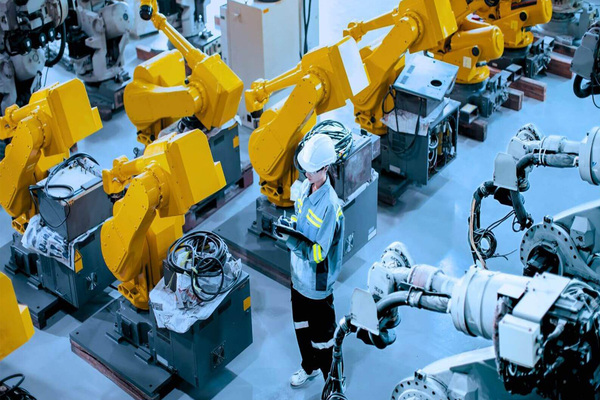
The era of bulky robotic arms isolated in safety cages is over. In its place is the rise of Collaborative Robots (Cobots). Equipped with intelligent sensor systems and self-adaptive capabilities, they can work safely alongside human operators. Cobots do not just take over strenuous or hazardous tasks; they can also easily “learn” new skills, providing maximum flexibility to the production line.
3D Printing
Printing Additive Manufacturing (3D Printing) has dismantled the limitations of traditional manufacturing methods. This technology enables the creation of highly complex geometric structures, optimizing weight while ensuring superior durability. Notably, 3D printing is a “lifesaver” for rapid prototyping and the on-demand production of replacement parts, significantly reducing lead times within the supply chain.
Virtual Reality (VR) and Augmented Reality (AR)
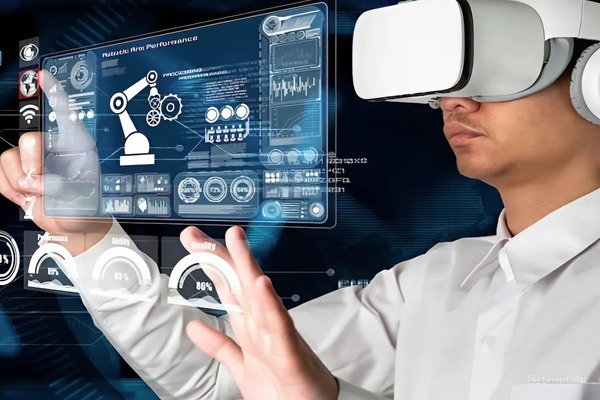
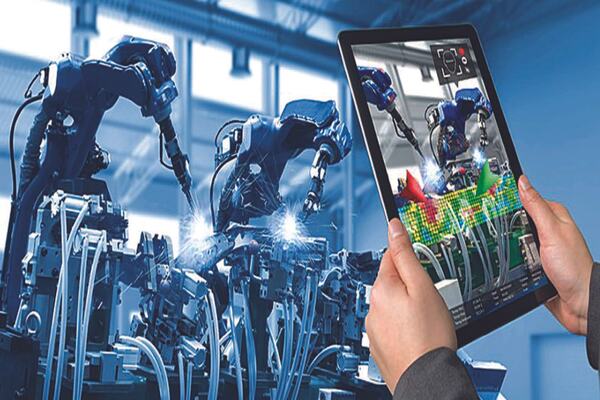
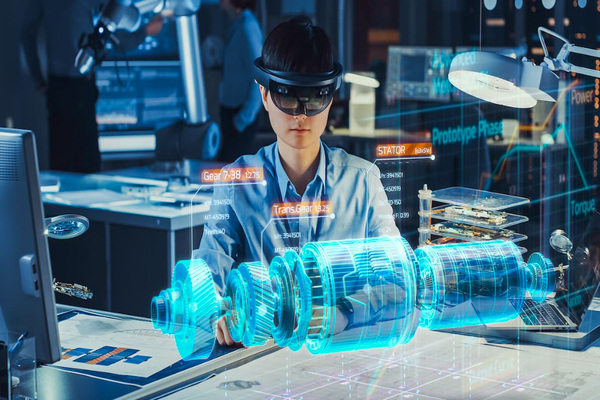
While Virtual Reality (VR) creates a perfect simulated environment for engineers to test production lines before “laying the first brick,” Augmented Reality (AR) serves as a powerful assistant directly on the factory floor. Through smart wearable devices, maintenance technicians can view technical specifications and repair manuals overlaid directly onto the physical equipment, minimizing errors and accelerating work progress.
5G Connectivity
The seamless operation of a smart factory depends on the speed of information transmission. With ultra-high bandwidth and near-zero latency, 5G networks act as the “nervous system” connecting tens of thousands of IoT devices. This ensures that every response from machinery occurs in real-time, providing an indispensable foundation for autonomous systems and Automated Guided Vehicles (AGVs) within warehouses.
Edge Computing
To optimize processing speeds, Edge Computing allows data to be analyzed right at the source rather than “traveling” long distances to a cloud server. This enables the system to react instantaneously to emergencies while simultaneously reducing network bandwidth pressure and enhancing the security of internal data.
Digital Twins
A Digital Twin is more than just a 3D model; it is a dynamic virtual entity that accurately reflects the real-time status of physical machinery. By running operational scenarios on this virtual replica, businesses can precisely predict maintenance schedules or optimize performance without incurring any risks or disruptions to the actual production line.
Smart Manufacturing Design
The smart revolution begins at the blueprint stage. The combination of advanced design software and AI facilitates the creation of groundbreaking products. The system automatically performs calculations to eliminate redundant parts and select optimal materials, resulting in products that are lightweight, durable, and easily mass-produced at the lowest possible cost.
5. Principles of Smart Manufacturing
To operate effectively, the production system must adhere to several core principles:
- Interoperability: The ability for humans, devices, and systems to connect and communicate seamlessly.
- Information Transparency: Data must be visualized clearly to provide managers with a comprehensive, “bird’s-eye” view of operations.
- Technical Assistance: Systems support humans in decision-making and in performing strenuous or hazardous tasks.
- Decentralized Decisions: Cyber-physical systems possess the capability to make simple autonomous decisions to achieve local optimization.
6. Implementation Steps for Smart Manufacturing
The transformation process cannot happen overnight. A typical roadmap generally includes:
- Step 1 – Current State Assessment: Evaluate the level of readiness regarding both technology and human resources.
- Step 2 – Goal Setting: Focus on a specific issue (e.g., reducing product defects) rather than a massive, simultaneous rollout.
- Step 3 – Building Connectivity Infrastructure: Install sensors and upgrade internal network systems.
- Step 4 – Pilot Phase: Apply technology to a single, small-scale production line to gather insights and lessons learned.
- Step 5 – Scaling and Optimization: Expand the implementation across the entire factory and deeply integrate AI.
7. Challenges in Smart Manufacturing
Despite its immense potential, businesses must confront several significant barriers:
- High Initial Investment Costs: Upgrading machinery and software infrastructure requires substantial capital.
- Cybersecurity: As connectivity becomes universal, the risk of cyberattacks and industrial data theft increases exponentially.
- Shortage of High-Skilled Labor: There is a critical need for engineers who possess a dual mastery of both traditional manufacturing and Information Technology (IT).
- Data Standardization: The lack of uniformity among communication protocols from different machinery manufacturers remains a challenge.
8. Applications of Smart Manufacturing
Currently, numerous industries have achieved significant success through this model:
- Automotive Industry: Utilizing robotics and Digital Twins to personalize each vehicle according to specific customer requirements.
- Pharmaceuticals: Implementing ultra-strict monitoring of production environments via IoT to ensure drug quality and compliance.
- Fast-Moving Consumer Goods (FMCG): Optimizing supply chains to react instantly to shifting consumer trends.
9. The Future of Smart Manufacturing
Looking ahead, we are moving toward Industry 5.0, where personalization reaches its peak and the human element is restored to the center of man-machine collaboration. Sustainability and the Circular Economy will be deeply integrated, with intelligent systems automatically calculating ways to minimize carbon footprints and recycle materials with maximum efficiency.
Smart Manufacturing is not merely a trend; it is an inevitable journey for enterprises to elevate their standing on the global industrial map. Embracing these technologies today will be the key to unlocking the door to sustainable prosperity.
