


In the era of digital transformation, the way businesses operate and utilize technology has changed completely. Instead of spending billions to build massive server systems or purchasing expensive perpetual software licenses, organizations are now shifting toward a more flexible, cost-effective, and efficient model. That model is SaaS (Software as a Service). So, why has this model become the “dominant force” in the global software market? Let’s dive deep into everything from the basic concepts to the practical value it provides.
What is SaaS (Software as a Service)?
To understand why SaaS is so popular, we first need to grasp its essence. SaaS is not merely a software product; it is a service distribution model based on cloud computing.
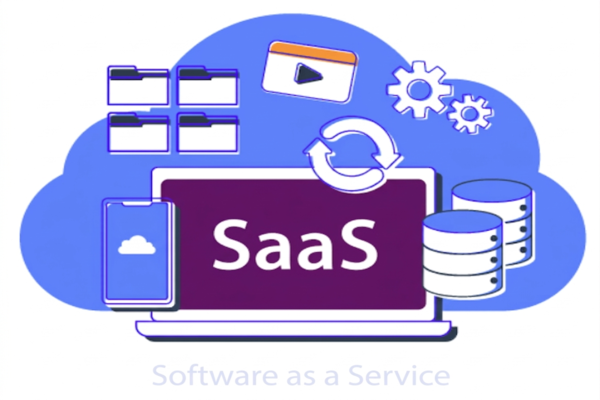
SaaS, or Software as a Service, is a model in which a provider creates an application, maintains it on cloud servers, and allows users to access it via the Internet. Instead of installing software directly onto a personal computer or local server (On-premise), you only need a web browser and login credentials to use it.
It is one of the three main pillars of cloud computing, alongside IaaS (Infrastructure as a Service) and PaaS (Platform as a Service). Common examples you likely use daily include Google Drive, Microsoft 365, Zoom, or enterprise management platforms like Salesforce and Base.vn.
How Does SaaS Work?
The operational mechanism of SaaS is the key to liberating businesses from complex technical barriers. Instead of selling a product outright, SaaS providers sell the right to use the service over time.
Fundamentally, the SaaS model operates on a Multi-tenant architecture. This means a single version of the software running on the provider’s server serves thousands of different customers. While each customer’s data is completely isolated and secure, everyone shares the same underlying infrastructure and source code.
When the provider updates a new feature, all users benefit immediately without needing manual intervention. Users pay a recurring fee (monthly or annually) to maintain access, which optimizes initial investment costs and ensures service continuity.
Advantages of SaaS
The reason SaaS dominates the market lies in the superior benefits that traditional software models simply cannot match. Below are the five core advantages that make SaaS the top choice for every business, from small startups to multinational corporations.
1. Flexible Payment
One of the biggest barriers to traditional software is the extremely high cost of purchasing a license. With SaaS, the Pay-as-you-go model has changed the game. Businesses can subscribe to a service plan that fits their current workforce size and easily upgrade or downgrade based on actual needs. This transforms Capital Expenditure (CapEx) into Operational Expenditure (OpEx), making business cash flow more stable and easier to control.
2. Access Anytime, Anywhere and Resilience
In a world of remote work, flexibility is a vital factor. Since SaaS runs on a web platform, employees can work at the office, at home, or even while on the go using just a laptop or a phone with an internet connection. Furthermore, SaaS providers typically commit to a very high SLA (Service Level Agreement), ensuring system uptime of 99.9%. If your personal computer breaks, your data remains safe in the cloud, ensuring work is never interrupted.
3. Automatic Software Updates
Forget the days of waiting for technicians to arrive to install patches or upgrade to new versions. With SaaS, the update process happens entirely automatically on the provider’s server side. Users always experience the latest and most secure features without incurring any additional costs or manual effort. This frees up a company’s IT team to focus on more important strategies instead of software maintenance.
4. Ready-to-use Hardware Infrastructure and Storage
Deploying software the old way meant you had to invest in servers, cooling systems, electricity, and an infrastructure maintenance team. SaaS completely eliminates this burden. The provider is responsible for the entire hardware infrastructure and storage space. The scalability of SaaS is nearly infinite; as your data grows, you simply purchase more capacity instead of buying more hard drives or building additional server rooms.
5. Convenient Data Management and Analytics
Centralizing data on a single platform makes management more scientific than ever. Modern SaaS tools often come integrated with smart reporting filters and analytics (Dashboards). With just a few clicks, business leaders can grasp the business situation, employee performance, or customer behavior in real-time. Data transparency ensures that decision-making based on numbers is both accurate and timely.
Disadvantages of SaaS
Despite offering countless benefits, no model is absolutely perfect. Understanding the limitations of SaaS will help businesses prepare more thoroughly and develop reasonable contingency plans.
1. Dependence on a Stable Internet Connection
Since all data and applications reside in the cloud, the Internet is the sole “lifeline” maintaining SaaS operations. If the network connection encounters issues or bandwidth is weak, the user experience will be severely impacted, or work may grind to a complete halt. While Internet access is now universal, this remains a weakness to consider for remote areas or businesses requiring instantaneous processing speeds.
2. New Versions May Not Always Be Suitable
While automatic updates are an advantage, they can sometimes be a drawback. Occasionally, a provider changes the interface or feature structure in a new version without prior notice, leaving users feeling confused or causing incompatibility with current workflows. Businesses are entirely dependent on the provider’s Roadmap and lack the right to decline updates or retain an older version they prefer.
3. Difficulty Switching Providers
This is known as Vendor Lock-in. Once a business has stored terabytes of data and built its entire workflow on a SaaS platform over many years, switching to a competitor is extremely difficult. Barriers such as incompatible data formats, migration costs, and staff retraining time leave many businesses “stuck” with their current provider, even if service quality declines.
4. System Security Risks
Although major SaaS providers invest millions of dollars in security, placing sensitive data on a third-party server always carries inherent risks. Cyberattacks, data leaks, or configuration errors on the provider’s side can affect thousands of customers simultaneously. Additionally, complying with data sovereignty regulations (such as requiring user data to be stored within the host country) is a complex legal challenge for international SaaS services.
5. Limited Control for Users
Unlike On-premise software, where you can customize the source code deeply to meet 100% of specific needs, SaaS is typically “ready-to-wear.” You can only customize within the scope allowed by the provider through available APIs or configurations. For businesses with extremely complex or unique operational processes, SaaS can feel restrictive and may fail to meet specialized requirements.
What is the State of SaaS in Vietnam?
The Vietnamese market is witnessing a powerful boom in the SaaS model, especially against the backdrop of a surging startup wave and national digital transformation goals.

Over the past 5–7 years, Vietnamese businesses have gradually shifted their mindset from “ownership” to “service leasing.” According to market reports, the growth rate of SaaS in Vietnam averages over 30% per year. Domestic tech giants such as Base.vn, MISA, KiotViet, and Haravan have solidified their positions by building “Pure Vietnamese” SaaS ecosystems that deeply understand local management culture, legal regulations, and accounting standards.
The advantages of domestic SaaS include more competitive pricing compared to international software and direct technical support in Vietnamese, making it more accessible for local businesses. However, the biggest challenge remains convincing traditional enterprises to overcome psychological barriers regarding data security when moving information to the “cloud.”
Frequently Asked Questions (FAQ) about SaaS
Below are some common concerns that businesses often encounter when they begin researching and deploying the SaaS model.
Is my data safe on SaaS?
Most reputable SaaS providers utilize international standard data centers (such as AWS, Google Cloud, or Azure) with strict security certifications like ISO 27001 or SOC 2. In reality, your data on SaaS is often safer than being stored on a personal computer, which is vulnerable to viruses or hardware failure.
How is SaaS different from Cloud Computing?
Cloud Computing is a broad term encompassing various services. SaaS is simply the application layer sitting at the top of Cloud Computing. You can think of the Cloud as the foundation of a house, while SaaS is a fully furnished apartment that you just need to move into.
Should small businesses use SaaS?
Absolutely. SaaS is extremely suitable for Small and Medium Enterprises (SMEs) because it requires no large upfront capital investment and no dedicated in-house IT team.
How do I choose a good SaaS provider?
You should consider three factors:
- Do the features solve your specific problem?
- What is the integration capability with other software?
- What is their reputation and the quality of their customer support?
We hope this article has provided you with a comprehensive and insightful look into why SaaS (Software as a Service) dominates the market today. With its flexibility, cost-efficiency, and constant innovation, SaaS will undoubtedly go even further in the future.
