


In the digital era, data is often likened to the “new oil.” However, if businesses stop at merely cataloging what has already happened in the past, they have only traveled half the distance. To truly break through and master the game, we need to see through the future. This is precisely where Predictive Analytics fulfills its mission.
What is the application of predictive analytics?
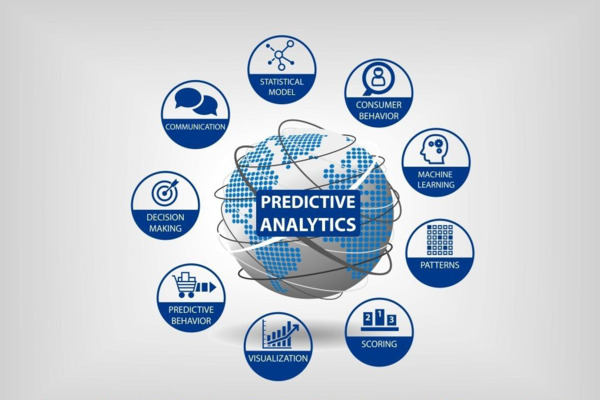
Predictive analytics is a branch of advanced analytics that utilizes historical data combined with statistical algorithms, data mining, and Machine Learning to forecast the probability of future events. Instead of asking “What happened?”, predictive analytics focuses on answering “What is most likely to happen?”.
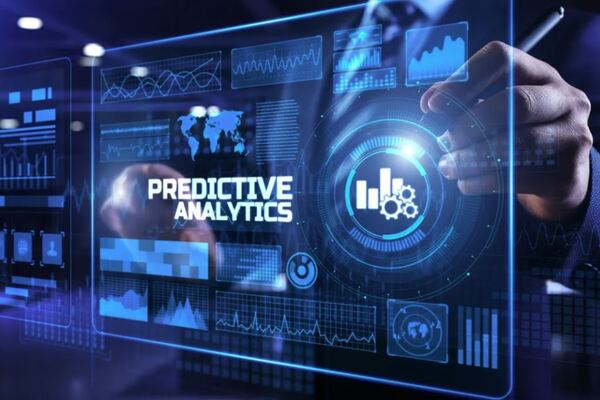
This process is not an intuitive “prophecy” but is based on a rigorous scientific foundation. By identifying patterns and hidden relationships within massive datasets, this technology enables humans to make high-precision judgments regarding customer behavior, market fluctuations, or potential risks. Today, its applications are no longer confined to laboratories but have permeated every corner of economic life.
The importance of predictive analytics
In a volatile world (VUCA), forecasting capability is the core competitive advantage. Predictive analytics not only helps businesses be more proactive in their planning but also serves as a “compass” for optimizing resources. Without prediction, a business is like a ship moving through fog—only able to react when it strikes an iceberg.
Implementing forecasting models helps organizations spot the “iceberg” from a distance, allowing them to adjust their course, save operational costs, and seize opportunities that competitors have yet to recognize. Particularly in high-risk sectors like finance or healthcare, its importance also lies in protecting assets and human lives. It shifts a business’s posture from “defense” to a calculated “offense.”
How Predictive Analytics Works
The operating mechanism of predictive analytics is a closed-loop cycle that begins with raw data collection and concludes with specific executable actions. This process typically undergoes rigorous steps to ensure the accuracy of the model.
First, data engineers define the business objectives, then gather data from various sources (CRM, social media, IoT devices). Next, the data is cleaned and pre-processed to remove noise. Once the data is “ready,” mathematical algorithms are applied to train the model. This model is then validated using a separate dataset before being deployed into a real-world environment to provide periodic forecasts.
Types of Predictive Analytics Models
To transform data into valuable information, data scientists use various types of models depending on the nature of the output variable. Below are the four most common types of models, each addressing a specific real-world problem:
Classification Models
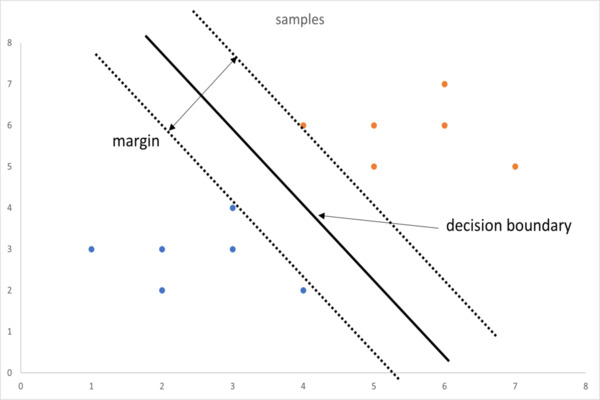
This is the most common model, used to categorize an object into a specific group based on input features. For example, in banking, classification models are used to determine if a transaction is “legitimate” or “fraudulent.” The results usually return clear labels such as “Yes/No” or “Pass/Fail.”
Regression Models
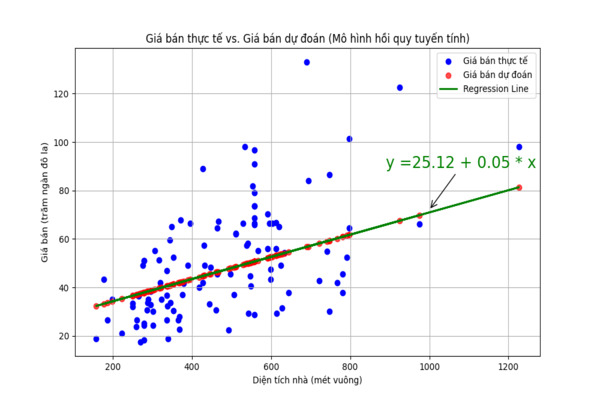
In contrast to classification, regression models are used to predict a specific numerical value on a continuous scale. Examples include forecasting house prices based on square footage and location, or predicting the temperature for the coming week. The mathematical formula is typically based on the correlation between independent and dependent variables:
Y = β0 + β1X1 + β2X2 + … + ε
Clustering Models
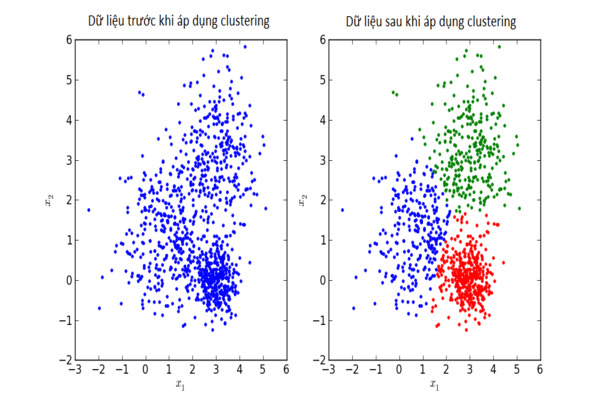
This model belongs to the unsupervised learning group, meaning it does not require pre-labeled data. It automatically searches for similarities to group objects together. In Marketing, clustering is extremely useful for segmenting customers into groups with similar shopping behaviors that the business had not previously identified.
Time Series Models
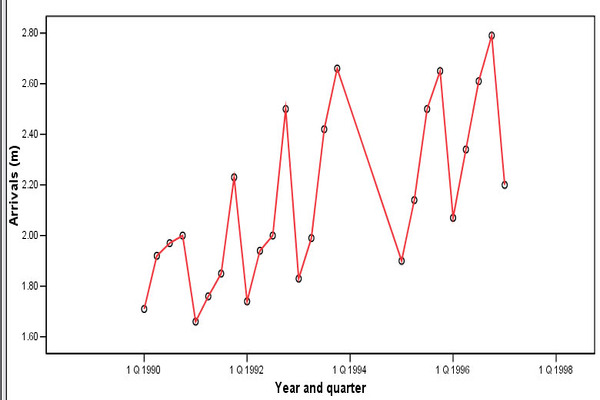
This model focuses on data points collected in a continuous chronological sequence. It is highly effective for forecasting monthly revenue, stock price fluctuations, or seasonal inventory demand by analyzing past trends and seasonality.
Benefits of Predictive Analytics
The successful application of predictive analytics delivers superior value that traditional methods cannot reach.
- Profit Optimization: Foreseeing shopping trends to maintain optimal inventory levels, reducing stockouts and excess inventory while launching advertisements at the perfect time.
- Enhancing Customer Experience: Automatically suggesting the exact products or services customers need (similar to how Netflix or Amazon operates).
- Risk Mitigation: Detecting early signs of anomalies to prevent financial fraud, bad debt, or cyber-attacks.
- Accurate Decision-Making: Empowering managers to make choices based on factual data rather than emotional intuition or guesswork.
Real-World Applications of Predictive Analytics
To better understand the power of this technology, let’s look at how leading industries leverage it daily. From personalizing messages to protecting financial systems, predictive analytics is becoming the heart of every growth strategy.
In Marketing
In the field of marketing, predictive analytics helps determine “Customer Lifetime Value” (CLV). Businesses can identify which customers are likely to stop using a service (churn prediction) to offer timely promotions for retention. Additionally, identifying the right advertising channels that yield the highest conversion rates helps save millions of dollars in annual budgets.
In Finance – Banking
Banks utilize predictive models for Credit Scoring. Instead of relying solely on payroll records, the system analyzes thousands of other variables to decide an individual’s repayment capacity. Furthermore, Fraud Detection systems operate in real-time to intercept suspicious transactions within milliseconds.
In Business
Major retailers like Walmart or Zara use Demand Forecasting to manage their supply chains. They know exactly how many T-shirts need to be shipped to a New York store next week based on weather forecasts and local cultural events. This helps maintain a balance between “out-of-stock” scenarios and “excessive inventory.”
Common Tools for Predictive Analytics
To perform complex calculations at scale, experts rely on specialized software and programming languages. The choice of tools depends on the scale of the data and the proficiency of the personnel.
- Programming Languages: Python and R are the two “kings” of the data science world, thanks to their rich libraries (such as Scikit-learn, Pandas, and TensorFlow).
- Commercial Software: SAS, IBM SPSS Modeler, and SAP Predictive Analytics offer intuitive interfaces, making them suitable for large enterprises that require stability and high-level technical support.
- Cloud Platforms: Google Cloud AI, AWS SageMaker, and Microsoft Azure Machine Learning allow businesses to build and deploy models on powerful cloud computing infrastructure without the need for costly investment in physical servers.
Development Trends in Predictive Analytics
The future of predictive analytics is closely tied to the breakthrough of Generative Artificial Intelligence (Generative AI). We are witnessing a shift from merely predicting “what” will happen to computers being able to automatically suggest “what to do” (Prescriptive Analytics).

In addition, the “AutoML” (Automated Machine Learning) trend is helping to democratize data analysis. Even those without programming expertise can build high-quality forecasting models through drag-and-drop tools. Notably, data ethics and algorithmic transparency (Explainable AI) will become central focus points, ensuring that predictions are not only accurate but also fair and free from bias.
Predictive analytics is no longer just a “nice-to-have” option but has become a vital necessity for survival. If you want to optimize your business processes today, start by accumulating clean data and choosing a forecasting model that fits your needs.
