


In the context of a fiercely competitive digital economy, fragmented management of departments such as accounting, human resources, and warehousing has become a major barrier to growth. ERP software has emerged as a “commander-in-chief,” helping businesses synchronize all resources. This article will dive deep into every aspect of this system to provide you with the clearest perspective.
What is ERP Software?
To put it simply, ERP software (short for Enterprise Resource Planning) is a system for planning a business’s resources. It is not just a single application but an integrated suite of applications that allows a business to manage core business activities on a single data platform.
Instead of each department using separate software—which causes overlap and data discrepancies—ERP gathers everything into a common “repository.” This allows information to flow seamlessly from one department to another automatically and accurately.
Core Modules of ERP
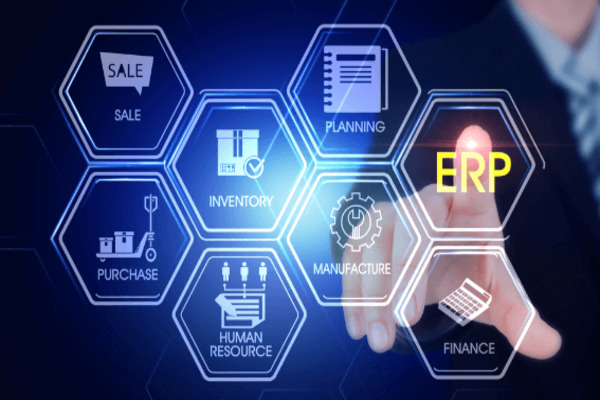
Every business has a different operating structure, but generally, a standard ERP software system typically includes the following core modules to ensure comprehensive coverage:
- Finance & Accounting Management: The “heart” of ERP, managing cash flow, accounts receivable/payable, general ledger, and tax reporting.
- Purchasing & Supply Chain Management: Tracking the process from placing orders with suppliers to warehouse receipt.
- Warehouse Management (WMS): Controlling inventory levels, locations, and optimizing inbound and outbound logistics.
- Production Management: Planning production, managing Bills of Materials (BOM), and tracking progress.
- Customer Relationship Management (CRM): Customer care, sales funnel management, and transaction history.
- Human Resources & Payroll (HRM): Timekeeping, payroll calculation, employee records management, and training.
Characteristics of an ERP System
The biggest difference between ERP software and ordinary accounting or retail management software lies in its systemic characteristics. Below are the identifying features of a true ERP solution:
- Integration: All data only needs to be entered once and will automatically update across all relevant departments.
- Consistency: Uses a single, unified database, helping to eliminate conflicting reports between departments.
- Scalability: ERP allows businesses to add new modules as they expand without needing to replace the entire system.
- Strict Authorization: Ensures information security by limiting access rights based on each employee’s specific role.
ERP Deployment Models
Depending on the budget, IT infrastructure, and security requirements, businesses can choose from different ERP software deployment models. Currently, there are three most popular models:
- On-Premise ERP: Businesses provide their own servers and network infrastructure, and install the software at their headquarters. This model offers high security but requires a very large initial investment.
- Cloud ERP: The software runs on the provider’s servers. Businesses access it via the Internet and pay a monthly or annual fee. This is the current trend due to its low cost and rapid deployment.
- Hybrid ERP: A combination of On-Premise and Cloud to leverage the advantages of both. It is typically designed for large corporations with complex processes.
The Role of ERP for Businesses
Why do large enterprises consider ERP an indispensable foundation? The answer lies in the practical value it brings:
- Productivity Optimization: Automates manual tasks and minimizes human error.
- Real-time Reporting: Leaders can view business reports instantly instead of waiting for staff to compile them weekly.
- Cost Savings: Reduces excess inventory and effectively manages waste in production.
- Enhanced Customer Experience: Faster response times to customers thanks to readily available product data and order history.
ERP Implementation Costs
This is often the most “headache-inducing” issue for managers. The cost of an ERP software project is not just the license price but also includes several other items:
- License Fees: Based on the number of users or modules utilized.
- Implementation & Consulting Fees: Costs for a team of experts to conduct surveys, design processes, and install the system.
- Training Fees: Instructing employees on how to use the new system.
- Maintenance & Upgrade Fees: Annual costs to ensure the system runs stably and features remain up-to-date.
Which Businesses Should Use ERP?
Simply using ERP does not guarantee success. This system is truly necessary when your business shows the following signs:
- Data is fragmented, difficult to control, and frequently inconsistent between departments.
- There are too many manual workflows, wasting time on reconciling paperwork.
- Leadership lacks timely information to make critical business decisions.
- The business is in a phase of rapid growth, and the old management system can no longer keep up with the new scale.
How to Acquire a Great ERP System
To own an ERP system that is truly “worth every penny,” businesses need to carry out thorough preparations:
- Identify Actual Needs: Do not be overambitious by selecting too many modules if you don’t need them yet. Start with the most critical departments.
- Select a Reputable Provider: Evaluate their implementation experience within your specific industry.
- Assess Customization Capability: Is the software flexible enough to be modified according to your business’s unique characteristics?
Key Considerations When Implementing ERP
Implementing ERP is a revolution within a business, and the failure rate is not small if preparation is lacking. For a project to reach the finish line successfully, you must keep in mind these four key factors:
- Compatibility with Business Processes: Many businesses try to force their processes into the software or vice-versa. A good system must be a cross-section: the software should support specific specialized tasks while helping to standardize weak existing processes.
- Minimizing Employee Resistance: People are often afraid of change. Employees may feel that ERP makes their work more complicated or fear being monitored too closely. Therefore, mindset alignment and training are crucial for them to see the benefits of the new tool.
- Ensuring Data Accuracy: “Garbage in, garbage out.” If the initial data entered into the system is incorrect or missing, the ERP will produce worthless reports. Cleaning old data and establishing standard input procedures are vital steps.
- Post-Implementation Support: An ERP system needs regular care. Ensure the provider commits to rapid technical support and has a retraining plan for new personnel to keep the system running smoothly.
Frequently Asked Questions About ERP Software
- How long does it take to implement ERP? It depends on the scale, but on average, it takes from 3 months to 1 year. Cloud ERP solutions for small businesses can be faster (a few weeks).
- Is ERP suitable for small businesses? Yes. Currently, there are many ERP software packages specifically designed for SMEs with very affordable costs.
- Why do ERP implementations often fail? Mostly due to a lack of decisiveness from leadership, poor input data, and lack of cooperation from employees with the new system.
- Should I choose domestic or foreign ERP? Foreign ERP (SAP, Oracle, Microsoft) is strong in global standard processes but comes at a high price. Domestic ERP (FPT, Bravo, Itcenter…) is more flexible with Vietnamese accounting standards and offers more reasonable costs.
Investing in ERP software is an investment in a sustainable future. Despite the challenges of the implementation journey, the results of an intelligent, transparent, and efficient operating machine will surely be a solid launchpad for any business.
