


Entering 2026, the electronics industry has evolved beyond a mere manufacturing sector to become the “backbone” of the global digital economy. The explosion of emerging technologies—such as Generative AI, early-stage 6G research, and smart electric vehicles—has propelled the role of electronic components to unprecedented heights. This article provides a comprehensive overview of the definitions, significance, key segments, as well as the trends and challenges of the industry today.
What is the Electronics Industry?
The electronics industry is not simply about producing machinery; it is a specialized techno-economic ecosystem encompassing the entire lifecycle from R&D and integrated circuit (IC) design to final assembly. This ecosystem spans from microscopic semiconductor chips measured in nanometers to supercomputers and global telecommunications infrastructure.

By 2026, the industry’s scope has expanded significantly: the boundaries between pure hardware and artificial intelligence software are blurring, giving rise to “intelligent electronic systems” capable of autonomous reasoning and flexible environmental adaptation.
The Importance of the Electronics Industry
As the world shifts decisively into the 4.0 era, the electronics industry serves as the engine driving every major transformation. Its presence permeates every aspect of life, from the way individuals work to how nations operate their economies.
Driving Economic Growth
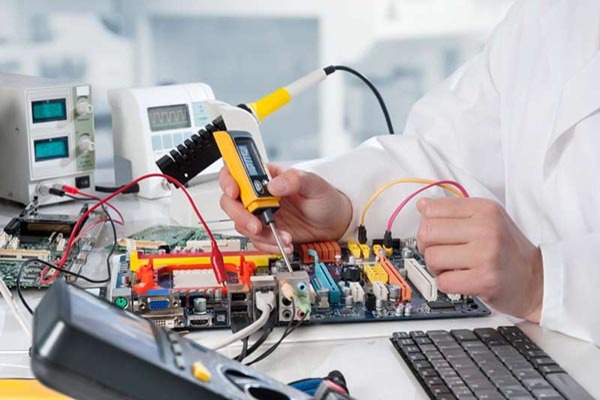
The electronics sector contributes a massive share to the GDP of leading nations such as the US, China, South Korea, and Vietnam. Electronic products are primary export commodities, helping balance trade scales and attracting powerful Foreign Direct Investment (FDI) into high-tech zones.
Job Creation and Skill Enhancement
With its global production scale, the industry provides livelihoods for millions. However, the highlight of 2026 is the revolution in human capital: a sharp shift from manual labor to a high-tech engineering workforce. Today’s electronics experts must master interdisciplinary knowledge, ranging from embedded programming and automation to complex chip design.
Encouraging Technological Innovation
Every breakthrough in healthcare, renewable energy, or space exploration originates from advancements in electronic components. Competitive pressure forces enterprises to continuously invest in R&D, creating a cycle of perpetual innovation to produce devices that are more compact, powerful, and energy-efficient.
Enhancing Competitive Advantage
In a complex geopolitical landscape, mastering semiconductor technology and component manufacturing is considered a strategic “shield” for any nation. Self-sufficiency in the electronic supply chain not only reduces dependence on volatile global networks but also asserts a nation’s technological sovereignty and power on the international stage.
Key Sectors of the Electronics Industry
To fully grasp the structural framework of the electronics industry, it is essential to analyze its core market segments. Each field possesses unique technical specifications and serves distinct customer bases, creating a diverse and ever-evolving ecosystem.
Industrial Electronics
This sector serves as the “operating system” for Smart Factories. Industrial electronics focus on automation control systems, high-efficiency inverters, and measurement devices with micro-level precision. In 2026, the rise of Digital Twin technology has enabled these electronic systems to simulate and optimize real-world production processes in a virtual environment before actual operation, minimizing risks and costs to the lowest possible levels.
Automotive Electronics
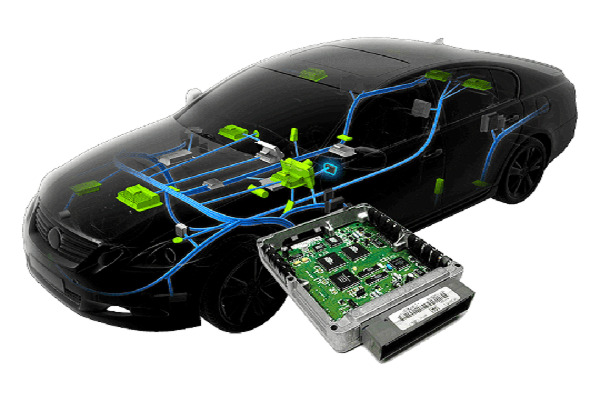
The era of Electric Vehicles (EVs) and autonomous driving has redefined the automobile from a purely mechanical vehicle into a “mobile supercomputer.” Today, electronic components account for over 40% of the total value of a modern vehicle. From Battery Management Systems (BMS) and LiDAR sensors for 3D environment scanning to VR-integrated entertainment systems, automotive electronics is currently the segment with the most explosive growth rate.
Consumer Electronics
As the most vibrant and accessible market segment, this includes smartphones, laptops, wearables, and the smart-home ecosystem. The dominant trend in 2026 is the integration of Edge AI. Rather than relying on cloud computing, consumer electronics can now process complex artificial intelligence tasks directly on local hardware, maximizing response speeds and data security for users.
Medical Electronics
The development of the electronics industry has humanely transformed healthcare, saving millions of lives annually. Advanced diagnostic imaging (next-gen MRI and CT), smart pacemakers, and remote medical logistics systems have collapsed geographical barriers. Notably, medical wearables have now reached an accuracy level comparable to specialized hospital equipment, allowing for real-time monitoring of vital signs.

Telecommunications Electronics
Acting as the “nervous system” of global connectivity, this sector is responsible for building world-class information infrastructure. With the widespread coverage of 5G Standalone networks and rapid strides in 6G infrastructure testing, telecommunications hardware—such as next-gen base stations, quantum routers, and broadband satellite networks—is developing at an unprecedented pace, realizing the dream of a zero-latency connected world.
Development Trends of the Electronics Industry
The year 2026 marks a historic milestone as the electronics industry enters an era of “hyper-convergence.” Breakthrough technologies are no longer isolated; they are seamlessly intertwining to completely redefine supply chain operations and global consumer experiences.
Artificial Intelligence (AI) – The “Brain” within Every Semiconductor Layer
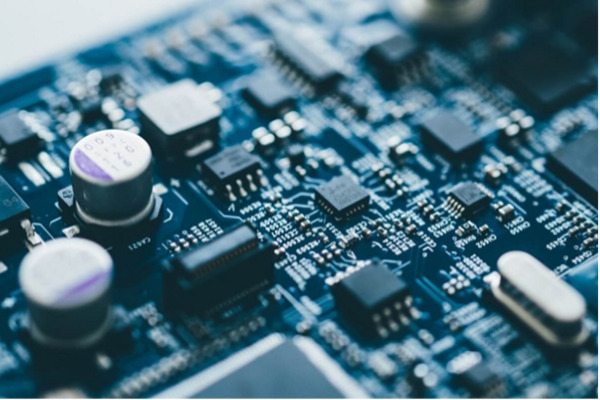
AI has transcended its role as mere supporting software to become the physical “soul” of next-generation integrated circuit designs. Specialized Neural Processing Units (NPUs) are now embedded directly into the hardware. This allows devices within the electronics industry to perform super-intelligent tasks—such as real-time multilingual translation, flawless biometric recognition, and autonomous power optimization based on user behavior—all without requiring an active network connection.
Internet of Things (IoT) – A Hyper-connected Ecosystem
The world is operating on a massive network with tens of billions of data touchpoints. From smart appliances in digital apartments to analytical sensors in high-tech agricultural fields, IoT is creating a “digital nervous system” for the planet. This connectivity ensures that resource management, energy distribution, and logistics within the electronics industry become more transparent, efficient, and sustainable than ever before.
5G Technology and the Era of Instant Connectivity
By 2026, 5G Standalone (SA) networks have become the global telecommunications backbone, providing ultra-wide bandwidth with near-zero latency. This is the key that unlocks the door to once-futuristic applications: from transcontinental surgeries via robotic assistance to operating automated production lines in the harshest environments inaccessible to humans.
Virtual Reality (VR) & Augmented Reality (AR) – Blurring Spatial Limits
The bulky AR/VR headsets of the past have been replaced by ultra-lightweight wearables featuring retinal-grade resolution, powered by Micro-LED display technology. Supported by eye-tracking sensors and sophisticated haptic feedback, the virtual and physical worlds have merged into one. This transformation has turned interactions in specialized training, engineering design, and entertainment into incredibly vivid and lifelike experiences.
Challenges and Opportunities in the Electronics Industry
Despite being at its developmental peak, the electronics industry continues to face complex puzzles alongside the opening of new doors of potential.
Challenges
- Semiconductor Shortages: Although production capacity has increased, the insatiable demand from the electric vehicle and AI sectors continues to exert immense pressure on the high-end chip supply chain.
- Electronic Waste (E-waste): Environmental concerns have become urgent as product lifecycles shorten. “Circular economy” regulations are now compelling manufacturers in the electronics industry to design products that are easier to recycle and repurpose.
- Cybersecurity: In an era where every device is connected, the risk of attacks via hardware vulnerabilities poses a significant strategic challenge for nations worldwide.
Opportunities
- Supply Chain Shift: The trend of supply chain diversification (China +1) creates a golden opportunity for Southeast Asian countries, including Vietnam, to emerge as the world’s new manufacturing hubs.
- Green Energy: The surging demand for low-power electronic components and renewable energy management systems is opening up a new multi-billion-dollar market.
- Product Personalization: 3D printing technology for electronic components now allows for the creation of customized products tailored to the specific needs of individual customers at a low cost.
The electronics industry in 2026 is a race of intellect and speed. To succeed, businesses must not only possess manufacturing prowess but also master core technologies and adapt swiftly to global sustainability standards.
