


In the era of the Fourth Industrial Revolution, the convergence of the physical and virtual worlds is creating unprecedented turning points. One of the core technologies driving this transformation is the Digital Twin. Moving beyond static 3D models, a Digital Twin is a living entity that helps businesses understand the past, control the present, and predict the future.
What is a Digital Twin?
In its simplest terms, a Digital Twin is a digital replica of a physical entity, process, or system from the real world. However, the key differentiator between it and a standard CAD blueprint is the real-time, two-way data connection.
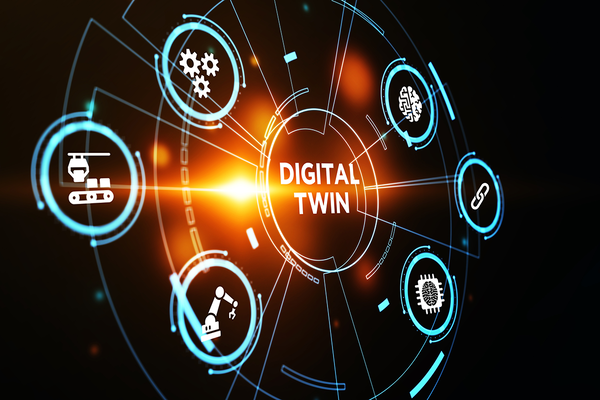
Data from IoT (Internet of Things) sensors attached to physical machinery is continuously transmitted to the digital version. Here, AI algorithms and Big Data analyze this information to accurately simulate the operating state of the real-world object. This relationship acts like a digital mirror: any change in the physical entity is instantly updated in the virtual clone, allowing engineers to test various scenarios without risking physical assets.
Why has Digital Twin become a new trend in manufacturing?
The rise of the Digital Twin is no coincidence; it is the result of the synchronized maturity of the global technological ecosystem. Three main factors are driving this trend:
- The IoT Explosion: A sharp decline in sensor costs has made it feasible to collect data from every corner of the factory.
- Cloud Computing Power: The ability to process billions of complex data packets in an instant ensures that simulation models run smoothly.
- Demand for Product Personalization: As the market demands more diverse products with shorter lifecycles, businesses must find ways to manufacture flexibly with minimal errors.
Benefits of Digital Twin
Implementing a Digital Twin offers benefits that go far beyond being just a monitoring tool. It directly impacts cash flow and corporate sustainability through resource optimization and waste reduction:
- Performance Optimization: Through simulation, businesses can identify the “sweet spot” in machinery operation to achieve maximum productivity with minimum energy consumption.
- Reduced Maintenance Costs: Instead of wasteful scheduled maintenance, a Digital Twin enables condition-based maintenance, preventing failures before they occur.
- Shortened Time-to-Market: Testing in a virtual environment helps eliminate design flaws early, reducing the number of physical prototypes required.
- Enhanced Safety: Dangerous scenarios can be tested on the digital clone to develop response protocols without putting personnel at risk.
Applications of Digital Twin in Industry
Digital Twin is no longer just a theoretical concept; it is being widely applied and is transforming the landscape of numerous industries, from consumer goods manufacturing to complex urban management.
Manufacturing
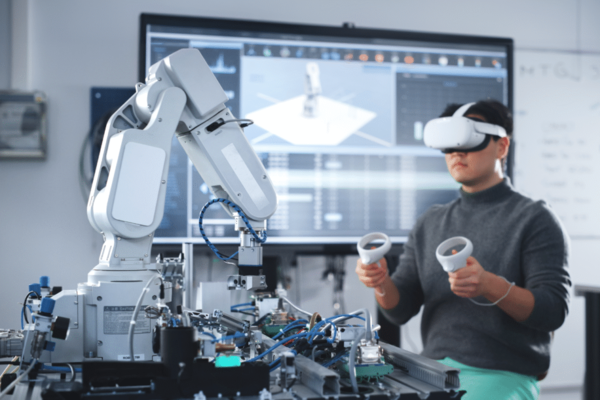
Within the factory environment, Digital Twin creates a connected ecosystem. Entire production lines are fully digitized, allowing managers to monitor workflows, detect bottlenecks, and flexibly adjust production schedules based on real-time orders.
Product Design
Before a car or an aircraft engine ever leaves the factory, it has already “lived” for thousands of hours within a Digital Twin virtual environment. Engineers can test durability, aerodynamics, and physical reactions under the most extreme conditions without spending a dime on actual material costs.
Process Optimization
By simulating entire operational processes, Digital Twin helps identify redundant steps. For example, in a warehouse, a digital replica can calculate the optimal travel routes for Automated Guided Vehicles (AGVs) to minimize picking times.
Quality Management
Data from a Digital Twin helps compare output products against original design standards in real-time. If even the slightest deviation in dimensions or technical specifications occurs, the system alerts immediately to adjust the machinery, ensuring an almost zero error rate.
Supply Chain Management
The reach of a Digital Twin is not limited to factory walls. It extends across the entire supply chain, helping businesses forecast demand, track cargo locations, and assess the impact of external factors (such as weather or pandemics) on supply capabilities.
Predictive Maintenance
This is one of the most valuable applications. By monitoring vibration, temperature, and noise through a Digital Twin, AI systems can accurately predict when a component will fail. This allows businesses to shift from a reactive to a fully proactive stance.
Public Healthcare
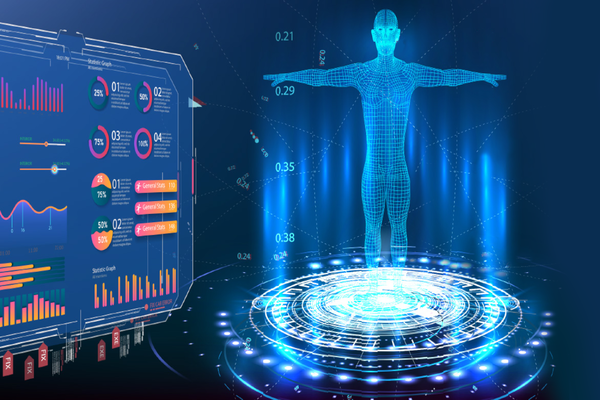
In medicine, the “Human Digital Twin” is becoming a reality. Doctors can create digital replicas of a patient’s internal organs to test drug reactions or plan surgeries precisely, significantly reducing medical risks.
Smart City Projects
Digital Twin technology is used to simulate traffic, energy consumption, and urban planning. Managers can foresee the impact of a new building on airflow or traffic density for an entire area before the first brick is even laid.
Customer Experience Analysis
Digital Twins of retail stores allow for tracking the customer shopping journey. Businesses can identify where customers linger the longest, enabling them to optimize store layouts and product placement to maximize purchasing potential.
Enhanced Collaboration
With Digital Twin, teams across the globe can work on a single model within a virtual space. This erases geographical barriers, making collaborative design and operations seamless and integrated.
How Does a Digital Twin Work?
At the heart of a Digital Twin is a continuous, iterative process consisting of four main stages:
- Data Collection: IoT sensors gather raw data from the physical asset.
- Transmission: Data is sent via connectivity protocols (such as 5G or Wi-Fi 6) to a cloud platform.
- Analysis and Simulation: Algorithms analyze the data and update the virtual model. Physics-based models are applied to predict reactions and outcomes.
- Feedback: Insights gained from the digital replica are sent back to control the physical equipment or to support human decision-making.
Digital Twin – The Future of Manufacturing
In the near future, the Digital Twin will no longer be an “optional extra” but will become a “mandatory standard.” As Artificial Intelligence (AI) becomes increasingly intelligent, digital replicas will gain the ability to learn and make decisions autonomously without human intervention (Autonomous Digital Twins). We are moving toward a world where every object around us has a “digital soul” as a companion, making life more efficient, safe, and sustainable.
Frequently Asked Questions about Digital Twin
- How is a Digital Twin different from traditional Simulation? Traditional simulation usually runs on static assumptions and occurs during the design phase. A Digital Twin connects directly to real-world data in real-time and exists throughout the entire lifecycle of the product.
- Is implementing a Digital Twin expensive? Initial costs can be high due to investments in IoT infrastructure and software. However, the Return on Investment (ROI) is often impressive thanks to the reduction in failures and increased operational efficiency.
- Can small businesses apply Digital Twin technology? Absolutely. There are currently many cloud-based (SaaS) Digital Twin solutions that allow businesses to start small, digitizing individual departments before scaling up to the entire system.
In summary, the Digital Twin is not just a fleeting tech trend but the “golden key” to unlocking the doors of smart manufacturing. By blurring the lines between the physical and virtual worlds, it helps businesses not only optimize resources but also create sustainable value in the digital age. Investing in a digital replica is an investment in a flexible, precise, and breakthrough-led future.
