


In the era of Industry 4.0, the intersection of medicine and technology has given birth to a landmark concept: Digital Health. Moving beyond paper medical records and long queues at hospitals, modern healthcare is undergoing a powerful transformation into a connected, intelligent, and patient-centered ecosystem.
What is Digital Health?
Digital Health is a broad concept encompassing the use of information and communication technologies to improve health, enhance treatment efficiency, and personalize the medical care process. It is not merely the digitization of administrative procedures; rather, it is the integration of hardware, software, and data analytics solutions into every aspect of medical life.

From mobile apps tracking sleep patterns to Artificial Intelligence (AI) systems analyzing X-ray images, digital health is blurring the gap between doctors and patients. Its core objective is to make healthcare more accessible, cost-effective, and, most importantly, provide more accurate treatment outcomes based on real-world data.
Technologies in Digital Health
Digital health does not exist in isolation; it relies on a diverse and complex technological foundation. Each technology acts as a vital link in building an intelligent healthcare ecosystem, helping to solve problems related to geographical distance, resource scarcity, and diagnostic accuracy. Below are the most important technological pillars shaping the healthcare industry today:
Telemedicine
Telemedicine is perhaps the most visible manifestation of digital health in daily life. Through video calling and online chat platforms, patients can connect with leading experts without having to travel hundreds of kilometers. This is particularly significant in managing chronic diseases and psychological counseling, where regular interaction is a vital factor.

IoT and Wearables
The Internet of Things (IoT) in healthcare often appears in the form of smart wearable devices such as the Apple Watch or Fitbit. These devices do more than just count steps; they monitor heart rate, blood oxygen levels (SpO_2), and even electrocardiograms (ECG). Data from wearables provides doctors with a continuous view of a patient’s health status, rather than just isolated metrics captured during hospital visits.
Robot-Assisted Surgery
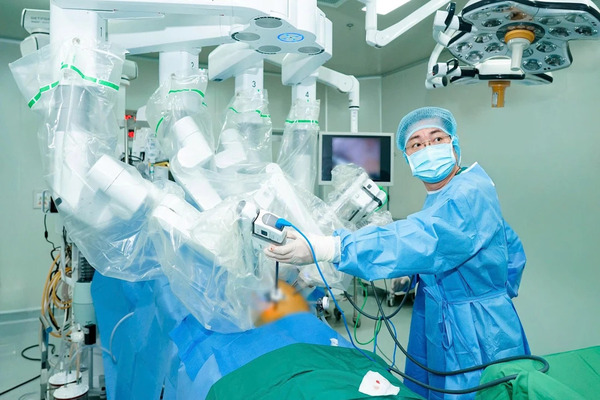
Robotic technology in medicine has elevated precision to the micrometer level. Systems like the Da Vinci robot allow surgeons to perform minimally invasive procedures with a level of flexibility that far exceeds the human hand. This helps minimize blood loss, limit infection risks, and significantly shorten recovery time for patients.
3D Bioprinting
3D Bioprinting is one of the most futuristic technologies in digital health. By using “bio-ink” containing living cells, scientists are moving closer to printing tissues, cartilage, and even artificial internal organs. This technology promises to completely solve the issue of organ donor shortages in the future.
Virtual Reality and Augmented Reality (VR/AR)
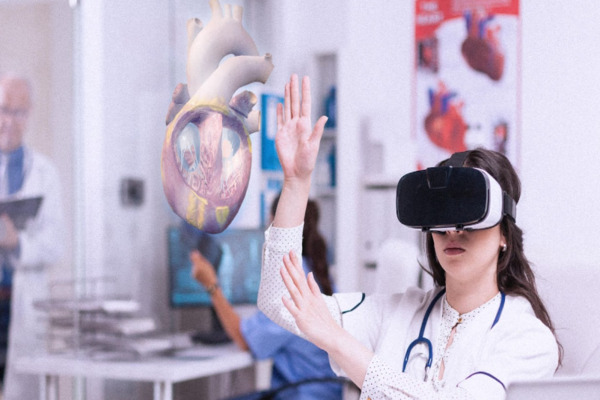
VR/AR is not just for gaming; it is a powerful medical training tool. Medical students can practice surgery in a simulated 3D virtual environment before touching a real patient. Additionally, VR is used to treat phobias, manage pain for cancer patients, or support rehabilitation after a stroke.
Medical Data Analytics (Big Data & AI)
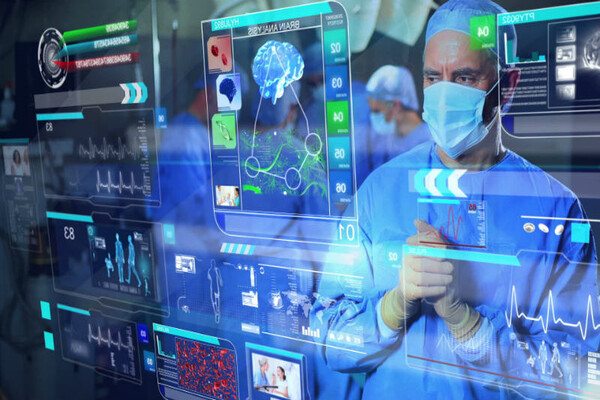
Artificial Intelligence has the capability to process billions of medical records in seconds to identify underlying disease patterns. Big Data analytics helps forecast disease outbreaks and supports doctors in providing personalized treatment regimens based on an individual’s genetic map.
The Importance of Digital Health
The emergence of digital health is not merely a technological trend but an urgent necessity of our time. In a context where the global population is aging rapidly and non-communicable diseases (such as diabetes and cardiovascular diseases) are becoming an economic burden, traditional healthcare systems are increasingly becoming overwhelmed.
Digital health serves as a “lifeline” that helps optimize resources. It enables a model shift from “treating illness once symptoms appear” to “prevention and early intervention.” Its importance is further demonstrated by its ability to bridge the healthcare gap between urban and rural areas, ensuring that every citizen, regardless of location, has the right to access high-quality care services.
Benefits of Digital Health
The benefits of applying technology to healthcare are immense, directly impacting three main groups: patients, medical staff, and administrators.

- For Patients: Increases autonomy in monitoring personal health. It saves time and travel costs while ensuring timely care through early warning systems from wearable devices.
- For Doctors: Reduces administrative pressure thanks to Electronic Health Records (EHR). It provides tools for more accurate decision-making based on historical data and allows for remote patient monitoring after hospital discharge.
- For the Healthcare System: Optimizes operational processes and reduces overcrowding at central-level hospitals. It also makes epidemiological data management more transparent and efficient.
Challenges in Digital Health
Despite its many benefits, the road to implementing digital health is not paved with roses. There are significant hurdles that must be overcome to ensure technology truly serves humanity safely.
- Data Security: This is the greatest challenge. Medical data is among the most sensitive human information. The risk of cyberattacks or personal data leaks leaves many people hesitant to participate in the digital ecosystem.
- Infrastructure and Cost Barriers: Deploying modern systems requires massive initial capital investment. In developing countries, inconsistent network infrastructure and equipment remain major obstacles.
- Digital Literacy: Not everyone is proficient in using medical applications, especially the elderly—the very group that requires the most healthcare.
- Legal Framework: Regulations regarding telemedicine licensing and legal liability for incidents caused by AI still contain many loopholes and require time to be perfected.
The Development of Digital Health
Looking back at history, digital health has come a long way. From the simple computer-based record storage of the 1990s, we have now reached an ecosystem of the Internet of Things (IoT). The COVID-19 pandemic served as a historic “catalyst,” accelerating this process many times over.
In Vietnam, the Government and the Ministry of Health are pushing for digital transformation in healthcare, with the goal of providing every citizen with an electronic health record. Smart hospitals are gradually taking shape, minimizing paperwork and shortening medical registration processes. The involvement of major technology corporations is also driving the development of “all-in-one” health applications.
The Future of Digital Health
In the near future, digital health will advance to the stage of “Precision Medicine.” Instead of using a “one-size-fits-all” medication, doctors will rely on genetic data and lifestyle habits recorded by technology to prescribe personalized treatments for each individual.
We can look forward to the emergence of “Hospital-at-home” models, where most monitoring and treatment are conducted via sensors and 5G/6G connectivity; only cases requiring surgical intervention will need a physical hospital visit. Artificial Intelligence will not replace doctors, but doctors who use AI will replace those who do not.
Digital health is not just a tool; it is a new mindset regarding life care. Investing in digital health today is an investment in a healthier, more sustainable, and more humane future.
