


In the digital era, data is often likened to the “new oil” of businesses. However, oil only holds value when it is refined and connected. This is precisely why Database Integration has become an indispensable part of the IT strategy for any organization aiming to lead the market.
What is Database Integration?
Database Integration is the process of combining data from various sources—such as different database management systems, flat files, or cloud applications—to create a unified and single view for users or applications. Instead of having to access each separate system to find information, integration allows businesses to query and analyze data through a common interface.
The core objective of this process is not just to group data together, but to ensure the consistency, accuracy, and availability of information. When data is integrated correctly, “data silos” are eliminated, enabling a seamless flow of information throughout the entire organization.
Why is Database Integration Important?
Maintaining fragmented data systems is the greatest barrier to growth. Database integration provides strategic benefits that no manager can afford to overlook:
- Improved Decision-Making: With a 360-degree view of customers and operations, leadership can make decisions based on factual data rather than intuition.
- Enhanced Operational Efficiency: Employees no longer have to spend hours manually aggregating data from multiple different spreadsheets.
- Ensuring Consistency: It prevents discrepancies, such as sales figures not matching logistics data.
- Optimizing Customer Experience: Gain a deep understanding of the customer journey by connecting data from marketing, sales, and after-sales services.
How Database Integration Works
To enable different systems to share and utilize data effectively, the integration process is carried out through specific, logical, and controllable steps:
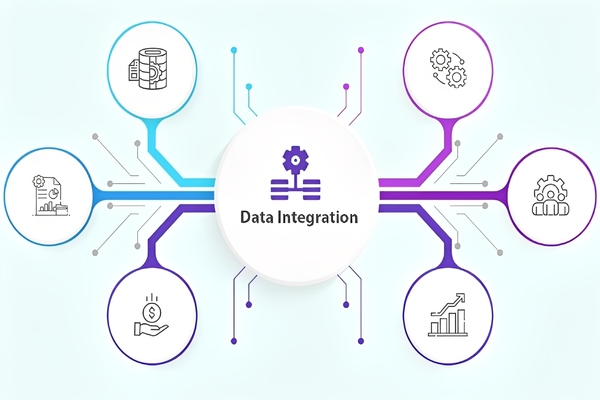
- Identify Data Sources: Determine which systems or data sources need to be integrated.
- Data Extraction: Retrieve data from the identified sources.
- Data Cleaning: Remove errors and duplicate data, and standardize formats.
- Data Transformation: Adjust the data to align with the structure of the target system.
- Data Loading or Connection: Load the data into a central repository or connect it through an intermediate layer.
This process ensures that data from diverse platforms—such as SQL Server, MySQL, or SaaS services like Salesforce—can connect and exchange information seamlessly.
Use Cases for Data Integration
Data integration is not an abstract concept; it is present in every modern business activity:
- Mergers and Acquisitions (M&A): Connecting the data systems of two different companies into a single, unified system.
- Cloud Migration: Moving data from legacy on-premise systems to cloud platforms like AWS or Azure.
- Omnichannel Reporting: Aggregating data from Facebook Ads, Google Ads, and websites to evaluate marketing effectiveness.
Database Integration Methods
Depending on the data scale and business objectives, organizations can choose different methods to connect information. Here are the four most common methods today:

Data Consolidation
This is the most popular method, where data from multiple sources is copied and physically moved into a single repository (Data Warehouse). The ETL (Extract, Transform, Load) process is the core technique here, ensuring data is clean and ready for long-term analysis.
Data Replication
Data replication focuses on creating copies of data from one system to another. This is often used for data backup or to share the access load for reporting systems without affecting the performance of the main operational database.
Data Virtualization
Unlike consolidation, virtualization does not physically move the data. Instead, it creates an abstraction layer that allows users to query data from multiple sources in real-time. This method is extremely flexible and saves on storage costs.
Data Federation
Similar to virtualization, data federation creates a virtual database that acts as a single communication gateway. When a query is made, the system automatically sends requests to the relevant data sources and aggregates the results for the user.
Database Integration Tools
To ensure successful implementation, businesses require robust support tools. These solutions help automate the connection process and minimize human error.
Some prominent names include:
- Informatica & Talend: The “giants” in the ETL space for large-scale enterprises.
- Fivetran & Stitch: Modern tools that support lightning-fast data integration into the Cloud.
- Microsoft SQL Server Integration Services (SSIS): A popular choice for businesses operating within the Microsoft ecosystem.
Comparison: Data Integration vs. Application Integration
Many people often confuse these two concepts. In reality, they have distinct differences in their objectives:
| Feature | Data Integration | Application Integration |
|---|---|---|
| Objective | Aggregate data for analysis and reporting. | Enable software to communicate with each other in real-time. |
| Status | Typically processes data “at rest.” | Processes data “in motion.” |
| Method | Batch processing, ETL. | APIs, Webhooks, Message Queues. |
Applications of Data Integration
Once data has been successfully integrated, businesses can leverage it through various forms to generate economic value:

- Data Mining: Using integrated data to uncover hidden patterns and correlations between variables. For example: Detecting credit card fraud or predicting customer shopping trends during holiday seasons.
- Data Warehousing: Integration is the foundation for building a data warehouse. This serves as a massive historical repository, scientifically organized for rapid information retrieval without disrupting daily operational transactions.
- Business Intelligence (BI): BI tools like Tableau or Power BI can only reach their full potential with a clean, integrated data source. Through intuitive dashboards, managers can monitor the “health” of the business in real-time.
Challenges in Implementing Database Integration
Despite the immense benefits, this process is not without its difficulties:
- Data Quality: “Garbage in, garbage out.” If the source data is inaccurate, the integration results will be worthless.
- Security Issues: Connecting multiple systems opens up potential vulnerabilities for cyberattacks.
- Data Volume (Big Data): Processing terabytes of data daily requires extremely powerful hardware and software infrastructure.
- Cost: Investing in technology and high-level personnel is a significant expenditure for small and medium-sized enterprises.
Database integration is not just a technical task; it is a compass for the sustainable development of modern businesses. By connecting fragmented information sources, you are opening the door to innovation and efficiency.
