


In the era of Industry 4.0, the emergence of Blockchain has not only introduced cryptocurrencies like Bitcoin but has also unlocked a revolutionary new concept: DApp. If you have ever heard of Decentralized Finance (DeFi) or NFTs, they all operate based on this application platform. So, what exactly is a DApp, and why is it expected to replace traditional applications?
What is a DApp?
DApp, short for Decentralized Application, refers to applications built on a peer-to-peer (P2P) computer network rather than a central server. The core difference lies in the power of control: no single organization or individual has the authority to govern the entire operation of the application.
To better understand the nature of DApps, we need to examine them through the lens of technical definitions and how they differ from traditional Apps:
Definition of a Decentralized Application
An application is classified as a DApp when it satisfies certain conditions: open-source code, autonomous operation, data stored on a Blockchain, and the use of digital tokens to provide access. Instead of running on Windows or iOS, DApps run on Blockchain platforms such as Ethereum, Solana, or Binance Smart Chain.
Differences Between DApps and Traditional Applications (Centralized Apps)
Standard applications (such as Facebook or Grab) store data on company servers. If the server crashes or the company changes its policies, users are directly affected. In contrast, DApps distribute data across the entire network, making it immutable and tamper-proof.
Advantages and Disadvantages of DApps
Any new technology is a double-edged sword. DApps offer absolute freedom and security, but they also come with technical barriers and user experience challenges that require careful analysis.

Outstanding Advantages of DApps
- Censorship Resistance: No one can block your access to a DApp or delete the content you have posted.
- Zero Downtime: Because they run on a network of thousands of nodes, DApps almost never experience a complete “crash.”
- Transparency: Every transaction and the source code are publicly available on the Blockchain for anyone to verify.
Disadvantages and Current Barriers
- Processing Speed: Because confirmation is required from multiple nodes in the network, DApps are often slower than centralized applications.
- Gas Fees: Users must pay a fee (gas fee) to execute transactions; sometimes, these fees become very high when the network is congested.
- Difficulty of Use: Managing cryptocurrency wallets and private keys remains a challenge for average users.
DApp Applications in the Digital Age
The power of DApps goes beyond just transferring money. Currently, this technology is finding its way into every corner of digital life-from finance and entertainment to identity management-creating a diverse Web3 ecosystem.

- Decentralized Finance (DeFi): This is the most robustly developing sector for DApps. DeFi applications allow you to borrow, lend, and trade assets without the need for intermediary banks, resulting in cost savings and increased autonomy.
- Gaming and Entertainment (GameFi): DApps have given birth to the “Play-to-Earn” model. In these games, items (NFTs) truly belong to the player and can be converted into real money, rather than just being lines of code sitting on a game publisher’s server.
- Decentralized Social Media (SocialFi): Platforms like Lens Protocol or Steemit allow users to control their personal data. You no longer have to worry about being “banned” without cause or having your personal information sold to advertisers.
How DApps Operate in Modern Technology
To operate without a central server, DApps rely on a complex technical structure consisting of multiple layers. The combination of automated code and distributed databases serves as the “heart” of every decentralized application.
The Role of Smart Contracts
Smart Contracts are self-executing pieces of code that trigger when specific conditions are met. For example: “If A sends money, B will receive a movie ticket.” In a DApp, the Smart Contract replaces the human administrative apparatus.
Consensus Mechanisms and Data Storage
Every action on a DApp must be validated by the network through mechanisms such as Proof of Work (PoW) or Proof of Stake (PoS). Once validated, data is permanently recorded in blocks that are tightly linked together.
Benefits of Using DApps
Why should users switch from familiar applications to DApps? The answer lies in the rights and security provided by the decentralized environment—benefits that today’s Big Tech corporations struggle to fully deliver.
True Data Ownership
In the world of DApps, you are the sole owner of your assets and personal information. No one has the right to access your wallet unless you grant permission, providing absolute peace of mind regarding privacy.
Security and Hack Resistance
Since there is no central server (a single point of failure), it is extremely difficult for hackers to attack the entire system. To alter data on a DApp, an attacker would need to control more than 51% of the network—a feat that is nearly impossible both economically and technically.
Limitations and Challenges in DApp Development
Despite their massive potential, the path for DApp development remains full of obstacles. Developers are facing complex puzzles regarding performance and global legal regulations.
- Scalability Challenges: As the number of users increases, Blockchain networks often slow down and transaction fees skyrocket. Layer 2 solutions are being developed, but they still require time to mature and synchronize.
- Legal and Regulatory Issues: Because DApps operate across borders and have no clear owner, applying tax regulations or Anti-Money Laundering (AML) laws becomes extremely difficult, sparking legal controversies in many countries.
Notable Examples of DApps
To get a more practical view, let’s look at the names that have made waves in the tech community. These are the most vivid proofs of the power and diversity of the decentralized model.
- Uniswap: Uniswap allows users to swap tokens directly with one another through Liquidity Pools without going through an intermediary exchange like Binance or Coinbase.
- Axie Infinity: A product from Vietnam that changed the face of the global gaming industry. Axie Infinity allows players to breed, battle, and earn money from virtual creatures, creating real income for millions of people during the pandemic.
The Future of DApps
We are only at the “dawn” of this technology. With the evolution of Web3, DApps are predicted to become the new standard for all online interactions, erasing the boundaries between users and creators.
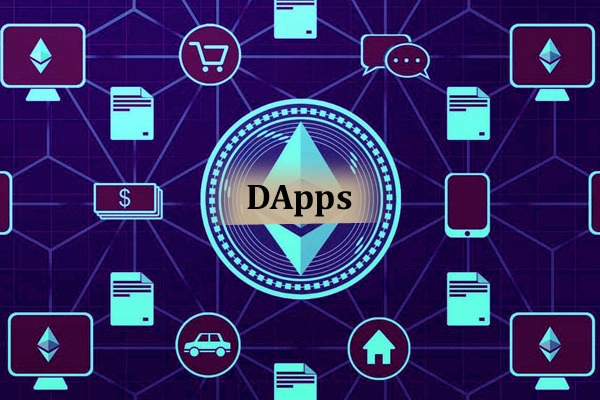
- The Shift Toward Web3: Web3 is the next generation of the internet, where DApps serve as the foundational architecture. In this space, users do not merely consume content but also own a piece of the network, creating a fairer and more transparent digital economy.
- Integrating AI and IoT into DApps: In the future, DApps could combine with Artificial Intelligence (AI) to automate complex processes, or integrate with the Internet of Things (IoT) to manage smart home devices without relying on the servers of major tech corporations.
DApps are not just a passing trend but an inevitable evolution of software technology. Despite ongoing difficulties regarding speed and cost, the values of transparency and ownership ensure that DApps will undoubtedly reshape how we live and work in the near future.
