


In the era of Industry 4.0, cloud computing is essential, but efficiency and cost-savings require a solid foundation. This is where a professional Cloud Architecture becomes paramount. By mastering system design and technical standards, businesses gain the flexibility needed to manage data and applications seamlessly, ensuring long-term scalability and success in a competitive digital landscape.
What is Cloud Architecture?
Cloud Architecture is the method of combining various technological components to create a complete cloud computing environment. It is not merely about connecting servers over the internet; it is a calculated arrangement of hardware resources, software, networks, and Application Programming Interfaces (APIs).

To put it simply, if cloud computing is a house, then cloud architecture is the detailed blueprint that specifies the position of every brick, electrical line, and water pipe to ensure the house functions smoothly. This architecture is designed to provide users with on-demand access to resources, regardless of geographical location, while ensuring high availability and disaster recovery capabilities.
Components of Cloud Architecture
For a cloud system to operate effectively, it requires seamless coordination between two major segments—the Front-end and the Back-end—via the internet. Below are the core components that constitute a standard system:
- Front-end (Client Side): Includes the User Interface (UI) and the necessary applications to access the cloud platform. This can be a web browser or a mobile app.
- Back-end (Provider Side): This is the “heart” of the system, comprising servers, storage systems, databases, and management software.
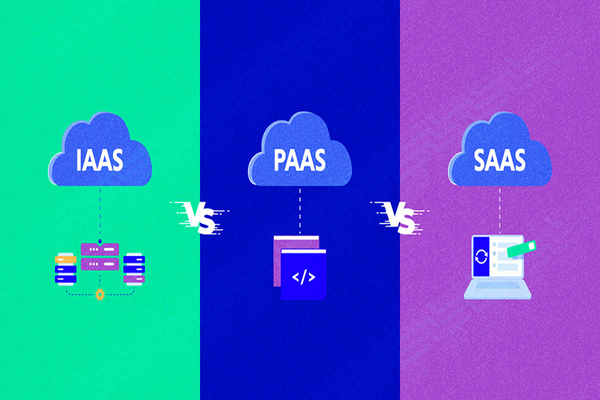
- Delivery Model: Includes services such as SaaS (Software as a Service), PaaS (Platform as a Service), and IaaS (Infrastructure as a Service).
- Network: The most critical bridge that allows data to flow between the Front-end and the Back-end.
- Management and Security: Specialized software layers used to monitor performance and protect data from cyberattacks.
Why is Cloud Application Architecture Important?
Building a systematic cloud architecture is not just a technical matter but a vital strategy for business survival. A loose structure can lead to wasted resources, data breaches, or system crashes during peak hours. Conversely, an optimized architecture helps businesses:
- Cost Optimization: Instead of making broad investments in physical hardware, businesses only pay for what they actually use.
- Faster Time-to-Market: Developers can leverage existing resources to build and deploy applications rapidly.
- Ensuring Compliance: A well-designed architecture integrates international security standards, helping businesses avoid legal complications related to user data.
- Scalability: The system can automatically scale resources up or down based on actual traffic, ensuring a consistently smooth user experience.
How Cloud Architecture Works
Fundamentally, cloud architecture operates based on Virtualization technology. Instead of using a physical server for a single task, virtualization allows a single physical server to be partitioned into multiple independent “virtual machines.”

Middleware acts as an orchestrator, managing communication between different components. When a user sends a request from the Front-end, the network transmits that request to the Back-end. Here, management software checks available resources and executes the task, then returns the results to the user via the application interface. This entire process occurs within milliseconds, thanks to the optimization of Load Balancing algorithms.
Benefits of Cloud Architecture
By correctly applying cloud architecture standards, businesses can achieve breakthrough benefits that traditional on-premise systems simply cannot match:
- Extreme Flexibility: Employees can work from anywhere, as long as they have an internet connection.
- Automatic Updates: Security patches and new features are automatically updated by the cloud provider, reducing the burden on internal IT teams.
- Disaster Recovery: Data is backed up across multiple geographical locations. If one data center encounters an issue, the system automatically switches to a backup center without disrupting service.
- Driving Innovation: Businesses can easily test new technologies like AI and Machine Learning on cloud platforms at a low cost before full-scale deployment.
Common Types of Cloud Application Architecture
Depending on usage needs, business scale, and industry specifics, experts will choose different models. Classification is typically based on deployment methods or the arrangement of internal application components.
By Deployment Models
The deployment model determines where the infrastructure is located and who has access to it. There are four main types:
- Public Cloud: Resources are shared among multiple users over the internet (e.g., AWS, Azure, Google Cloud). It offers low costs but limited customization.
- Private Cloud: Dedicated to a single organization, providing maximum security and control.
- Hybrid Cloud: Combines both Public and Private Clouds, allowing data and applications to move flexibly between the two environments.
- Multi-cloud: Utilizes services from multiple different cloud providers to avoid vendor lock-in.
By Architectural Patterns
Software design within the cloud is also diverse to meet specific performance requirements:
- Microservices: Breaking an application into independent services, making it easy to upgrade and maintain individual parts without affecting the entire system.
- Serverless: Developers only need to focus on writing code; server and resource management are entirely handled by the provider.
- Event-driven Architecture: The system reacts based on events (such as a mouse click or a new order), helping to optimize data processing flows.
What are Cloud-Native Applications?
Cloud-native applications are software designed and built from the ground up to fully leverage the advantages of cloud architecture. Unlike traditional applications moved to the cloud via “Lift and Shift,” cloud-native apps are typically packaged in Containers (such as Docker) and managed by orchestration systems (such as Kubernetes).
The characteristics of these applications include high modularity, self-healing capabilities, and Continuous Integration/Continuous Deployment (CI/CD). As a result, businesses can update new features daily or even hourly without system downtime, providing a seamless experience for customers.
Cloud architecture is not just a technical trend; it is the core foundation for businesses to modernize their operations. Choosing the right deployment model and application architecture type will help organizations optimize costs, secure data, and stay ready to adapt to any market fluctuations.
