


Blockchain technology has become one of the most important innovations of the 21st century, paving the way for cryptocurrencies, decentralized finance (DeFi), and countless other applications. The heart of this revolution is Blockchain Programming. So, what exactly is Blockchain programming, and why is it so highly sought after? This article will provide a comprehensive look into this promising field.
What is Blockchain Programming?
Blockchain Programming is the process of designing, developing, and deploying applications (DApps – Decentralized Applications) or core systems that operate on a Blockchain network. Essentially, it involves building Smart Contracts, security protocols, and the entire distributed architecture that ensures the immutability and transparency of the chain.

The main goal of Blockchain Programming is to create decentralized solutions, eliminating the need for a trusted intermediary. This work requires a combination of knowledge in traditional computer science, cryptography, and economics.
Popular Blockchain Programming Languages
The selection of a programming language is the first and most important step for any Blockchain project. Different languages serve different purposes, ranging from developing smart contracts to building the core of the blockchain.
- Solidity: The leading language for writing Smart Contracts on the Ethereum Virtual Machine (EVM). It is the most widely used language in the DeFi and NFT space.
- Rust: Known for its performance and memory safety, Rust is used to build major Blockchain platforms such as Solana, Polkadot.
- Go (Golang): Widely used to build high-performance core Blockchain systems like Hyperledger Fabric.
- C++: Being one of the original languages used to write Bitcoin, C++ is still utilized for projects requiring high performance and low-level control.
- JavaScript/TypeScript: These familiar languages are typically used to develop the user interface (Front-end) for DApps, connecting them with Smart Contracts.
Blockchain Programming Platforms
The world of Blockchain is not limited to a single type of network. Developers can choose to build their applications on various platforms, each having specific characteristics regarding access rights, speed, and security.
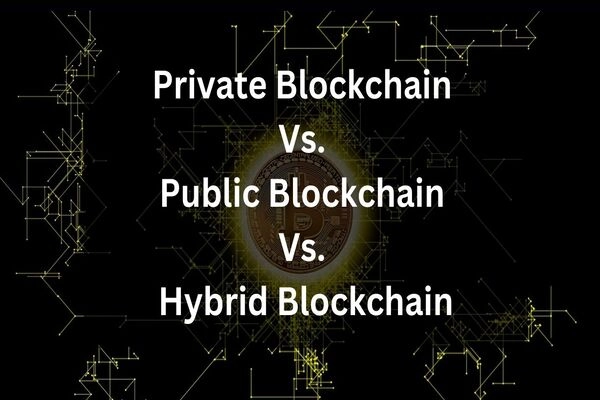
Clearly understanding the differences between these platforms is extremely important for a Blockchain Programmer because it determines the governance model, the degree of decentralization, and the target user group for the application. Below are the three main types of Blockchain platforms that developers commonly work with:
Public Blockchain
Public Blockchains (Public Chains) are open, fully decentralized networks where anyone can participate, read, send transactions, and validate blocks. These networks rely on consensus mechanisms (Proof-of-Work or Proof-of-Stake) and operate without the permission of any central authority.
The most notable examples are Bitcoin and Ethereum. Blockchain Programming on these platforms usually focuses on Smart Contracts and public DApps, such as decentralized exchanges (DEX) or NFT applications.
Private Blockchain
Private Blockchains (Private Chains) are networks controlled by one organization or a group of organizations. Participation rights (reading/writing/validating) are restricted, and only authorized users can gain access. Although they still use distributed ledger technology, they are often considered more centralized than Public Blockchains.
Platforms like Hyperledger Fabric are frequently used to build Private Blockchains in enterprise environments. Blockchain Programming in this context focuses on creating supply chain solutions and internal data management with high security and efficiency.
Hybrid Blockchain
Hybrid Blockchains (Hybrid Chains) are a combination of elements from both Public and Private Blockchains. They allow organizations to maintain privacy for internal operations (using a Private Blockchain) but can still interact with the public network when necessary, leveraging the transparency and security of the Public Blockchain.
Blockchain Programming on hybrid platforms requires skills to build bridges and protocols that allow data to flow securely between two different environments, a typical example being projects that combine personal (private) data with publicly verified transactions.
Types of Blockchain Developers
The Blockchain Programming market has diversified into many specialized roles due to the complexity of the technology. Depending on the scope of work, Blockchain programmers are mainly categorized into two principal groups:

Blockchain Software Developers
Blockchain Software Developers are the specialized group responsible for building decentralized applications (DApps) and user interfaces (UI/UX) for Blockchain systems. This is the team that works closest to the end-user, ensuring the application operates smoothly and intuitively.
Their work includes writing and testing Smart Contracts, developing APIs to connect Smart Contracts with the Front-end interface, and handling errors that arise during application operation. They use languages like Solidity, JavaScript/TypeScript, and DApp development frameworks such as Hardhat or Truffle.
Core Blockchain Developers
Core Blockchain Developers are those responsible for the architecture, security, and consensus mechanism of the Blockchain protocol itself. They work at the deepest platform layer, building and maintaining the source code of the chain.
They build consensus protocols, cryptographic algorithms, and network improvements (forks). This job requires deep knowledge of cryptography, data structures, and high-performance system programming languages like C++, Rust, or Go. This is the most crucial role in ensuring the security and scalability of the entire system.
Challenges in Blockchain Programming
Although appealing, Blockchain Programming comes with significant challenges that developers must overcome:
- Scalability Issue: Many early-generation Blockchains (like Ethereum) struggle with slow transaction processing speeds and high costs (gas fees) when the network is overloaded.
- Smart Contract Security: Smart Contracts are immutable; once deployed, any security flaw (bug) cannot be fixed and can lead to massive losses of cryptocurrency.
- Legal Regulations: The legal environment for Blockchain and digital assets is still developing and constantly changing, creating compliance barriers for DApps.
- Nascent Development Environment: Compared to traditional technologies, Blockchain Programming tools and frameworks are still relatively immature and change rapidly.
Effective Steps for Blockchain Programming
To successfully start or deploy a Blockchain Programming project, a systematic process must be followed:
- Identify Problem & Goal: Decide whether Blockchain is the best solution.
- Platform Selection: Choose between Public, Private, or Hybrid Blockchain (e.g., Ethereum, Solana, Hyperledger).
- Architecture Design: Establish the consensus mechanism, data structure, and network components.
- Smart Contract Development: Write the smart contract code (usually in Solidity), focusing on security.
- Testing and Security Auditing: This is an extremely critical step; auditing must be carried out by a third party to find security flaws.
- Interface Development (DApps): Build the Front-end and Back-end to interact with the Smart Contract.
- Deployment and Monitoring: Deploy the Smart Contract to the main network (Mainnet) and continuously monitor performance and security.
The Blockchain Programming Career: Present and Future
The demand for Blockchain Programming skills is skyrocketing globally. Large technology corporations, DeFi startups, banks, and governments are all seeking talent.
Present: Salaries for Smart Contract Developers and Core Blockchain Developers are among the highest in the technology sector. Blockchain Programming is not limited to the cryptocurrency field but also extends to supply chain management, healthcare, real estate, and elections.
Future: With the development of Web3, the Metaverse, and Decentralized Finance (DeFi), the role of the Blockchain programmer will become increasingly important. This profession is projected to continue maintaining high growth and be one of the “hottest” careers in the next decade.
Frequently Asked Questions About Blockchain Programming
What knowledge do I need to start Blockchain Programming?
You need a solid foundation in computer science, data structures, and at least one popular programming language (e.g., Python, JavaScript). Additionally, you need to learn basic cryptography, how Blockchain works (hashing, Merkle trees), and a Smart Contract language like Solidity.
How can I learn Blockchain Programming effectively?
The most effective way is to combine theory and practice. Start with online courses on Solidity and Ethereum, then participate in building small real-world projects, read open-source code, and contribute to the Blockchain community.
Is Blockchain Programming harder than traditional programming?
In one aspect, Blockchain Programming is harder because it requires an understanding of decentralized mechanisms, cryptography, and especially the immutability of Smart Contracts (bugs cannot be fixed). However, if you have a good programming foundation, the transition to Blockchain will be feasible.
Blockchain Programming is the key field shaping Web3 and the future digital economy. Despite facing challenges in scalability and security, the demand for Core and Software Developers remains strong. By mastering Solidity, Rust, and clearly understanding Public/Private platforms, you are positioning yourself at the forefront of this decentralized technology revolution. Start your programming journey today!
