


The rapid growth of cryptocurrencies has driven the increasing demand for Blockchain e-wallets. These wallets are essential tools that allow users to securely store, manage, and transact digital assets. However, to use them effectively, you need to understand each operational step as well as how to choose the right type of wallet. This article will provide a detailed guide on how to use blockchain wallets, recommend the best options available, and answer common questions from users.
What is a Blockchain e-wallet?
In the fast-expanding world of digital assets, a Blockchain e-wallet has become an indispensable tool for anyone looking to participate in the cryptocurrency ecosystem. Unlike traditional wallets used to hold cash or bank cards, a Blockchain e-wallet operates entirely in the digital environment. It stores your private key and public key, enabling you to manage your assets securely. Once you understand these fundamental concepts, you will find it much easier to explore different wallet types, learn how they work, and choose the most suitable option for your needs.

A blockchain e-wallet does not store coins in a physical form; instead, it stores the information that allows you to access assets that exist on the blockchain. Every transaction is signed using a private key, ensuring transparency, security, and immutability. This is why blockchain wallets have become essential tools for all decentralized financial transactions.
The basic structure of a blockchain e-wallet
Before exploring the different types of blockchain e-wallets, it is important to understand what components they are made of. This knowledge helps you assess their security levels, how assets are controlled, and how to avoid potential risks. The core elements that make up a blockchain wallet are closely tied to blockchain’s encryption mechanisms, creating an almost absolute level of safety for users.
In general, a blockchain e-wallet consists of four key components: the public key, private key, seed phrase, and the wallet interface. Each element plays a distinct role, yet all work together to ensure smooth operation and protect the user’s assets.
- Public Key: This functions as the “address” of the wallet and is used to receive funds. You can freely share your public key with others.
- Private Key: This is the most critical component, used to sign transactions and prove ownership of your assets. Losing your private key means permanently losing access to your wallet.
- Seed Phrase: A recovery phrase made up of 12–24 English words. It allows you to restore your wallet if you forget your password or switch devices. This phrase must never be shared with anyone.
- Wallet Interface: The application or software that enables you to perform actions such as sending, receiving, and checking your balance.
- Transaction Signing System: The mechanism that verifies ownership through the private key, ensuring all transactions are valid and cannot be forged.
Types of blockchain e-wallets
Once you understand the basic structure of a wallet, the next step is to explore the various types of blockchain e-wallets. Each type serves different purposes and offers its own level of security and convenience. Categorizing wallets helps users choose the right one depending on their needs—daily transactions, long-term storage, or managing multiple assets.

To make it easier to understand, we can categorize wallets into the most common groups: hot wallets, cold wallets, single-chain and multi-chain wallets, as well as centralized and decentralized wallets.
Hot wallets and cold wallets
The most fundamental classification is between hot wallets and cold wallets. The main difference lies in whether the wallet is connected to the Internet. This factor directly impacts both the security level and the convenience of using the wallet.
Hot Wallets
Hot wallets are wallets that remain connected to the Internet. This makes them extremely convenient for daily transactions but also more vulnerable to cyberattacks.
| Type | Description | Advantages | Disadvantages |
|---|---|---|---|
| Web Wallet | Operates directly on the browser; requires only an account, no installation needed | Easy to use, quick access | Vulnerable if the website is compromised |
| Desktop Wallet | Installed on a computer; the private key is stored directly on the device | More secure than web wallets | Risky if the computer is infected with malware or viruses |
| Mobile Wallet | Wallet application running on a smartphone | Convenient payments, QR support, fast processing | Risky if the phone is lost or if a fake app is downloaded |
Cold Wallets
Cold wallets are not connected to the Internet, making them extremely secure and ideal for long-term storage.
| Type | Description | Advantages | Disadvantages |
|---|---|---|---|
| Hardware Wallet | A compact physical device that stores private keys offline | Highest level of security, very hard to hack | Higher cost, slower operation compared to hot wallets |
| Paper Wallet | A printed sheet containing both private and public keys | Completely offline, immune to online attacks | Easy to lose, burn, or damage; difficult to preserve long-term |
Single-chain and Multi-chain Wallets
In addition to categorizing wallets based on their Internet connectivity, they can also be classified by the number of blockchains they support.
| Wallet Type | Description | Advantages | Disadvantages |
|---|---|---|---|
| Single-Chain Wallet | Supports only one blockchain (e.g., Bitcoin Core works exclusively with Bitcoin). | Stable and optimized for a single network. | Limited asset variety and restricted transaction options. |
| Multi-Chain Wallet | Supports multiple blockchains such as Ethereum, BNB Chain, Polygon, Solana, etc. | Convenient for users holding various tokens. | May be complex for beginners. |
Custodial and Non-Custodial Wallets
In the blockchain ecosystem, the way private keys are managed determines whether a wallet is custodial or non-custodial.
| Wallet Type | Description | Advantages | Disadvantages |
|---|---|---|---|
| Custodial Wallet | A third party, such as an exchange, manages the private key. | Easy to use with simple account recovery. | Users do not have full ownership of their assets. |
| Non-custodial Wallet | Users manage their own private key or seed phrase. | Complete control over assets. | Losing the seed phrase means losing access to the wallet forever. |
Pros and Cons of Blockchain Wallets
Whether you choose a hot wallet, cold wallet, custodial wallet, or non-custodial wallet, each type has its own strengths and limitations. Understanding these factors helps you make better decisions when navigating the digital asset market.
Before selecting a blockchain e-wallet to store your assets, carefully weigh the advantages and disadvantages below to strike the right balance between security and convenience.
Advantages of blockchain e-wallets:
- High security: Thanks to encryption and transaction signing with a private key.
- No intermediaries required: All transactions are verified on the blockchain.
- Transparency: Transaction history is easy to audit.
- Wide range of options: From hot wallets to cold wallets, and from custodial to non-custodial solutions.
- Convenience: Hot wallets enable transactions anytime, anywhere.
Disadvantages of blockchain e-wallets:
- Losing your private key means losing your assets — this is the biggest risk.
- Hot wallets are more vulnerable to hacks because they are connected to the Internet.
- Cold wallets incur costs and require more complex procedures.
- Non-custodial wallets can be difficult for beginners since users must manage everything themselves.
How to use a blockchain e-wallet
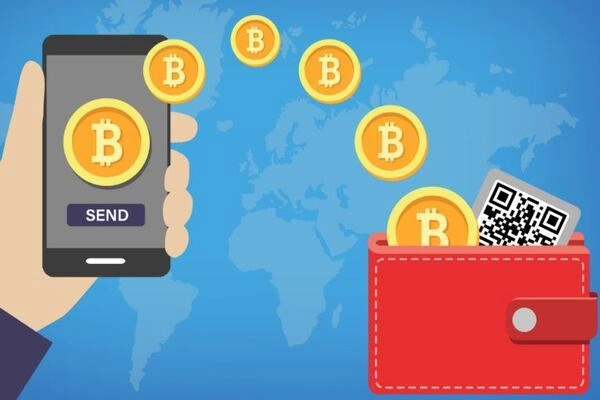
To start using a blockchain e-wallet, users should follow several basic steps: create an account, log in, create a wallet for each coin type, then receive and withdraw funds. Each step plays a specific role and requires careful attention to ensure the wallet’s security. Below is a detailed guide for beginners.
Creating a Blockchain Wallet Account
First, choose a reputable wallet platform such as Blockchain.com, Trust Wallet, MetaMask, or Coin98. Each platform offers different features, but all require an initial account setup.
Typically, the account creation process includes:
- Registering with your email and verifying it.
- Creating a strong password with special characters and at least 8–12 characters in length.
- Saving your seed phrase of 12–24 words — this is the key to recovering your wallet.
- Ensuring the seed phrase is written down on paper, not screenshot, and not stored on any Internet-connected device.
Once these steps are completed, your wallet will be created and ready to use.
Logging Into Your Account
After your account is set up, you can log in using the email and password you registered. Some wallets also support login via PIN codes, app passwords, or biometric authentication (fingerprint or Face ID) on mobile devices.
To further enhance the security of your blockchain e-wallet, it’s recommended to enable 2FA (Two-Factor Authentication). This additional security layer requires a verification code from an app such as Google Authenticator or a code sent via SMS each time you log in.
Creating a Bitcoin Wallet
Most blockchain wallets support multiple digital assets. If you need to use Bitcoin, simply follow these steps:
- Select “Add Wallet” or “Create Bitcoin Wallet.”
- The wallet will automatically generate a Bitcoin address, which is a string of letters and numbers.
- You can name the wallet to make it easier to manage if you have multiple wallets.
- Each time a new wallet is created, the system generates a corresponding wallet address and private key for you to manage your Bitcoin assets.
Receiving Bitcoin
To receive Bitcoin, all you need to do is share your Bitcoin wallet address with the sender. There are two common methods:
- Copy and share the alphanumeric address.
- Use a QR code that the sender can quickly scan.
Notes:
- Each coin uses a different address format. Never send coins to the wrong network.
- Some wallets support generating multiple receiving addresses (HD Wallet), but the assets still accumulate into the same main wallet.
- After the transaction is sent, you can check its confirmation status on the blockchain.
Withdrawing Bitcoin from Your Wallet
To send Bitcoin to someone else, follow these steps:
- Select the Send / Transfer function.
- Enter the recipient’s Bitcoin address.
- Enter the amount of Bitcoin you want to send.
- Choose the transaction fee — higher fees result in faster confirmations.
- Confirm the transaction using your password, 2FA code, or digital signature.
Once submitted, the transaction will be included in a block by the Bitcoin network and will be publicly visible on the blockchain.
Best Blockchain E-Wallets Today
There are many different wallet platforms available today, each suited to specific needs—beginners, long-term investors, traders, or DeFi users. When choosing a blockchain e-wallet, you should consider security, convenience, and the supported ecosystem.
Some popular wallets commonly used include:
- Trust Wallet: Multi-chain support, user-friendly interface, suitable for everyone.
- MetaMask: Ideal for Ethereum users, DeFi activities, and NFTs.
- Coin98 Wallet: Supports multiple blockchains with built-in features like swap and lending.
- Ledger Nano / Trezor: High-security hardware wallets designed for long-term investors.
- Blockchain.com Wallet: Easy to use, intuitive, and backed by a long-standing reputation.
Each wallet comes with its own strengths and weaknesses. Beginners should choose hot wallets for easier operation, while large investors should rely on cold wallets to maximize security.
Important Notes When Using Blockchain E-Wallets
While blockchain e-wallets offer great convenience, they also carry risks if users are careless with security. Therefore, you should always keep in mind several essential precautions:

- Never share your seed phrase or private key with anyone.
- Avoid logging into your wallet on unfamiliar devices or public Wi-Fi networks.
- Always enable two-factor authentication (2FA).
- For hot wallets, only keep the amount of crypto you need for daily transactions.
- Store the majority of your assets in a cold wallet.
- Double-check the recipient’s address before sending coins to avoid mistakes.
- Regularly update your wallet to the latest version to ensure optimal security.
- These precautions help minimize the risk of asset loss or cyberattacks.
Frequently Asked Questions About Blockchain E-Wallets
To help new users better understand how blockchain e-wallets work, here are the most common questions people ask:
- Does a blockchain e-wallet store real coins?
No. Your coins always remain on the blockchain. The wallet only stores your private keys, which grant control over those assets.
- Will I lose my wallet if I lose my phone?
No, as long as you still have your seed phrase. You can simply restore your wallet on another device.
- Are hot wallets or cold wallets more secure?
Cold wallets are more secure because they don’t connect to the Internet, making them far harder to hack. Hot wallets, however, are more convenient for everyday transactions.
- Can I use multiple wallets at the same time?
Yes. You can manage your assets across multiple wallets depending on your needs—for example, using a hot wallet for trading and a cold wallet for long-term storage.
- Can a blockchain wallet be locked like a bank account?
No. With a non-custodial wallet, no third party has the authority to freeze or lock your account. You have full control over your assets.
- Can I recover coins sent to the wrong address?
In most cases, no—especially if the coins were sent to the wrong network or an incorrect address. That’s why verifying the address before sending is critically important.
A blockchain e-wallet is an essential tool for securing and managing digital assets in the modern technological era. By understanding how to use it correctly, choosing the right wallet type, and following proper security practices, you can protect and manage your assets far more safely and effectively. Hopefully, this guide has helped you understand the usage process, key precautions, and answers to the most common questions.
