


Blockchain is emerging as a critical technology platform helping businesses optimize operations, enhance transparency, and strengthen data security. Its utility is no longer confined to finance, extending widely into supply chains, healthcare, energy, and data management. Thanks to its decentralized and tamper-proof storage capabilities, Blockchain applications in business are pioneering a revolutionary path for digital transformation, creating more efficient and reliable automation processes across various sectors.
Blockchain applications in business
In recent years, Blockchain applications in business have emerged as one of the most significant technology trends, creating opportunities to innovate operational models, management systems, and product development. Beyond cryptocurrencies, Blockchain is now applied across various fields such as finance, healthcare, education, energy, supply chain management, and data governance. Its strengths-decentralized structure, transparency, immutability, and real-time verification—enable businesses to optimize both internal workflows and customer experiences.

In the following sections, we will explore the key advantages and specific Blockchain applications in business across various fields—from supply chain management to electronic voting—helping organizations better understand the true potential of this technology.
Advantages of using Blockchain
Before diving into each application, businesses need to understand why Blockchain is becoming a preferred choice.
- Blockchain is built on a structure of interconnected and immutable data blocks.
- This provides a high level of transparency and security.
- Smart contracts enable automated processes.
- By removing many intermediaries, Blockchain helps reduce costs and shorten processing time.
From this foundation, a wide range of new solutions has been developed to support different business sectors.
Efficient supply chain management
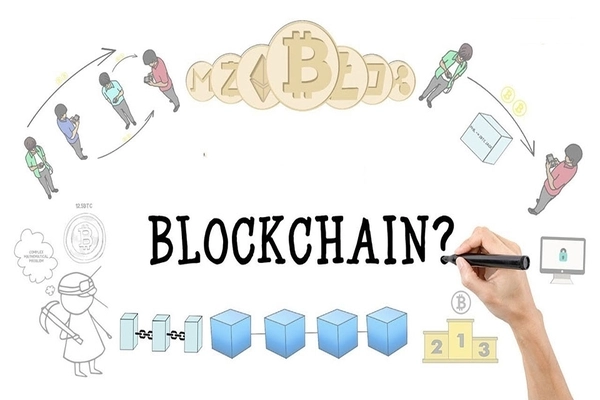
Supply chain management is one of the most common Blockchain applications in business, especially in industries such as food, fashion, pharmaceuticals, and logistics. Blockchain allows every piece of data-from production and packaging to transportation and final delivery-to be recorded and verified accurately.
With this system, businesses can:
- Track product origins accurately in real time
- Reduce counterfeit and imitation goods
- Optimize inventory management
- Strengthen customer trust
A notable example is Walmart and IBM, which have applied Blockchain to their food supply chains, allowing them to trace product origins within seconds instead of days.
Identity and data security
Amid the rise of cyberattacks, Blockchain helps businesses enhance the security of user identities and critical data. Its decentralized data storage makes it difficult for hackers to compromise the entire system.
Businesses can apply Blockchain for:
- Digital identity management
- Secure account authentication
- Preventing data fraud
- Protecting customer privacy
Instead of relying on centralized systems that are vulnerable to breaches, Blockchain allows enterprises to eliminate data-loss risks and improve control over internal access.
More accurate analysis and prediction
For data-driven businesses, Blockchain offers major advantages in collecting and verifying input data. Because the data cannot be altered, analytical results and prediction models become far more accurate.
Applications include:
- Analyzing customer behavior based on reliable data
- Optimizing marketing strategies
- Forecasting market demand
- Enhancing analytics by combining AI and Blockchain
When data is a valuable asset, Blockchain becomes a key tool for ensuring data integrity, thereby improving the quality of business decisions.
Applications in healthcare
Healthcare is one of the sectors where Blockchain delivers significant value. Electronic medical records stored on Blockchain are highly secure, while giving patients full control over which doctors or hospitals can access their information.

Healthcare businesses can leverage Blockchain to:
- Securely store electronic medical records
- Synchronize data across medical facilities
- Track patient treatment processes
- Prevent health insurance fraud
This technology not only protects patient privacy but also helps the healthcare sector reduce data management costs and improve treatment efficiency.
Applications in the energy sector
In the energy industry, Blockchain supports the management of electricity distribution, energy trading, and the optimization of smart grid systems.
Some practical applications include:
- Peer-to-peer (P2P) energy trading among households with solar power systems
- Transparent tracking of electricity consumption
- Managing and optimizing smart grid operations
- Supporting the development of renewable energy
These capabilities help reduce operational costs and enhance the overall efficiency of energy distribution.
Land-use registration
Many countries have adopted Blockchain to manage land-use rights, helping to:
- Reduce document forgery
- Maintain a transparent record of land transactions
- Minimize ownership disputes
- Accelerate legal and administrative procedures
With all data recorded and verified on Blockchain, proving ownership becomes simpler and far more reliable.
Smart Contracts
Smart contracts are among the most important Blockchain applications in business. These contracts automatically execute once predefined conditions are met, eliminating the need for intermediaries.
Benefits:
- Reduce legal costs and processing time
- Automate payment, signing, and reconciliation workflows
- Minimize disputes thanks to transparent contracts
- Improve overall business management efficiency
Smart contracts are particularly suitable for industries such as finance, insurance, real estate, and e-commerce.
Electronic voting and online polling
Blockchain provides a transparent, fraud-resistant, and highly secure solution for electronic voting. Businesses can use it for:
- Internal voting
- Board of directors elections
- Employee feedback collection
- Important organizational surveys
Voting data is stored immutably, ensuring fairness and reliability throughout the entire process.
Challenges in implementing Blockchain in businesses
Despite its many advantages, implementing Blockchain is not always easy. Companies may encounter several difficulties such as:

- High initial investment costs
- A shortage of technology-skilled personnel
- Difficulties integrating Blockchain with legacy systems
- Incomplete legal frameworks and standardization
- Processing performance that may be slower than traditional systems
However, with the right strategy and appropriate technology choices, businesses can overcome these challenges and fully leverage the potential of Blockchain.
Blockchain delivers substantial practical value to enterprises—from supply chain management and data security to applications in healthcare, energy, and smart contracts. Despite existing challenges in cost, workforce, and regulations, this technology remains a key driver for improving operational efficiency and creating competitive advantages. Businesses that adopt it effectively will gain a strong edge in the future digital landscape.
