


In the context of powerful digital transformation, the two most prominent technologies acting as the “backbone” of data infrastructure are Blockchain and Cloud Computing. While Cloud Computing provides flexible computing power and storage, Blockchain offers absolute transparency and security. Understanding the nature and coordination between these two platforms not only helps businesses optimize costs but also creates breakthroughs in business models.
1. What are Blockchain and Cloud Computing?
To understand why these two technologies are frequently placed side by side, we need to deconstruct each concept from basic to advanced levels. In reality, Blockchain and Cloud Computing are two mutually supportive extremes: one focuses on the centralization of resources to achieve performance (Cloud), while the other focuses on decentralization to achieve trust (Blockchain).
1.1. What is Blockchain?
Blockchain is a data storage technology where information is kept in blocks linked together using cryptography. The most important characteristics of Blockchain are decentralization and immutability. Instead of storing data on a single server, Blockchain distributes data across a network of thousands of computers (nodes).

Once data has been recorded onto the chain, no one can modify or delete it without the consensus of the entire network. This creates an absolutely reliable “digital ledger” for financial transactions, smart contracts, and identity management.
1.2. What is Cloud Computing?
Cloud Computing is the delivery of computing services-including servers, storage, databases, networking, and software-over the Internet (“the cloud”). Instead of having to invest in expensive physical hardware and maintain on-premises data centers, users can rent resources from providers such as AWS, Google Cloud, or Microsoft Azure.
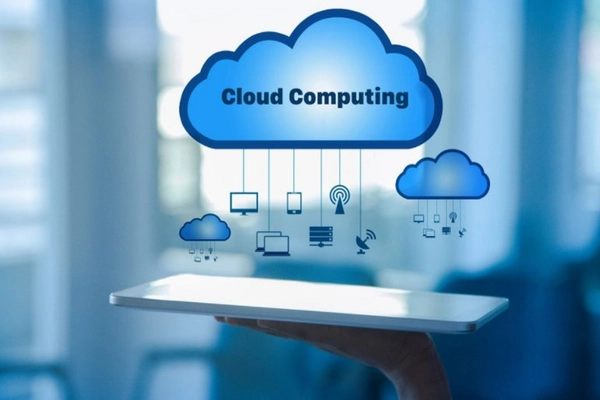
Cloud Computing offers extreme scalability, allowing businesses to instantly scale resources up or down depending on their usage needs.
1.3. Differences between Blockchain and Cloud Computing
Although both are related to data storage and processing, they have core differences in terms of architecture and purpose:
| Criteria | Cloud Computing | Blockchain |
|---|---|---|
| Architectural Model | Centralized: Resources are located in large data centers of the provider. | Decentralized: Data is distributed across a network of many independent nodes. |
| Data Integrity | Can be changed, edited, or deleted by administrators or authorized users. | Immutable: Data is permanent; it cannot be modified or deleted once recorded on the chain. |
| Operational Priority | Performance: Optimized for fast processing speeds and massive storage capacity. | Security: Prioritizes transaction validation and transparency; speed is usually slower. |
| Main Purpose | Providing flexible computing and storage resources on demand. | Building trust and maintaining an unforgeable ledger. |
2. Should you use Blockchain or Cloud Computing?
Choosing between Blockchain and Cloud Computing is not a “pick one or the other” problem, but rather a matter of identifying which values your business case needs to prioritize. If you are operating an e-commerce application that needs to process millions of transactions per second at a low cost, Cloud Computing is the top choice. Conversely, if you need to build an electronic voting system or product traceability where transparency is a vital factor, Blockchain will play the key role.
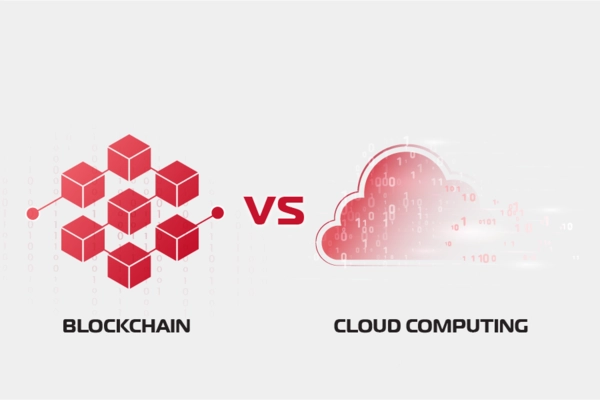
Most modern businesses today use Cloud Computing as an infrastructure foundation to run conventional services, and integrate Blockchain as a security layer or transaction layer to enhance credibility.
3. Is it possible to combine Blockchain and Cloud Computing?
The answer is: Absolutely, and this is an inevitable trend. This concept is commonly referred to as BaaS (Blockchain as a Service). In this model, cloud service providers allow customers to build, host, and use their applications, smart contracts, and functions on a Blockchain platform managed by the cloud provider.
This combination addresses the biggest drawback of Blockchain: the complexity of hardware installation and operation. By moving Blockchain to the cloud, setting up a network of nodes becomes as simple as clicking a button on an AWS or Azure dashboard.
4. Benefits of combining Blockchain and Cloud Computing
When these two “giants” join forces, they create an ecosystem that is more powerful than any single technology. This combination delivers four strategic benefits:
- Superior Scalability: The Cloud helps Blockchain networks overcome barriers regarding storage capacity and bandwidth.
- Reduced Capital Expenditure (CAPEX): Businesses do not need to purchase physical servers to run nodes, saving billions in initial infrastructure costs.
- Enhanced Security: The Cloud provides powerful firewall layers and anti-DDoS protection, while Blockchain protects the integrity of the data within.
- Rapid Deployment: Utilizing available templates on the cloud helps shorten Blockchain project development time from several months to just a few weeks.
5. Pros and Cons of Integrating Blockchain with the Cloud
Despite bringing many benefits, any combination has two sides. Understanding the advantages and disadvantages will help businesses develop better backup strategies.
Pros:
- High Availability: Cloud providers commit to uptimes of up to 99.99%, ensuring the Blockchain network is always operational.
- Ease of Management: Monitoring tools on the Cloud help track the health of blocks extremely effectively.
- Flexible Testing: Easily create Sandbox environments to test smart contracts.
Cons:
- Dependency: If the cloud provider encounters a major incident or changes its policies, your Blockchain network could be affected.
- Privacy Issues: Storing sensitive data on a Public Cloud remains a concern for specialized sectors such as banking or government.
6. Outstanding Features of Blockchain and Cloud Computing
To gain a deeper understanding of the power of this alliance, we need to look at the technical features they bring. This convergence creates unique characteristics:
- Smart Contracts: Stored on the Cloud but executed based on Blockchain logic, helping to automate processes without intermediaries.
- End-to-end Encryption: Data is encrypted before being uploaded to the cloud and can only be unlocked with a private key on the Blockchain.
- Provenance: Every data change on the Cloud leaves an indelible trace on the Blockchain.
7. Practical Applications of Combining Blockchain and Cloud Computing
In reality, Blockchain and Cloud Computing are changing the way many industries operate. Here are the most typical applications we see today.
7.1. Building Blockchain Validation Nodes on the Cloud
Maintaining a full node on the Ethereum or Bitcoin network requires large hard drive capacity and a continuous internet connection. Cloud Computing allows users to rent high-configuration Virtual Private Servers (VPS) to run these nodes stably, making the decentralized network more robust without the need to own physical hardware.

7.2. Creating Cryptocurrency Exchanges
Major cryptocurrency exchanges like Binance or Coinbase utilize cloud infrastructure to process millions of trading orders per second (leveraging the speed of the Cloud) while using Blockchain to execute deposit and withdrawal transactions (leveraging its security).
7.3. Building Blockchain Applications (BaaS)
Enterprises like Microsoft offer the Azure Blockchain Service to help food companies track the provenance of pork and vegetables from farm to table. All journey data is stored on the Cloud for fast access but is validated by Blockchain to prevent fraud.
7.4. Decentralized Applications (DApps)
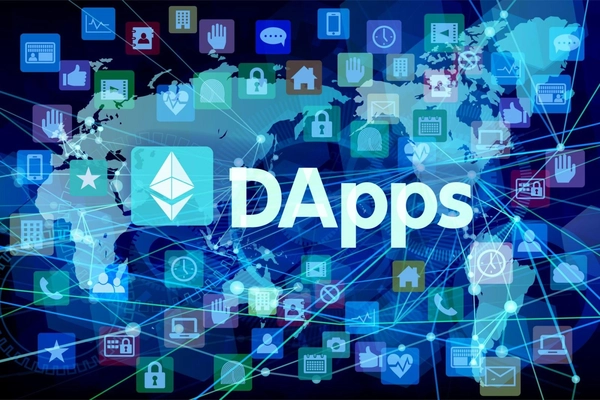
DApps require a place to host the user interface (Frontend) and multimedia resources. Cloud Computing serves as the hosting location for these components, while critical business logic is pushed for execution on the Blockchain network (Decentralized Backend).
7.5. Applications in IoT (Internet of Things)
In IoT systems, billions of sensor devices continuously send back data. Cloud Computing handles this massive volume of information (Big Data), while Blockchain ensures that the data from these sensors is not tampered with, helping smart home or smart city systems operate safely.
The combination of Blockchain and Cloud Computing is not just a temporary technology trend, but the foundation for Web 3.0 and the future digital economy. The Cloud provides the wings of performance, while Blockchain provides the anchor of trust.
