


In the era of the Fourth Industrial Revolution, the explosion of Artificial Intelligence (AI) is no longer a science fiction concept but has become the “backbone” for business survival. AI in Manufacturing is transforming pure mechanical assembly lines into intelligent systems capable of self-thinking and optimization. This article will delve into how AI is reshaping the global industrial landscape.
What is AI in Manufacturing?
At its core, AI in Manufacturing is the application of machine learning algorithms, artificial neural networks, and big data processing to simulate human intelligence within industrial processes. Instead of merely operating according to pre-programmed scripts, AI systems have the ability to learn from historical data, recognize complex patterns, and make independent decisions to improve operational workflows.
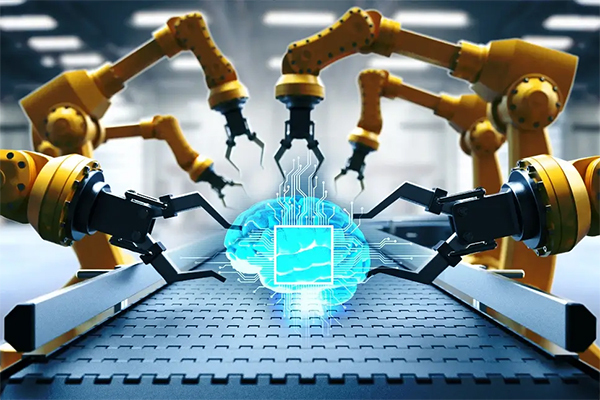
It does not stop at robotic arms but also resides in the “brain” of the factory—where data from IoT sensors is analyzed in real-time to create a self-adapting and flexible manufacturing ecosystem.
Applications of AI in Manufacturing
Integrating AI into the factory floor is not just a trend but a revolution in operational methods. Below are the practical applications bringing the most significant changes to businesses today:
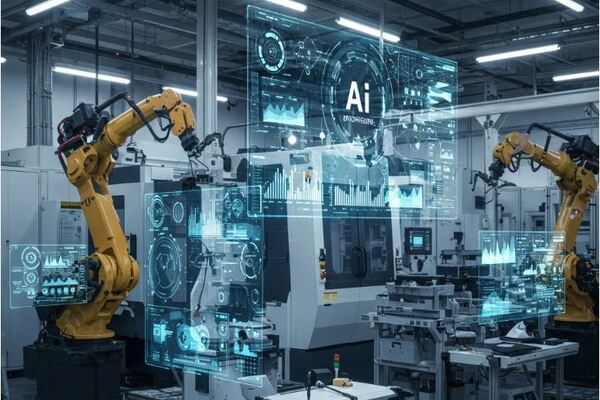
- Predictive Maintenance: This is one of the most vital applications. Instead of waiting for a machine to break down or performing wasteful periodic maintenance, AI uses data from vibration and temperature sensors to accurately predict when a component is about to fail. This helps minimize unplanned downtime to the lowest possible level.
- Quality Control: Using Computer Vision, AI can inspect thousands of products per minute with precision far exceeding the human eye. The system can detect microscopic scratches or assembly errors that the naked eye might easily miss, ensuring the defect rate of outgoing products is nearly zero.
- Supply Chain Optimization: AI analyzes market fluctuations, weather, and geopolitical situations to forecast customer demand. From there, businesses can optimize inventory levels and scientifically plan raw material procurement, avoiding supply chain disruptions or surpluses.
- Intelligent Automation: Unlike traditional robots that only perform repetitive tasks, AI-integrated robots can interact safely with humans (Cobots) and self-adjust their behavior when production processes change. They can learn to pick up objects of different shapes without needing to be reprogrammed from scratch.
- Training and Support: Virtual assistant systems and Augmented Reality (AR) combined with AI help train new workers quickly. When incidents occur, AI can immediately provide repair instructions based on massive technical databases, reducing dependence on high-level experts.
Benefits of AI in Manufacturing
Investing in AI in Manufacturing delivers both direct and indirect economic value, helping businesses build a sustainable competitive advantage in the market.
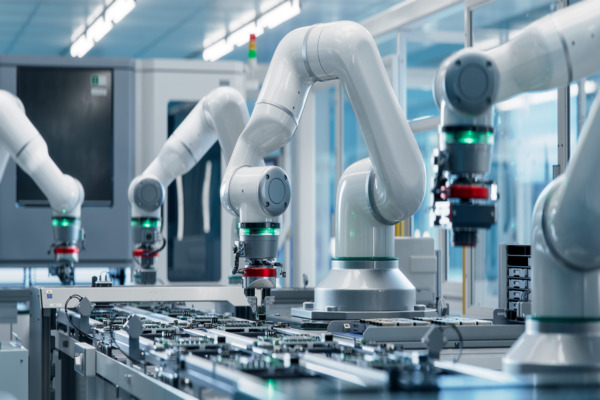
- Reduced Operational Costs: By optimizing energy consumption and minimizing raw material waste, AI directly cuts production costs. Additionally, reducing machine failures saves millions of dollars in emergency repair expenses.
- Fast and Accurate Decision-Making: Massive amounts of data from the factory are processed by AI in an instant, providing managers with visual reports and strategic suggestions. Instead of relying on intuition, all production decisions are now based on “numbers that speak.”
- Optimal Supply Chain Management: AI helps predict risks in transportation and logistics. Businesses can select the most optimal delivery routes, saving fuel and ensuring goods reach customers on time under all conditions.
- Enhanced Factory Performance: Overall Equipment Effectiveness (OEE) is significantly improved as AI eliminates “bottlenecks” in the production line. Machinery operates at its optimal capacity without causing overloads or breakdowns.
- Improved Labor Safety: AI monitors the work environment through cameras to detect unsafe behaviors (such as not wearing protective gear) or hazardous areas with fire and explosion risks, providing timely warnings to protect workers’ lives.
- Increased Product Quality: The stability of AI helps maintain consistent quality standards across every batch. This not only enhances brand reputation but also reduces costs associated with returns and handling defective products.
Advantages of Applying AI in Manufacturing
The greatest advantage of AI in Manufacturing is its scalability and continuous learning. The longer the system operates and the more data it collects, the smarter and more accurate the artificial intelligence becomes.
Compared to human labor, AI never tires and can operate 24/7 with absolute stability. Furthermore, AI enables businesses to achieve Mass Customization—something that is traditionally very difficult and costly to implement using manual methods.
Challenges in Applying AI in Manufacturing
While the potential is enormous, implementing AI is not always a path strewn with roses:
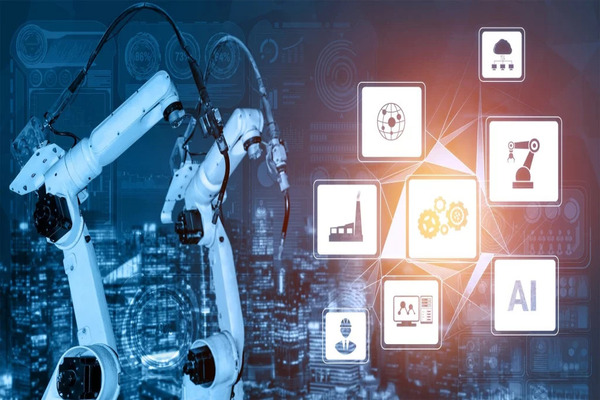
- High Initial Investment: AI hardware systems, sensors, and software require significant capital.
- Talent Shortage: Finding engineers who understand both manufacturing and AI is a daunting challenge.
- Data Quality: AI is only as smart as the data it is fed. Many older factories have fragmented data systems, making it difficult to train models.
- Security Issues: As factories connect to the internet, the risk of cyberattacks and the theft of technological secrets increases.
Implementation Process of AI in Manufacturing
To apply it successfully, businesses need a systematic roadmap:
- Define Objectives: Do you want to reduce product defects or downtime? Start with a specific problem.
- Data Collection: Digitize processes and install sensors to gather raw data.
- Select AI Models: Collaborate with solution providers to build suitable algorithms.
- Pilot Testing: Implement on a small line to evaluate effectiveness and make adjustments.
- Scaling: Once positive results are achieved, proceed to apply it across the entire factory.
Future Trends of AI in Manufacturing
In the near future, we will see the rise of Generative AI in product design, where AI suggests optimized new material structures. Additionally, the Edge AI trend (processing data directly on devices without sending it to the cloud) will increase machine reaction speeds to milliseconds. Notably, the combination of AI and Digital Twins will allow managers to simulate the entire factory in a virtual environment before making any real-world changes.
AI in Manufacturing is no longer an option but a mandatory requirement for businesses to avoid being left behind in the global industrial race. It has evolved from a mere support tool into a key factor shaping the competitive edge of modern enterprises. Despite challenges regarding costs and human resources, the benefits of cost optimization, quality enhancement, and safety are undeniable. Investing in AI is an investment in a smart, sustainable, and breakthrough manufacturing future.
