


ERP Migration is the process of moving from an outdated ERP system to a modern platform that better supports business growth and digital transformation. As technology evolves and operations expand, legacy systems often face limitations in performance, security, and integration. ERP Migration helps businesses improve efficiency, streamline management, and optimize operations effectively.
What is ERP Migration?
The concept of ERP Migration is central to any organization’s digital transformation. To best prepare for this transition, businesses must understand its core nature and the common deployment models used today.
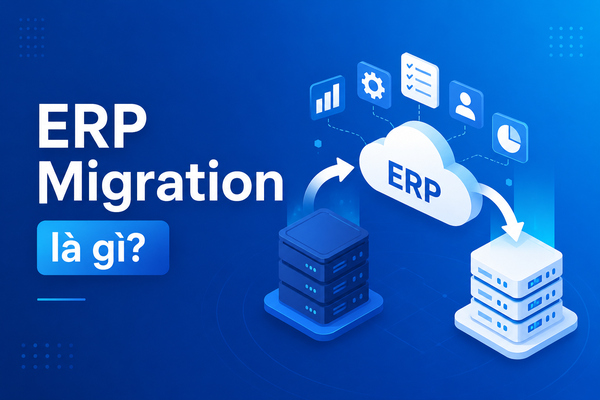
Core Definition
ERP Migration is the process of moving data, workflows, and management functions from a legacy ERP system (or fragmented management tools) to a more advanced ERP platform. This process is not merely about copying data; it is a comprehensive restructuring of the information infrastructure.
Common Migration Types
- On-premise to Cloud: Moving from physical on-site servers to a cloud computing platform to increase flexibility.
- Cloud to Cloud: Changing cloud service providers to optimize costs and access better features.
- Version Upgrade: Moving from an older ERP version to the latest release from the same provider to stay current with technology.
Why an ERP Migration Strategy is Vital
Changing a core management system is a long-term strategic decision. Establishing a clear direction not only protects data assets but also drives significant breakthroughs in operational efficiency and competitive advantage.
1. Optimizing Operational Performance
New ERP systems eliminate cumbersome manual processes through high-level automation. Real-time data processing allows departments to coordinate seamlessly, minimizing errors and boosting employee productivity.
2. Enhancing Information Security
Modern ERP platforms, especially Cloud ERP, are equipped with international security standards. Systems receive automatic patches, end-to-end encryption, and strict access controls to defend against cyber threats.
3. Flexible Scalability
Legacy systems are often limited by capacity and rigid architecture. As a business opens new branches, expands product lines, or enters international markets, a new ERP provides the scalability and seamless integration with third-party applications required for growth.
Steps to Build an ERP Migration Strategy
A sound strategy serves as a compass, ensuring the business stays on track and avoids wasting resources. This preparation phase requires serious commitment from both leadership and technical teams through several key stages.
- Assessment of Current Systems: Businesses need to audit all existing hardware infrastructure, software, and operational processes. Clearly identify bottlenecks, missing features, and specific reasons why the legacy system no longer meets growth requirements.
- Defining Goals and Budget: Implementation goals should be quantified with clear metrics, such as reducing reporting time by 30% or optimizing warehouse operational costs by 20%. Simultaneously, the budget must be planned in detail, including licensing fees, implementation costs, and a risk contingency fund.
- Establishing a Dedicated Project Team: An ERP migration project requires a cross-functional team. This includes a Project Manager, IT specialists, representatives from key departments (Accounting, HR, Logistics), and external solution consultants.
ERP Migration Implementation Plan
Once a strategy is in place, businesses must crystallize it into a detailed action plan with specific milestones. Executing according to a technical roadmap helps control progress and ensures data integrity throughout the transition.
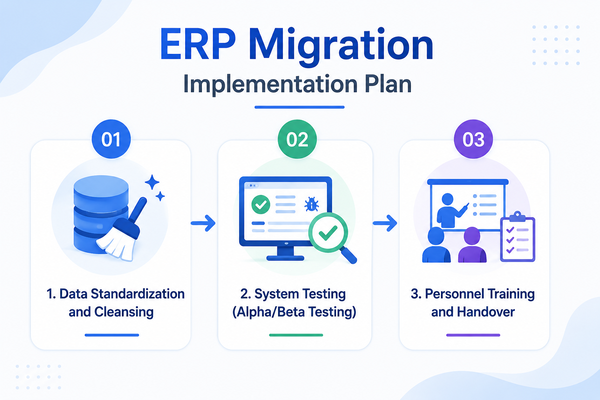
1. Data Standardization and Cleansing
Data from legacy systems often contains duplicates, errors, or outdated information. Before migrating to the new system, the technical team must filter out “junk” data and standardize formats for customer and material codes to ensure absolute accuracy.
2. System Testing (Alpha/Beta Testing)
Before going live, the new system must undergo rigorous testing cycles. The project team will simulate real-world operational scenarios to detect system bugs, check processing speeds, and measure the infrastructure’s load capacity.
3. Personnel Training and Handover
People are the deciding factor in the success or failure of a new system. Organizations need to conduct detailed, hands-on training sessions for each user group based on their specific roles, while simultaneously developing intuitive internal operating manuals.
Tips and Best Practices for ERP Migration
To optimize timelines and minimize business disruption risks, enterprises should adopt globally proven standards. The following practical experiences will help ensure a smoother transition process.
- Adopt a Phased Approach: Instead of switching the entire system at once (the “Big Bang” approach), businesses should consider a phased approach. For instance, deploying the Accounting module first, followed by Logistics and Production, can significantly reduce operational pressure.
- Continuous Data Backup and Security: Throughout the migration process, data backups must be performed daily or at every technical milestone. This ensures the business always has a restoration plan to return to the original state should an unexpected incident occur.
- Maintain Transparent Internal Communication: Clearly communicate the roadmap, benefits, and upcoming changes to all employees. When staff understand the “why” behind the change, they are more likely to cooperate proactively, reducing resistance and adapting faster to the new work environment.
How to Choose an ERP Migration Service Provider
A partner accounts for up to 50% of an ERP migration project’s success. Choosing a service provider should not be based on price alone but on a comprehensive evaluation of their expertise and long-term commitment.
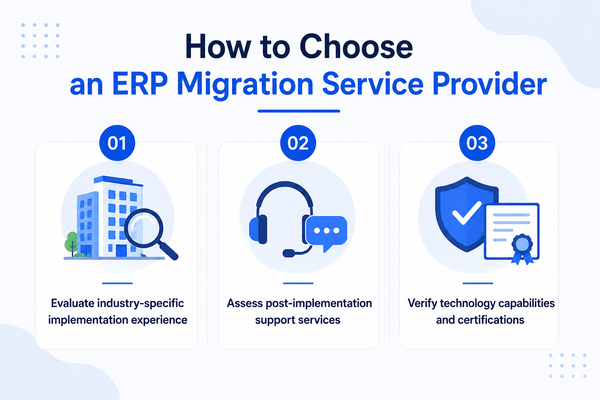
- Consider Industry-Specific Experience: Every sector (Manufacturing, Retail, Logistics) has unique process characteristics. Businesses should prioritize providers with a track record of successful projects in their specific field to receive the most optimized solution consulting.
- Evaluate Post-Implementation Support: The transition does not end the moment the system goes live. Choose a partner with clear maintenance commitments, 24/7 technical support, and a defined upgrade roadmap to grow alongside your business.
- Verify Technical Competency and Certifications: The provider’s expert team should possess international professional certifications from major ERP vendors (such as SAP, Oracle, or Microsoft). This proves they have the capability to handle complex technical challenges and optimize the system effectively.
Common Challenges in ERP Migration
Despite the immense benefits, the migration process carries inherent risks that can extend timelines and drive costs beyond control. Identifying these challenges early helps businesses proactively build prevention plans.
- Data Loss or Discrepancies: When converting data table structures from the legacy system to the new one, the risk of lost or inaccurate information is high. This can disrupt financial reporting or corrupt customer transaction histories.
- Resistance to Change: Employees accustomed to the interface and operations of the old system often hesitate to learn something new. Without a solid Change Management strategy, businesses may face subtle resistance, hindering the effective utilization of the new ERP.
- Unplanned Cost Overruns: Hidden costs-such as additional feature licensing, deep configuration customization, or hiring specialists to fix data errors-can easily cause the project budget to exceed initial estimates significantly.
ERP Migration is a process that demands serious investment in strategy, resources, and change management. When executed correctly, it is a transformative step that helps businesses build a solid technological foundation to enhance their stability in the digital age.
