



In the era of digital transformation, speed is the vital competitive advantage for any enterprise. To bring an idea from a draft to a finished software product running in a real-world environment, businesses no longer rely solely on traditional methods. The combination of Cloud Computing and DevOps processes has created a revolutionary concept: Cloud DevOps. This is not just a technical trend but a key that helps development and operations departments function as a unified entity, optimizing performance and minimizing risks.
What is Cloud DevOps?
To clearly understand what Cloud DevOps is, we first need to separate the two concepts of Cloud and DevOps while placing them in a symbiotic relationship. DevOps is a culture—a set of practices that combines software Development and system Operations. When this entire process is moved to a cloud computing environment, we have Cloud DevOps. This involves leveraging the flexible resources, infinite scalability, and automation services of the Cloud to implement DevOps principles to their fullest extent.
The core aspects that define Cloud DevOps include:
- The Convergence of Technology: Cloud provides the Infrastructure, while DevOps provides the Process. This combination ensures that software deployment is no longer limited by physical hardware.
- Total Automation: From coding and testing to release, every step is automated through scripts and cloud-based tools.
- A Culture of Continuous Improvement: Cloud DevOps promotes the CI/CD (Continuous Integration/Continuous Deployment) loop, helping products be updated continuously based on real user feedback.
Who participates in Cloud DevOps?
Successful Cloud DevOps implementation is not the task of a single individual or a separate department. It requires seamless coordination between various roles within an organization, where the boundaries between the “coder” and the “server manager” are gradually blurred. Each position serves as a vital link in the modern software supply chain.
Key roles include:
- Cloud DevOps Engineer: These are the primary “architects” who design automation pipelines, manage Infrastructure as Code (IaC), and ensure stable system operations on the Cloud.
- Software Developers: Instead of focusing only on features, they now possess a deep understanding of the deployment environment to write code optimized for Cloud-native applications.
- QA/Tester: They participate in test automation directly within the pipeline, ensuring every build meets quality standards before going “live.”
- Security Engineers: With the concept of DevSecOps, security is integrated from the very beginning of the process rather than being the final step, helping to prevent vulnerabilities as early as possible.
Why is Cloud DevOps Important?
Why do tech giants like Netflix, Amazon, or Spotify grow so rapidly? The answer lies in their ability to release thousands of updates every day without service interruptions. Cloud DevOps serves as the “engine” driving this agility. In a volatile business environment, being even a week behind a competitor can cause an enterprise to lose significant market share.
Its importance is reflected through:
- Shortened Time-to-Market: Shifting from monthly release cycles to hourly ones. Businesses can deliver new features to customers as soon as they are completed.
- Infrastructure Cost Optimization: Thanks to the Cloud’s “Pay-as-you-go” mechanism, businesses only pay for the resources actually used during the DevOps process, avoiding waste on idle resources.
- Enhanced Reliability: Automated processes help eliminate human error, ensuring that systems remain available to serve users 24/7.
Benefits of Cloud DevOps
The benefits of Cloud DevOps extend beyond technical metrics; they directly impact business efficiency and customer experience. When silos between departments are dismantled and tools are optimized, enterprises achieve significant breakthroughs in performance.
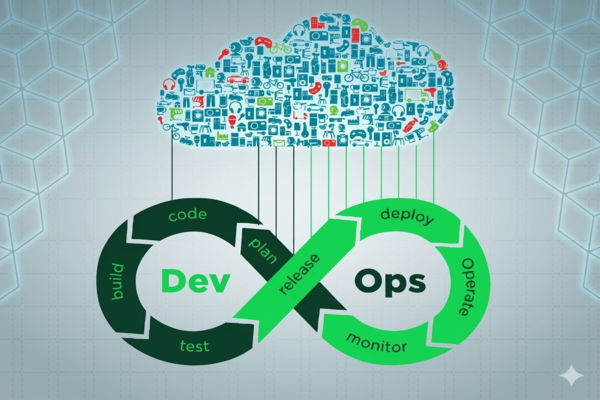
Key benefits include:
- Scalability: When traffic spikes unexpectedly, the Cloud infrastructure automatically scales to meet demand, while DevOps processes ensure the software operates smoothly at that massive scale.
- Disaster Recovery: With data and configurations stored on the Cloud, system recovery after an incident takes minutes instead of days.
- Enhanced Collaboration: Development and Operations teams share the same toolset, language, and goals, which minimizes conflict and boosts teamwork efficiency.
- Improved Software Quality: Through frequent automated testing, bugs are detected early (Shift-left testing), reducing repair costs and increasing user satisfaction.
Challenges in Adopting Cloud DevOps
While it offers immense benefits, the path to transitioning to Cloud DevOps is not entirely a bed of roses. Many enterprises encounter technical and cultural “stumbling blocks” when beginning this journey. Identifying these challenges beforehand will help organizations prepare a more suitable roadmap.
Common difficulties include:
- Cultural Barriers: Shifting from traditional workflows to shared responsibility often meets with resistance from employees.
- Skill Gaps: Finding and training personnel who understand both the Cloud and DevOps processes is a difficult and costly puzzle to solve.
- Security and Compliance Management: When everything moves rapidly and automatically, controlling access rights and ensuring data security on the Cloud requires extremely rigorous standards.
- Tool Selection Complexity: The vast Cloud DevOps tool ecosystem can sometimes overwhelm businesses, leading them to choose tools that do not align with their actual needs.
Popular Cloud DevOps Tools
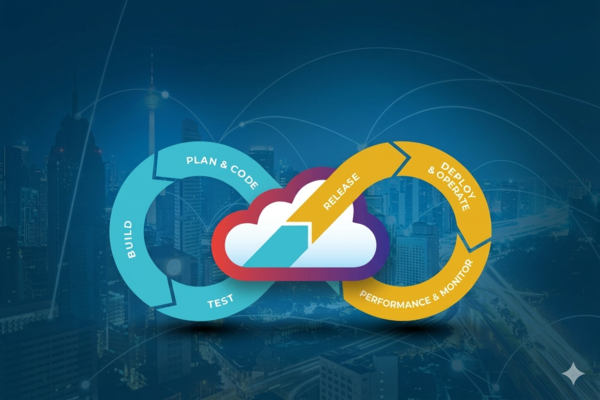
To realize the Cloud DevOps process, choosing the right “weapons” is crucial. Currently, the three “giants” in the cloud computing industry-AWS, Microsoft Azure, and Google Cloud-all provide specialized tool ecosystems to automate the software development process from A to Z.
AWS DevOps Tools
Amazon Web Services (AWS) is the market leader with a vast range of products. Tools like AWS CodePipeline automate the release flow, AWS CodeBuild compiles source code, and AWS CodeDeploy automates deployment to EC2 instances or Lambda. The advantage of AWS lies in its high customizability and deep integration with all other storage and computing services within the Amazon ecosystem.
Azure DevOps Tools
Microsoft offers Azure DevOps Services—a comprehensive suite including Azure Boards (work management), Azure Repos (source code hosting), and Azure Pipelines (CI/CD). The greatest strength of Azure DevOps is its perfect integration with Microsoft products like Visual Studio, .NET, and the Windows operating system, making it ideal for enterprises already utilizing the Microsoft ecosystem.
Google DevOps Tools
Google Cloud Platform (GCP) focuses heavily on containers and Kubernetes—the technology that Google itself pioneered. Google Cloud Build allows for rapid container image creation, while Artifact Registry manages software artifacts. With robust support for Google Kubernetes Engine (GKE), Google DevOps is the top choice for modern microservices architectures that require high flexibility.
Cloud DevOps is no longer an option but an inevitable requirement for any business wishing to survive and lead in the digital age. By combining the power of cloud computing with the breakthrough mindset of DevOps, you not only accelerate software deployment but also build a solid foundation for continuous innovation.
