



In the era of digital transformation, migrating data to the cloud is no longer an option but a mandatory requirement for businesses to maintain a competitive edge. However, this convenience is accompanied by massive cybersecurity and legal challenges. Cloud Compliance has emerged as a “guiding compass,” helping organizations navigate the regulatory maze and protect their most valuable digital assets.
What is Cloud Compliance?
To gain a deep understanding of risk management, we must first clarify the core concept. Cloud Compliance is not merely about installing security software; it is a holistic strategy combining technology, processes, and people. To fully grasp this concept, we will delve into the basic definition and the Shared Responsibility Model-the backbone of all cloud compliance activities.
Definition of Cloud Compliance
Cloud Compliance is the process of ensuring that the cloud computing services used by a business fully meet legal standards, industry regulations, and internal security policies. it encompasses adherence to international laws (such as GDPR), technical standards (such as ISO 27001), and sector-specific requirements (such as HIPAA in healthcare).
Shared Responsibility Model
A common misconception is assuming that the Cloud Service Provider (CSP) bears full responsibility for security. In reality, compliance is a mutual effort:
- The Provider (AWS, Azure, Google Cloud): Responsible for security “of” the cloud (physical infrastructure, networking, virtualization).
- The Customer (The Business): Responsible for security “in” the cloud (data, identity management, application configuration).
Key Components of Cloud Compliance
Building a robust compliance system requires a close integration of technical standards and governance processes. There is no “magic wand” to solve everything; instead, businesses must focus on three main pillars: international standards, data management, and access control.
Common Standards and Certifications
Businesses need to benchmark their systems against reputable frameworks to build trust with customers:
- ISO/IEC 27017: A standard specifically designed for cloud information security.
- SOC 2: Reports on controls related to security, availability, and data privacy.
- PCI DSS: Mandatory for organizations handling payment card information.
Data Governance and Protection
This component focuses on where data is stored, who has permission to view it, and how it is encrypted. Cloud Compliance requires data to be classified by sensitivity levels, with corresponding protective measures applied, such as AES-256 encryption or Key Management Services (KMS).
Identity and Access Management (IAM)
IAM serves as the first line of defense. Implementing the Principle of Least Privilege ensures that employees only have access to the resources necessary for their specific roles, minimizing the risk of internal data leaks.
Benefits and Limitations of Cloud Compliance
Implementing Cloud Compliance is a significant investment of both time and capital. However, when weighed on the scales, the value it delivers often far outweighs the incurred costs. Let’s analyze the standout advantages as well as the common hurdles businesses encounter during this process.
Benefits for Businesses
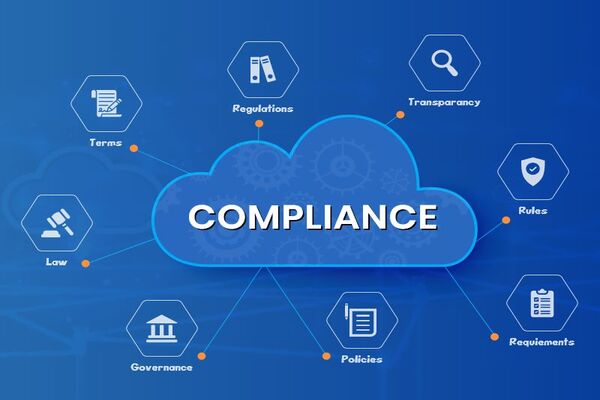
- Building Trust: Demonstrating to customers and partners that their data is protected by the most rigorous standards.
- Avoiding Legal Risks: Minimizing heavy fines from regulatory bodies resulting from data security breaches.
- Operational Optimization: Compliance processes help make IT systems more organized, manageable, and resilient during recovery after an incident.
Limitations and Challenges
- High Costs: Hiring specialist consultants and purchasing automated monitoring tools can be expensive.
- Complexity: Legal regulations are constantly evolving (such as the Vietnam Cybersecurity Law), requiring businesses to provide continuous updates.
- Provider Dependency: Businesses sometimes face difficulties in maintaining full control over how the CSP manages the backend infrastructure.
Why is Cloud Compliance Important?
Why have we been discussing compliance so much in recent years? The answer lies in the explosion of cyberattacks and the tightening of global regulatory frameworks. Cloud Compliance is no longer just an “accessory”—it has become a vital foundation for business sustainability.
Protecting Brand Reputation
A single data leak can wipe out decades of brand-building efforts. Cloud compliance serves as a shield, protecting a company’s reputation against “worst-case scenarios.”
Meeting Global Legal Requirements
In a flat world, a company based in Vietnam can easily serve customers in Europe. This means you must comply with GDPR. Cloud Compliance helps businesses successfully “clear the hurdles” to enter international markets without the fear of tripping over legal barriers.
Challenges in Implementing Cloud Compliance
Despite a clear understanding of its importance, executing Cloud Compliance in practice is never easy. Organizations often face a range of hurdles, from technical issues to governance. Below are the most significant challenges that IT departments and executive leadership must be mentally prepared to confront.

Shortage of Specialized Personnel
Finding an expert who is both proficient in Cloud infrastructure and well-versed in complex legal frameworks is a major challenge. Many businesses find themselves in a situation where they “have the tools but lack the operators.”
Managing Multi-cloud and Hybrid-cloud Environments
When a business utilizes multiple cloud providers (for example, using both AWS and Azure), synchronizing compliance policies becomes extremely complex. Each provider comes with its own set of tools and reporting standards.
Continuous Monitoring and Reporting
Compliance is not a “one-and-done” certification. It is an ongoing process. The challenge lies in how to monitor systems 24/7 and promptly detect non-compliant behaviors—such as misconfigurations—before they can be exploited by hackers.
Cloud Compliance is a long-term journey that requires commitment from top-level leadership down to every individual employee. By clearly understanding responsibilities, mastering standards, and proactively addressing challenges, businesses do more than just protect their data—they create a sustainable competitive advantage in the digital age.
