



In the era of digital transformation, Time-to-Market determines the survival of an application. Instead of spending months setting up servers and writing repetitive backend code, modern developers are shifting to a more optimized model: BaaS (Backend as a Service). This article will dive deep into every aspect of BaaS to help you understand why it is the “secret weapon” for startups and developers today.
What is BaaS (Backend as a Service)?
To understand BaaS, we first need to look at the structure of an application. Typically, an app is divided into two parts: the Frontend (user interface) and the Backend (data processing, servers, security). BaaS is a cloud service model that automates this entire “back-end” portion.
Definition of BaaS
BaaS is a model that provides backend features through ready-to-use APIs and SDKs. Instead of hiring backend engineers to build storage systems, user authentication, or database management from scratch, you simply “call” these services from a provider.
BaaS vs. Other Cloud Models
While IaaS (Infrastructure as a Service) provides raw infrastructure like virtual machines, and PaaS (Platform as a Service) provides an environment for you to build your own app, BaaS goes further by providing specific business logic features. This allows frontend developers to complete a full-stack application on their own without deep knowledge of system administration.
Why You Should Use BaaS
Why are businesses willing to pay for BaaS platforms instead of building their own systems? The answer lies in resource optimization and the ability to adapt quickly to the market. Here are the core reasons why BaaS has become a trend:
- Optimizing Development Time: Using BaaS can cut the backend workload by up to 80%. You don’t need to worry about socket programming, database setup, or installing security certificates. Everything is pre-packaged, allowing you to focus 100% on creating the frontend user experience.
- Saving Personnel and Operational Costs: Instead of maintaining an elite DevOps and Backend team with expensive salaries, a single Mobile or Web developer can manage the entire system. Additionally, BaaS costs are usually based on usage (Pay-as-you-go), helping businesses avoid wasting server resources when the app doesn’t have many users yet.
Core Features of BaaS
A standard BaaS platform is more than just a place to store data; it integrates an entire ecosystem of essential tools to ensure a modern application runs smoothly. Let’s look at the “backbone” features of this model:
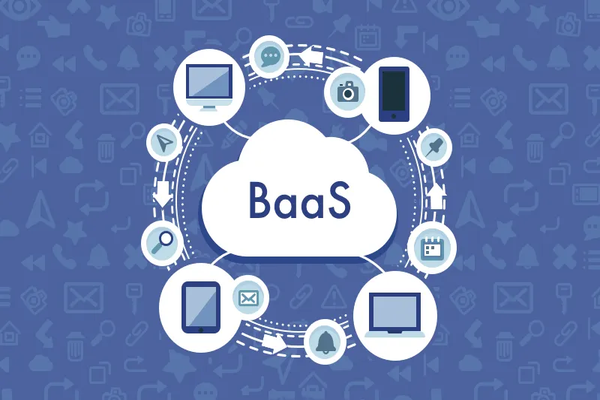
- Database Management: BaaS provides databases (typically NoSQL like Cloud Firestore or MongoDB) with the ability to automatically synchronize data in real-time. This is incredibly useful for chat apps, social networks, or food delivery services.
- User Authentication: Building your own login system via email, phone numbers, or social media (Facebook, Google, Apple ID) is complex and carries security risks. BaaS handles this entire process securely and quickly with just a few lines of code.
- Push Notifications: Sending notifications to millions of users simultaneously across both iOS and Android is an infrastructure challenge. BaaS services come with this integrated, helping you maintain user engagement without setting up your own server.
- Cloud Storage: From images and videos to user-uploaded documents, BaaS provides cloud storage space that can auto-scale based on actual demand.
The Basic Architecture of BaaS
While users only interact with APIs, there is a complex architectural system behind the scenes designed to handle high loads. Understanding this architecture helps you see how your data flows within a BaaS environment.
- The API Gateway Layer: This is the “gateway” that receives every request from your application. The API Gateway is responsible for routing requests to the correct corresponding service (such as the database or authentication) while ensuring security and traffic control.
- The Business Logic Layer (Cloud Functions): Most BaaS platforms allow you to write server-side code snippets (Serverless Functions) to handle specific logic that out-of-the-box features cannot meet. These functions only run when triggered by an event, which helps optimize resources.
Pros and Cons of BaaS
No solution is absolute perfection. While BaaS offers extreme convenience, it also comes with certain trade-offs that you should carefully consider before applying it to a strategic project.
Outstanding Advantages
- Lightning-Fast Deployment: Turn an idea from a drawing board into reality in just a few days.
- Scalability: The system automatically upgrades infrastructure when there is a sudden spike in traffic.
- Standardized Security: Major providers like Google or AWS constantly update their systems with the latest security patches.
Disadvantages to Note
- Vendor Lock-in: You are entirely dependent on the provider. If they increase prices or discontinue a service, migrating to another platform can be very costly.
- Customization Limits: For extremely complex logic or requirements that need deep intervention into the system kernel, BaaS may not be as flexible as building your own server.
How Does BaaS Work?
The mechanism of BaaS can be compared to renting a high-end luxury apartment that is already fully furnished and serviced. Instead of having to build the house yourself, you just move in and use the available amenities.
- The SDK Connection Process: The provider will give you a Software Development Kit (SDK) corresponding to the programming language you are using (JavaScript, Swift, Kotlin, etc.). You install this SDK into your project and then initialize the connection via a unique API Key.
- Communication via API: Every action, such as “Save Username” or “Fetch Product List,” is essentially an HTTP request sent to the BaaS server. The server processes these requests and returns the results to your application in an instant.
How to Choose the Right BaaS
There are currently many names on the market, ranging from tech giants to open-source platforms. Choosing the wrong BaaS can lead to significant consequences regarding costs and operational capabilities later on.
- Identify Actual Needs: If you are building a real-time app, choose a provider strong in fast-syncing databases. If you prioritize freedom and want to self-host to avoid dependency, open-source solutions are the top choice.
- Costs and Community Support: Examine the pricing tiers carefully. Some providers are cheap initially but become extremely expensive as the app scales. Additionally, a large community will help you find solutions to bugs within minutes of a Google search.
Popular BaaS Platforms
The BaaS market is clearly divided into two groups: centralized cloud services and flexible open-source solutions. Here are the most prominent names today:
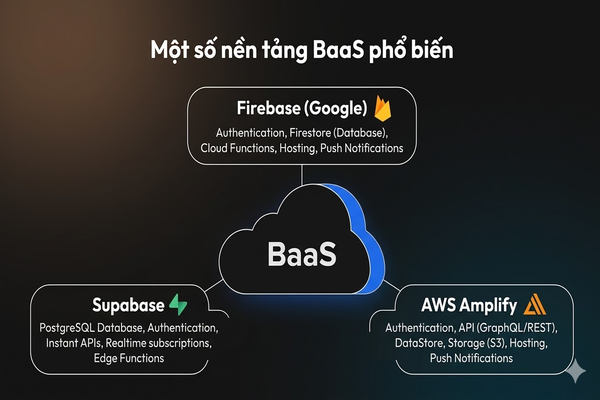
- Firebase (Google): The market leader in terms of popularity. Firebase offers a powerful ecosystem with deep integration into Google Cloud and data analytics tools.
- Supabase: Dubbed “The Open Source Firebase Alternative.” Supabase uses PostgreSQL, bringing the power of traditional SQL while maintaining the convenience of a modern BaaS.
- AWS Amplify: If your business is already within the Amazon Web Services ecosystem, Amplify is an excellent choice to leverage AWS’s massive infrastructure with a simplified experience.
When Should You Use BaaS?
BaaS is a fantastic solution, but it is not a “silver bullet” for every problem. Identifying the right time to use it will help you maximize the effectiveness of this tool.
- The MVP (Minimum Viable Product) Phase: When you need to validate an idea with users as quickly as possible, don’t waste time building a complex backend. BaaS helps you have a complete product for a demo in the shortest time possible.
- Small and Medium Applications: For apps without highly specialized backend logic, BaaS is a much more economical and stable choice than operating your own server.
Frequently Asked Questions about BaaS
To conclude this article, we have summarized the most common concerns from developers and business owners when first approaching this concept.
- Is BaaS secure? Yes—often even more secure than building your own, as providers like Google or AWS have world-class security experts monitoring systems 24/7.
- Can I switch from BaaS to a private server later? It is possible, but it will take effort to migrate data and rewrite backend logic. Therefore, choose platforms that support easy data exports from the beginning.
BaaS (Backend as a Service) is not just a technology; it is a new development mindset: focus on what users see and love, rather than getting bogged down in complex backend infrastructure. If you are looking to accelerate your app development, BaaS is your most powerful ally.
