



In today’s digital era, cloud computing is no longer just an option; it has become the core foundation for any business aiming to break through. However, gaining a clear understanding and choosing the right Cloud Deployment Model is the true key to optimizing costs and operational performance. This article will provide a comprehensive overview to help you build the most robust IT infrastructure roadmap.
What is a Cloud Deployment Model?
Essentially, Cloud Deployment Models are ways of configuring specific parameters such as ownership, storage scale, and accessibility within a cloud environment. Rather than just focusing on where the data resides, the deployment model defines who manages the infrastructure and who has access to specific resources.
Every business has unique needs: a startup may require flexibility and low costs, while a bank prioritizes absolute security and control. Categorizing these deployment models helps IT administrators determine the level of responsibility between the service provider and the user. From there, they can develop a digital transformation strategy that aligns with the organization’s budget and security requirements.
Types of Cloud Deployment Models
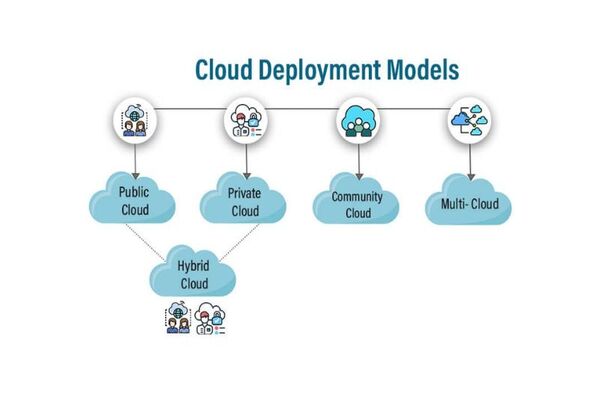
The world of cloud computing is diverse, with no “one-size-fits-all” solution. To better understand how each type operates, we will dive deep into analyzing the five most popular Cloud Deployment Model groups today, ranging from shared platforms to industry-specific systems.
Public Cloud
Public Cloud is the most common model, where computing resources (such as servers and storage) are owned and operated by third-party providers (like AWS, Google Cloud, Azure). The entire hardware and software infrastructure is managed by the provider and shared across various customers via the Internet. Its greatest advantage is near-infinite scalability and a “pay-as-you-go” billing model, helping businesses save significantly on massive upfront investment costs.
Private Cloud
In contrast to the Public Cloud, a Private Cloud is infrastructure designed exclusively for a single organization. It can be located at the business’s own data center (on-premises) or hosted by a third party. This model provides the highest level of security and control, meeting stringent data compliance standards. It is the top choice for financial corporations, government agencies, or businesses handling extremely sensitive data.
Hybrid Cloud
Hybrid Cloud is a smart combination of Public and Private Clouds, interconnected by technology that allows data and applications to be shared between them. This model offers maximum flexibility: businesses can run critical applications on a Private Cloud for security while still leveraging the massive computing power of a Public Cloud when traffic spikes. This is considered the optimal solution for a gradual digital transformation process.
Community Cloud
This is a specialized variant where the cloud infrastructure is shared by several organizations with common goals, interests, or compliance requirements (for example, banks sharing a payment system or universities sharing research infrastructure). Community Cloud helps reduce costs compared to a Private Cloud while ensuring greater privacy than a Public Cloud, as the user community is narrowed and clearly authenticated.
Multi-Cloud
Multi-Cloud is a strategy that utilizes services from multiple different Public Cloud providers (for example, using both AWS and Azure). The primary goal is to avoid “Vendor Lock-in” (dependency on a single provider) and to capitalize on the unique strengths of each vendor. For instance, you might choose Google Cloud for AI/Machine Learning tasks but select Azure for its seamless compatibility with the company’s existing Microsoft software.
How to Choose the Right Cloud Deployment Model
Selecting the correct Cloud Deployment Model is not just a matter of preference; it must be based on specific technical and business criteria. A mistake at this stage can lead to budget waste or create serious security vulnerabilities.
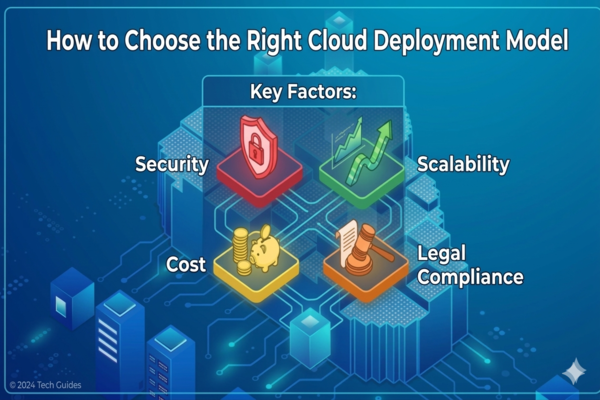
To make the right choice, you need to evaluate four key pillars:
- Security: Does your data have strict privacy requirements?
- Scalability: Do you need to scale resources up or down instantly based on seasonal demand?
- Cost: Do you prefer upfront capital expenditure (CapEx) or monthly operating expenses (OpEx)?
- Legal Compliance: Does your industry have regulations requiring data to be stored within your local country?
Comparison of Cloud Deployment Models
To get the most comprehensive overview before deciding, let’s weigh these models against the criteria most critical to corporate IT infrastructure.
| Criteria | Public Cloud | Private Cloud | Hybrid Cloud |
|---|---|---|---|
| Cost | Low (Pay-as-you-go) | High (Large infra investment) | Medium (Customizable) |
| Control | Low (Managed by provider) | Very High | High |
| Security | Medium / Good | Very High | High (Customizable) |
| Flexibility | Very High | Low | Very High |
| Management Difficulty | Easy (Provider handles all) | Difficult (Requires experts) | Very Difficult (Requires sync) |
Cloud Service Models
In addition to choosing where to deploy (Deployment Models), you also need to choose the type of service you will use. These service models define the boundary between what you manage yourself and what the provider does for you, often referred to as the Shared Responsibility Model.
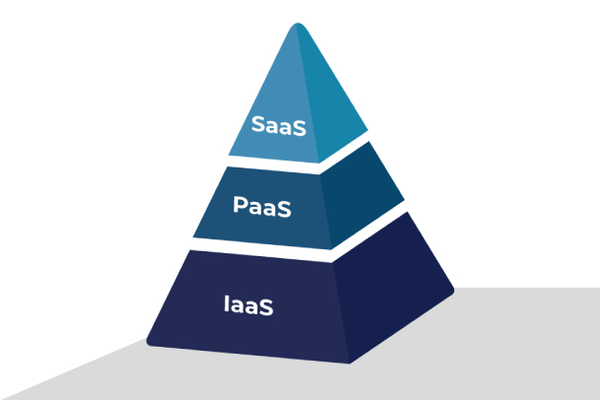
Here are the three primary service layers that any IT infrastructure optimization roadmap must address:
Infrastructure as a Service (IaaS)
IaaS is the most foundational level. The provider leases you raw infrastructure, including virtual servers, networking, and storage. You have full authority to install operating systems, databases, and applications. This is the perfect alternative to purchasing physical servers, making it ideal for system administrators who want total control over the infrastructure.
Platform as a Service (PaaS)
PaaS provides a complete environment for developers to build, test, and deploy applications without worrying about managing the underlying servers or operating systems. It accelerates software development (DevOps) because all necessary tools are pre-integrated as a service.
Software as a Service (SaaS)
SaaS is the most complete model, where you simply log in and use applications via a browser (e.g., Google Workspace, Salesforce, Zoom). Every concern regarding infrastructure, software updates, and security is handled by the provider. This is the optimal choice for business, HR, or marketing departments to work efficiently immediately.
Understanding Cloud Deployment Models is the first and most crucial step in the IT infrastructure optimization roadmap. Whether you choose Public Cloud for its flexibility, Private Cloud for its security, or Hybrid Cloud to balance both, the most important factor is its alignment with your organization’s long-term business goals.
