



In the digital era of 2026, data is often likened to the “oil” of a business. However, without the tools to extract and process it, data remains nothing more than lifeless numbers. This is precisely when CRM software becomes a strategic “weapon,” helping enterprises not only manage information but also understand and build enduring relationships with their customers. This article will provide a comprehensive overview, ranging from the core concepts and benefits to the detailed implementation process of a modern CRM system.
What is CRM Software?
To fully grasp the power of technology in management, we must first clarify the essence of this tool. A CRM is not merely a storage vault for phone numbers; it is an entire ecosystem that supports the complete customer experience journey.
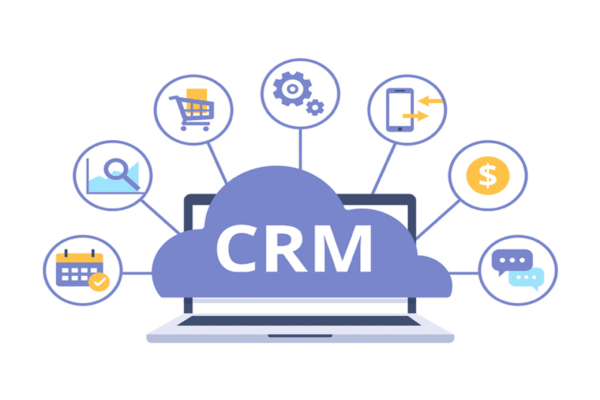
The Concept of CRM
CRM stands for Customer Relationship Management. It is both a strategy and a technological solution that helps businesses manage all interactions with current and potential customers. The ultimate goal of CRM software is to improve business relationships, support customer retention, and drive sales growth.
Who uses CRM within a company?
This system is not reserved for any single individual but serves as a bridge between departments:
- Sales Team: Tracks the process from the moment a customer is a “lead” until the contract is closed.
- Marketing Team: Analyzes behavior to run personalized campaigns.
- Customer Service Department: Receives complaints and resolves issues based on existing transaction history.
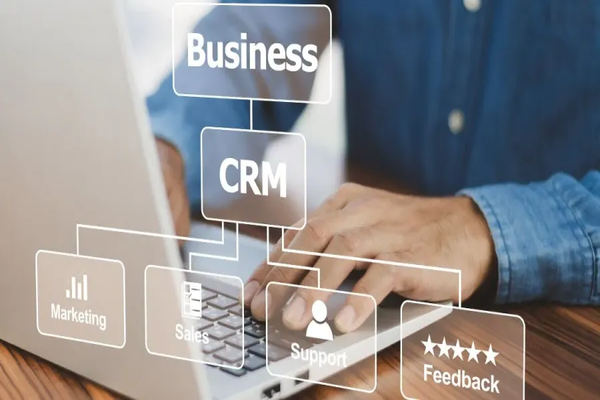
- Managers/CEOs: Monitor visual reports to make strategic decisions based on real-time data.
Benefits of using CRM software
Adopting CRM software brings breakthrough changes to operational methods. Instead of fragmented management via Excel or notebooks, a business will possess a central “brain” that converges all the following benefits:
- Customer Information Management: All data—from full names, emails, and purchase history to small notes about personal preferences—is stored centrally. This eliminates data fragmentation across multiple personal computers or the risk of losing information when an employee resigns.
- Increasing Customer Engagement: CRM helps businesses be present exactly when the customer needs them. Through omni-channel integration (Facebook, Zalo, Email, Call Center), you can respond to customers immediately on a single interface, creating a sense of professionalism and dedication.
- Improving Customer Care: When a customer calls, service staff can instantly know who they are, what they have purchased, and what issues they have faced in the past. This insight makes the support process faster and more personalized than ever before.
- Optimizing the Sales Process: The system automates steps ranging from sending quotes and appointment reminders to tracking the sales pipeline. Salespeople no longer miss out on potential leads and can focus on deals with high conversion rates.
- Analytics and Reporting: Instead of spending hours manually aggregating data, CRM software provides visual reports on revenue, employee performance, and ROI in real-time with just a few clicks.
- Building Long-term Relationships: CRM helps you “nurture” customers through automated campaigns, such as birthday greetings or sending special offers to former clients, which increases the customer retention and repurchase rate.
- Connecting the Team: Information is shared seamlessly across departments. Marketing knows which leads Sales is currently handling, and Sales knows how many potential customers Marketing has generated, creating a unified operational machine.
- Checking for Inaccurate Data: Modern systems feature the ability to automatically filter duplicate data or flag incorrect information (such as wrong email formats or phone numbers), ensuring the data “fuel source” remains clean and accurate.
When Should a Business Implement CRM?
Many businesses ask themselves: “Are we too small to use a CRM?” In reality, scale is less important than management needs. You should implement one immediately if you encounter the following signs:
- Customer data is lost or scattered.
- Sales staff frequently forget to follow up with customers.
- Difficulty in evaluating the effectiveness of advertising campaigns.
- The cost of acquiring new customers is too high while existing customers are leaving rapidly.
Essential Features of CRM Software
To ensure investment efficiency, a standard CRM system in 2026 needs to meet the following core features:
- Lead Management: Collecting and categorizing customer sources from multiple channels.
- Pipeline Management: Visually displaying the various stages of a deal.
- Automation: Automatically sending emails and SMS based on pre-defined scripts.
- Multi-platform Integration: Easily connecting with tools such as Zalo, Facebook, VoIP, and Websites.
- Mobile App: Supporting employees to work anytime, anywhere via smartphones.
Criteria for Choosing the Right CRM
The market offers hundreds of solutions, but not every one will “fit” your business. Consider the following criteria to make an informed choice:
- Features tailored to needs: Do not choose software with too many redundant features. Prioritize tools that solve your current “pain points.” For example, if you are service-oriented, choose a CRM with a powerful customer service module.
- Budget-appropriate pricing: You need to calculate the Total Cost of Ownership (TCO), including monthly licensing fees, implementation fees, training, and future upgrade costs.
- Customization and Scalability: Businesses grow over time. CRM software must allow for adding or removing data fields and upgrading to higher tiers as your customer base expands.
- Ease of Use and Convenience: If the interface is too complex, employees will be reluctant to use it. A good system is one that anyone can become proficient in after just 1-2 training sessions.
- Data Security: Customers are your greatest asset. Ensure the provider has international security certifications, strict decentralized access control, and regular data backups.
- Customer Support Services: Technical issues are inevitable. A provider with a support team in Vietnam offering 24/7 fast response will help ensure your business processes remain uninterrupted.
Distinguishing Between CRM and ERP
Many people often confuse these two systems. However, they have distinctly different objectives:
- CRM (Customer Relationship Management): Focuses on the “output”—meaning customers and revenue. The goal is to sell more and ensure customer satisfaction.
- ERP (Enterprise Resource Planning): Focuses on the “internal”—including accounting, human resources, production, and warehousing. The goal is to optimize costs and manage corporate resources.
Comparing CRM Online and Offline
The choice of deployment model significantly impacts a business’s flexibility:
| Criteria | CRM Online (Cloud) | CRM Offline (On-premise) |
|---|---|---|
| Installation | Accessed via browser/App | Installed directly on company servers |
| Investment Cost | Paid monthly/annually (Low initial cost) | Investment in servers & infrastructure (High initial cost) |
| Maintenance | Automatically updated by the provider | Managed and maintained by the business |
| Flexibility | Work anywhere with internet | Only work at the office or via VPN |
Common Types of CRM Systems
Currently, CRM is divided into three main types based on the purpose of use:
- Operational CRM: Focuses on automating Sales, Marketing, and Service.
- Analytical CRM: Focuses on deep-diving into data to identify customer behavior trends.
- Collaborative CRM: Focuses on sharing customer information between departments inside and outside the company.
The Role of CRM for Different Business Types
- B2B Businesses: CRM helps manage long, complex sales cycles and maintain relationships with multiple stakeholders within a single client company.
- B2C Businesses: Focuses on processing large volumes of individual customer data and automating marketing to increase purchase frequency.
The Role of CRM in Marketing Campaigns
CRM acts as the “anchor” for Inbound Marketing campaigns. It assists in customer segmentation to send targeted messages instead of sending mass spam emails.
AI Applications in CRM Systems
The year 2026 has witnessed an explosion of Artificial Intelligence (AI) deeply integrated into CRM. AI is no longer a luxury feature but has become a powerful assistant:
- Sales Forecasting: AI analyzes historical data to provide accurate revenue forecasts for the upcoming quarter.
- Lead Scoring: It automatically evaluates which customers have the highest probability of closing a deal, allowing staff to prioritize their efforts.
- AI Chatbots: These handle frequently asked questions 24/7 using natural language, only transferring to a human agent when encountering complex issues.
Popular CRM Software Today
Depending on your scale and budget, you may consider the following prominent names:
- Salesforce: The global “king” of CRM, suitable for large corporations with infinite customization capabilities.
- HubSpot: Features a user-friendly interface and is strong in Marketing Automation; offers a very high-quality free version for startups.
- Zoho CRM: A solution that balances features and price, making it a great fit for small and medium-sized enterprises (SMEs).
- MISA AMIS CRM / Getfly / SlimCRM: Leading solutions in Vietnam, specifically designed for local business processes and the Vietnamese language, offering excellent local support.
Investing in CRM software is not an expense; it is an investment in a sustainable future. In a fiercely competitive market, whichever business understands its customers better will emerge as the winner.
