



In the era of powerful digital transformation, web applications have become the “heart” of all business operations, from e-commerce and online banking to corporate data management. However, this convenience comes with potential risks as cyberattacks become increasingly sophisticated. Web application security is no longer an option, but a vital requirement to protect the reputation and finances of an organization.
What is Web Application Security?
Web Application Security is a branch of information security specifically focused on protecting websites, web applications, and web services from cybersecurity threats. This process involves applying technical barriers, control procedures, and secure programming practices to ensure that applications function correctly without unauthorized interference.

Simply put, web application security is like designing a solid fortress for your digital home. It does not stop at locking the door (passwords) but also includes verifying the identity of those entering, monitoring internal behavior, and building walls to defend against external attacks. The ultimate goal is to protect the integrity, confidentiality, and availability of data.
Why is Web Application Security Necessary?
Neglecting cybersecurity can lead to catastrophic consequences that a business may take years to recover from. Here are the key reasons why you need to prioritize security right from the development stage:
- Protecting customer data: Personal information, credit card numbers, and medical records are top targets for hackers. Data leaks lead to serious legal issues.
- Maintaining brand reputation: Customers will never return to a website that has been hacked or leaked their information. Trust is the most expensive asset in business.
- Avoiding financial loss: The cost of remediating the aftermath of an attack (ransom, fines, operational downtime) is often many times higher than the initial investment in security.
- Legal compliance: Regulations such as GDPR, PCI DSS, or the Cybersecurity Law of Vietnam require organizations to have stringent measures in place to protect user data.
Common Attacks
To protect a system effectively, we first need to clearly understand who our opponents are and how they attack. Web application security vulnerabilities often stem from flaws in the source code or incorrect server configurations.
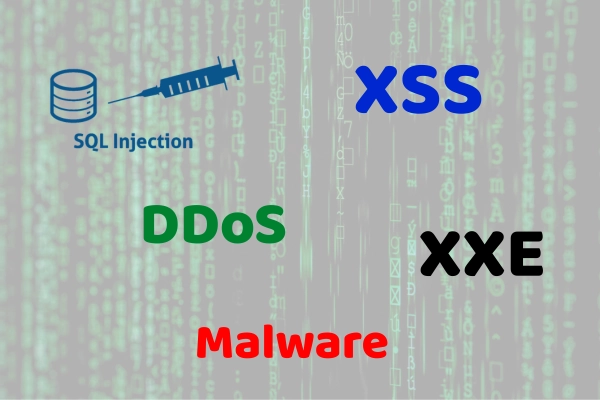
Below are the details of the most dangerous forms of attack today that every administrator should be aware of:
Cross-Site Scripting (XSS)
XSS is a type of attack where the attacker injects malicious scripts (usually JavaScript) into trusted websites. When a user visits that website, the malicious code executes in their browser, allowing the attacker to steal cookies, session tokens, or redirect the user to fraudulent websites.
SQL Injection
This is one of the most classic and dangerous vulnerabilities. Attackers inject malicious SQL statements into input fields (such as search boxes or login forms) to trick the database. If successful, they can view, modify, or delete all data within the database, and even gain control of the server.
XXE (XML External Entity)
An XXE attack occurs when a web application processes XML input insecurely. An attacker can inject references to external entities into an XML document, thereby reading internal files on the server, performing port scanning within the internal network, or causing a Denial of Service (DoS) attack.
DDoS (Distributed Denial of Service)
DDoS does not target source code vulnerabilities but rather strikes at the system’s load capacity. By mobilizing a network of compromised computers (botnets) to send millions of requests simultaneously, attackers paralyze the server, making it impossible for real users to access the web application.
Malware
Attackers can exploit vulnerabilities to upload malicious software onto the web server. This malware can be ransomware that encrypts data for ransom, or backdoors that allow them to maintain long-term access to the system without being detected.
Effective Ways to Secure Web Applications
After identifying the threats, the next step is to establish multi-layered defense tiers. An effective web application security strategy must combine modern technology with strict management processes.
Below are the core technical measures to help you strengthen your system:
Using HTTPS/SSL
The HTTPS protocol encrypts data transmitted between the user’s browser and the server. This prevents “Man-in-the-Middle” attacks from intercepting sensitive information. Owning an SSL certificate also helps improve SEO rankings and builds trust with users.

Regular Software Updates
Many successful attacks occur simply because businesses use outdated versions of CMS (such as WordPress, Magento) or legacy source code libraries. Always ensure that the operating system, web server, and frameworks are updated with the latest security patches as soon as they are released.
Automatic Data Backup
Prevention is better than a cure, but you also need a plan for the worst-case scenario. Implementing automatic data backups and storing them in an independent location (such as Cloud Storage) will help you recover the system quickly in the event of a ransomware attack or data deletion.
Using a Web Application Firewall (WAF)
A WAF acts like an intelligent filter standing in front of your web application. It inspects all HTTP/HTTPS traffic and blocks malicious requests such as SQL Injection or XSS before they reach your server. Modern WAF solutions are also capable of blocking bots and mitigating DDoS attacks.

Securing the Database
The database is the ultimate target for hackers. Implement the “principle of least privilege,” allowing the web application to access only the necessary data tables. Additionally, encrypt sensitive data directly within the database and always thoroughly sanitize all user inputs.
Common Web Application Security Risks
Even with multi-layered security in place, new risks constantly emerge due to evolving technology and changing user habits. Understanding these risks helps businesses become more proactive in prevention.
- Security Misconfiguration: This is the most common risk, occurring when administrators leave default passwords, open unnecessary ports, or display detailed error messages that reveal system information.
- Broken Access Control: Users may gain access to administrative pages or other users’ data because the system does not strictly verify permissions.
- Using Components with Known Vulnerabilities: Integrating too many open-source libraries without vetting their origins makes an application vulnerable from the inside.
Key Web Application Security Strategies
A successful security strategy relies not just on tools, but on a “Security by Design” mindset. This requires close coordination between the development team and the cybersecurity department.

- Training the Development Team: Developers need to understand security vulnerabilities to write clean and secure code from the very first line.
- Regular Penetration Testing: Hire security experts to simulate hackers and attack your system. This helps find “loopholes” that automated scanning tools often miss.
- Building an Incident Response Plan: When an incident occurs, who handles it? What is the process for isolating a hacked server? Having a response script in place will minimize damage.
How to Combat Web Application Attacks
The battle between security and hackers is an endless arms race. To effectively combat attacks, you need to apply the Defense in Depth model.
- Never trust input data: Always treat all information sent by users as potentially harmful.
- Strict data control: Implement Input Validation and Output Encoding for all data fields.
- Real-time monitoring: Use tracking tools to immediately detect and block abnormal access behaviors.
- Maintain continuous security: Security is not a one-time task; it requires periodic system checks and evaluations to deal with new threats.
Web application security is not just a technical barrier but a core foundation for the survival of a business in the digital age. Understanding vulnerabilities like SQL Injection or XSS and proactively deploying solutions like WAF and SSL will help you protect precious data assets. Remember, cybersecurity is a continuous journey that requires constant vigilance and updates to face new challenges.
