



In the era of digitalization in 2026, the explosion of web and mobile applications has made the role of interface programming more important than ever. This article will provide you with the most comprehensive overview of Frontend Development, from basic concepts and essential tools to career roadmaps and attractive salaries in the industry.
1. What is Frontend Development?
Frontend Development is the process of building the user interface of a website or application. Simply put, everything you see, touch, or interact with on a browser—from colors, fonts, buttons, and menus to smooth motion effects—is a product of frontend development.
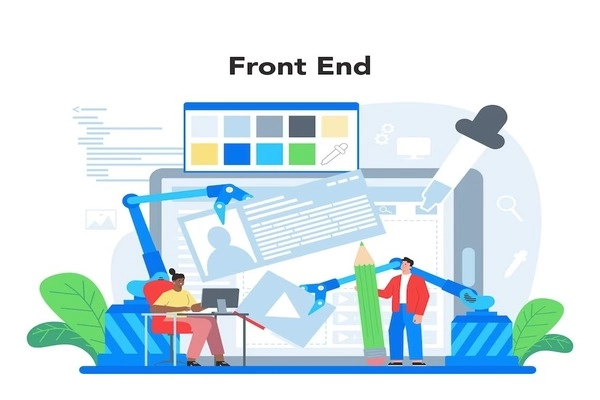
The core goal of a frontend developer is not only to make the website look appealing but also to ensure usability, optimized loading speeds, and a seamless user experience (UX) across all devices.
2. How do Frontend and Backend differ?
For a web application to operate smoothly, there must be seamless coordination between two poles: Frontend and Backend. If the Frontend is the “face,” then the Backend is the “brain” behind every complex process.
Below is a comparison table to help you easily distinguish between the two:
| Feature | Frontend (Client-side) | Backend (Server-side) |
|---|---|---|
| Location | Runs on the user’s browser. | Runs on the server. |
| Responsibility | Data presentation, user interaction, UI/UX design. | Data storage, logic processing, security, APIs. |
| Core Tools | HTML, CSS, JavaScript, React, Vue. | Node.js, Python, Java, SQL, MongoDB. |
| Experience | Focuses on how the user feels. | Focuses on system performance and stability. |
3. Programming Languages for Frontend
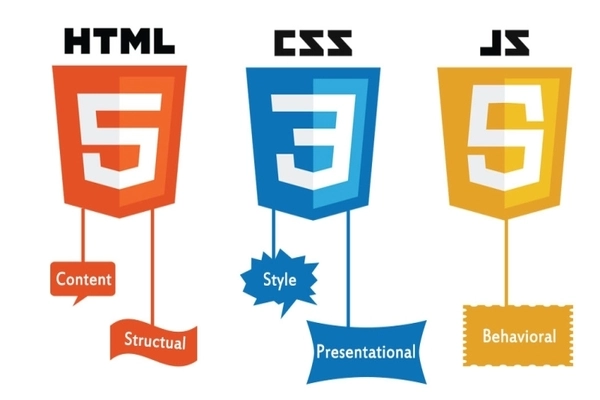
To get started with Frontend Development, you cannot ignore the “power trio” that creates the structure, shape, and soul of a website. Each language plays a distinct yet inseparable role in the modern interface construction process.
3.1. HTML (HyperText Markup Language)
HTML is a markup language that acts as the “skeleton” of a website. It defines basic elements such as headings, paragraphs, images, and links. Without HTML, a browser would not know what content to display.
3.2. CSS (Cascading Style Sheets)
If HTML is the skeleton, CSS is the decorative “clothing.” CSS allows you to customize colors, layouts, spacing, and fonts. In particular, modern CSS (with Flexbox and Grid) enables the creation of complex and flexible interfaces with ease.
3.3. JavaScript (JS)
JavaScript is the only true programming language in this trio, bringing “life” to the website. It handles interactions such as form submissions, displaying notifications, creating animations, or updating data without reloading the page. By 2026, JavaScript remains the absolute dominant language in the Frontend domain.
4. Average Salary of Front-end Developers
In the context of a high-quality talent shortage, salaries for Frontend Development positions in Vietnam in 2026 are highly competitive.
- Fresher (Less than 1 year of experience): Ranges from 10 – 15 million VND/month.
- Junior (1 – 3 years of experience): Approximately 18 – 30 million VND/month.
- Senior (Over 5 years of experience): From 40 – 70 million VND/month, and even higher at multinational corporations or for remote international projects.
These salary levels may vary depending on supplementary skills such as TypeScript, Framework expertise, or foreign language proficiency.
5. Frontend Development Frameworks
As web applications become increasingly complex, writing pure code (Vanilla JS) becomes difficult to manage. This is why Frontend Frameworks were created—to help developers increase productivity and maintain source code more effectively.
Modern frameworks provide reusable components, making interface construction more systematic and professional:
- React (by Meta): The world’s most popular library thanks to its massive ecosystem and strong community support.
- Vue.js: Favored for its conciseness, ease of learning, and extremely detailed documentation.
- Angular (by Google): A comprehensive framework typically used for large-scale enterprise projects.
- Svelte & Next.js: Rising stars that optimize for ultra-fast loading speeds and are highly SEO-friendly.
6. Responsive Web Development
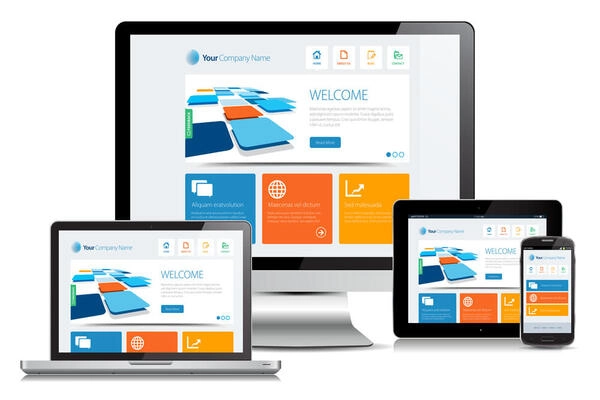
Today, users access the web from a myriad of different devices: smartphones, tablets, laptops, and even giant TV screens. Modern Frontend Development must inherently include a Responsive Design mindset.

Developers utilize Media Queries and flexible layout grids to ensure that content automatically scales and rearranges to fit any screen size. A website that does not support mobile devices will quickly be abandoned by users and penalized in rankings by Google.
7. Business Benefits of Frontend Development
Many businesses often view the Frontend as mere “decoration,” but in reality, it plays a vital role in customer conversion and revenue growth.
- Creating a First Impression: A professional interface helps customers trust a brand instantly.
- Increasing Conversion Rates: A smooth checkout process and clear call-to-action buttons encourage customers to make a purchase.
- SEO Optimization: Clean Frontend source code makes it easier for search bots to crawl data, helping the website achieve higher rankings.
- Reducing Bounce Rates: Fast loading speeds (under 3 seconds) help retain users longer on the website.
8. Types of Web Applications
During the Frontend development process, choosing the right type of application is a strategic decision that directly affects performance, maintenance costs, and the end-user experience. Depending on business goals, developers will implement different architectures:
8.1. Static Web Apps
This is the most basic type, where content is delivered to the user’s browser exactly as it is stored on the server. They are typically built using pure HTML/CSS.
- Advantages: Extremely fast loading speeds, high security, and low hosting costs.
- Suitability: Corporate brochures, Landing Pages, or personal Portfolios.
8.2. Dynamic Web Apps
Unlike static webs, dynamic web applications use databases to display content that changes in real-time or based on personalized user requests. Each time a user visits, the server processes the request and returns the corresponding data.
Characteristics: High interactivity, allowing content management through a CMS (such as WordPress).
8.3. E-commerce Apps
This is a complex type of application that requires a tight integration between the Frontend and a massive Backend system. The Frontend here must handle everything from displaying product catalogs and smart filters to integrating online payment gateways and secure order tracking.

8.4. Single Page Application (SPA)
SPAs are a dominant trend in modern Frontend development. Instead of reloading the entire page when navigating, an SPA only updates small pieces of content (components) via JavaScript.
- Examples: Facebook, Gmail, Netflix.
- Experience: A smooth feel, similar to using a desktop-installed application.
8.5. Progressive Web Apps (PWA)
A PWA is a “hybrid” between a website and a mobile app. They are capable of functioning offline, sending push notifications, and can be added to a phone’s home screen without going through app stores like the App Store or Google Play.
8.6. SaaS Applications (Software as a Service)
These are cloud-based software distributed via the web. Developing the Frontend for SaaS requires highly logical system design thinking because the interface must handle massive amounts of data and multiple levels of user permissions (e.g., Canva, Slack, Microsoft 365).
9. Is Learning Frontend Difficult? Where to Start?
The answer is: It is not difficult to start, but it requires persistence to become an expert. Frontend is highly visual; you see the results as soon as you write the code, which provides great inspiration for beginners.

Suggested Roadmap:
- Master HTML5 & CSS3: (within 2-4 weeks).
- Deep dive into Basic and Advanced JavaScript: (this is the most critical part).
- Familiarize yourself with version control tools: such as Git/GitHub.
- Choose a Framework: (React or Vue) to go specialized.
- Practice through real-world projects: (e.g., cloning the Shopee interface, creating a personal portfolio…).
10. Notable Frontend Technology Trends in 2026
The world of technology is constantly evolving. To avoid falling behind, you need to stay updated on the following trends:
- AI-Driven Development: Utilizing AI to assist in coding, testing, and automatically optimizing UI/UX.
- WebAssembly (Wasm): Allowing high-performance code (C++, Rust) to run directly in the browser, making web apps as powerful as desktop software.
- Micro-Frontend: Breaking down the interface into independent parts so that different teams can develop simultaneously without affecting one another.
- Server-Side Rendering (SSR) & Static Site Generation (SSG): Prioritizing ultra-fast page load speeds and superior SEO optimization.
11. Frequently Asked Questions (FAQ)
Q: Can I do Frontend if I don’t have an eye for aesthetics? A: Absolutely. Frontend developers primarily transform designs (from Figma/Adobe XD) into source code. You need logical thinking and attention to detail more than the ability to draw beautifully.
Q: Should I learn React or Vue first? A: If you want more job opportunities, choose React. If you want a faster and easier start, Vue is an excellent choice.
Q: How long does it take to learn Frontend before getting a job? A: On average, it takes 6 months to 1 year if you study with focus and have structured guidance.
Frontend development is not just about writing code for an interface; it is the art of connecting technology with human experience. With the continuous advancement of Frameworks and AI, now is the golden age for you to enter the industry.
