



In the era of the mobile technology boom, establishing a presence on both major operating systems—iOS and Android—has become a mandatory requirement for every business. However, building separate Native Apps for each platform often demands a massive amount of resources. This is why cross-platform application development has emerged as a leading trend, helping to bridge the gap between ideas and the market.
What is Cross-platform Application Development?
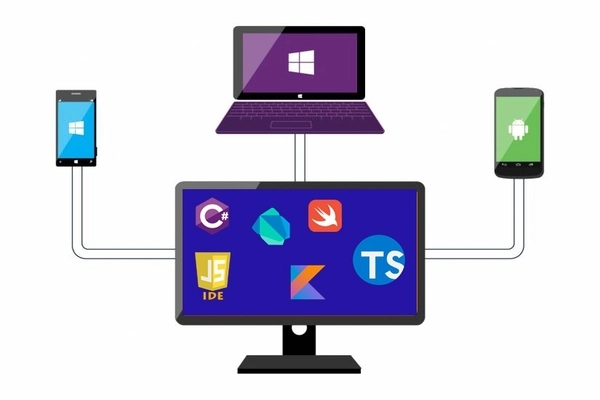
Cross-platform application development is a technique that involves writing a single codebase that can be deployed and run smoothly across various operating systems, such as iOS, Android, and sometimes Web or Desktop. Instead of writing in Swift/Objective-C for iPhone and Kotlin/Java for Android, developers use intermediary frameworks to compile or interpret the source code into a language that the device can understand.

The evolution of this technology has blurred the performance boundaries between cross-platform and native applications. Today, with the backing of tech giants like Google, Meta, and Microsoft, cross-platform apps go beyond just displaying content; they are capable of handling complex graphics and interacting deeply with device hardware.
Pros & Cons of Cross-Platform Development
Any technological choice involves a trade-off between benefits and limitations. Understanding both sides of cross-platform application development will give businesses a more realistic perspective before committing their investment capital.
Advantages:
- Cost Efficiency: Instead of hiring two separate development teams, you only need a single team to maintain one codebase.
- Time-to-Market: Development time is reduced by 40-60%, enabling businesses to reach customers much faster.
- Ease of Maintenance and Updates: Any feature changes or bug fixes only need to be implemented once and synchronized across all platforms.
- Consistent User Experience (UX): Ensures that the interface and user flow remain identical across all devices.
Disadvantages:
- Performance: Although significantly improved, cross-platform apps still cannot match Native Apps for applications requiring heavy graphic processing (such as high-end 3D games).
- Delayed Access to New Features: When iOS or Android releases new hardware features, cross-platform frameworks often require some time to update their supporting libraries.
- App Size: Because they must include intermediary libraries, the installation files are typically heavier than those of native applications.
Factors to Consider When Choosing a Tool
Before launching a project, you should not choose a tool based solely on its popularity. Cross-platform application development requires a technical selection strategy based on specific project criteria to avoid the need for a complete rebuild in the future.
- Performance: Define your app’s performance requirements; for applications needing complex, real-time data processing, priority should be given to frameworks capable of compiling directly to machine code.
- Talent Pool: Ensure that the chosen tool and programming language have a large developer community, making it easier to recruit in the area where the project is being implemented.
- Scalability: Evaluate the tool’s ability to handle growth as the application expands to serve hundreds of thousands or even millions of users.
Why Do Businesses Need Cross-Platform Applications?
In the race for digital transformation, speed and financial efficiency are two vital factors. Cross-platform development provides businesses with powerful leverage to capture the market without requiring the massive budgets typical of multinational corporations.
Being present on both the App Store and Google Play doubles a brand’s visibility. At the same time, feature parity allows customer service and marketing departments to execute campaigns seamlessly, without worrying about differences between users’ devices. For startups, this is the perfect solution for building an MVP (Minimum Viable Product) to test market feedback as quickly as possible.
Popular Cross-Platform Development Tools
The tech market currently offers a wide array of options for cross-platform application development. Each tool possesses unique characteristics regarding its programming language and UI rendering approach, making them suitable for specific project goals.
Flutter
Backed by Google, Flutter utilizes the Dart language combined with the powerful Skia graphics engine to manually “paint” every pixel on the screen. This mechanism enables Flutter to achieve incredible performance and absolute visual consistency across all devices. It is the top choice for projects that crave refined aesthetics, smooth animations, and lightning-fast development speed.

React Native
The brainchild of Meta (Facebook) has changed the game by allowing developers to leverage the power of JavaScript and React. The core differentiator of React Native is its ability to interact directly with native UI components, providing an authentic, “OS-native” feel while maintaining the flexibility and high customizability of the Web world.

Xamarin / .NET MAUI
As Microsoft’s representative, this is the ideal “haven” for those who favor the C# language and the .NET ecosystem. With the introduction of .NET MAUI, Microsoft has leveled up the playing field, allowing businesses to unify their codebase not just for mobile but also for Desktop. It is the perfect solution for building synchronized and in-depth enterprise management systems.

Ionic
Ionic is a testament to the enduring power of traditional Web technologies like HTML, CSS, and JavaScript. By operating as a modern website sophisticatedly “packaged” within a mobile app shell, Ionic helps startups rapidly launch management apps, news portals, or MVPs with optimal costs and record-breaking deployment times.
NativeScript
NativeScript scores points for its ability to connect directly to native iOS and Android APIs via JavaScript or TypeScript without the need for complex intermediary bridges. This allows developers to flexibly interact with deep OS hardware features, creating specialized experiences that few other cross-platform frameworks can achieve.
How to Choose the Right Tool
There is no “best” tool, only the “most suitable” one for your specific project. When deciding on a solution for cross-platform application development, you should conduct a comparison based on your actual available resources.
If your team is strong in Web development, React Native or Ionic will offer the smoothest transition. If you prioritize performance and a near-perfect native experience for a high-end e-commerce app, Flutter should be the priority. Do not forget to verify whether third-party libraries (such as payment gateways, maps, and push notifications) offer robust support for your chosen framework before signing a development contract.
Integrating Native Features in Cross-Platform Apps
One of the biggest misconceptions is that cross-platform development cannot utilize a phone’s advanced features. In reality, modern frameworks provide powerful mechanisms to communicate with native hardware.
Through “Plugins” or “Bridges,” developers can easily invoke functions such as the Camera, Biometrics (fingerprint/face recognition), GPS, or Bluetooth. For highly specialized requirements not yet supported by the framework, you can entirely write a short snippet of Native code and integrate it into the cross-platform project. This provides maximum flexibility, allowing your app to leverage hardware power while still maintaining the advantages of a shared codebase.
Testing & Debugging Cross-Platform Applications
The testing process is the most critical phase for quality assurance. In cross-platform application development, testing becomes slightly more complex as you must ensure the app performs well across thousands of different screen sizes and various operating system versions.
Developers often utilize automation tools like Appium or built-in Emulators/Simulators provided by the frameworks. However, testing on real devices remains mandatory to detect issues related to overheating, battery consumption, or touch latency. A robust debugging process helps identify code conflicts between iOS and Android, allowing for codebase optimization to achieve peak stability.
Future Trends in Cross-Platform Application Development
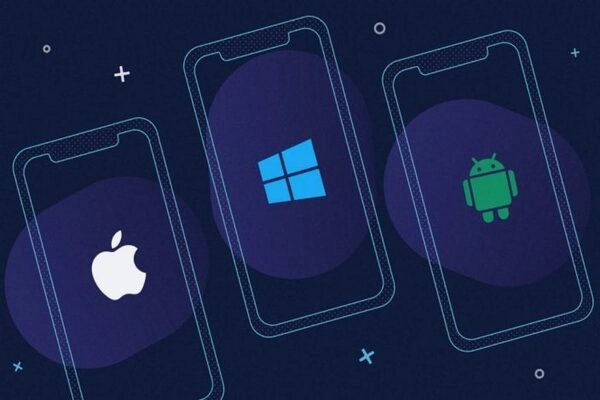
The future of mobile programming is witnessing a powerful rise in tools that streamline the development workflow. Cross-platform development is moving toward the concept of “Ambient Computing”—where applications do not just run on phones but are also present on smartwatches, TVs, cars, and IoT devices.
We will see a deeper integration of Artificial Intelligence (AI) in automating cross-platform code generation. Furthermore, technologies like WebAssembly (Wasm) promise to deliver near-native performance for web-based applications. Investing in cross-platform today is not merely following a trend; it is a strategic preparation for businesses to adapt to any technological platform that may emerge in the future.
Cross-platform application development is more than just a cost-saving solution; it is a smart strategy for businesses to adapt rapidly to market changes. Although some limitations in intensive performance remain, the remarkable progress of Flutter and React Native is steadily erasing these boundaries. Choosing the right tools and following a structured deployment process will empower you to own a powerful, consistent tech product, ready to break through in the digital future.
