



In the digital era, the agricultural industry no longer relies solely on manual labor or fertilizers. The emergence of blockchain technology is creating a monumental turning point, completely transforming the way we produce, transport, and consume food. Blockchain in agriculture is not just a passing trend but the ultimate solution to the long-standing challenges of transparency and trust.
1. What is Blockchain in Agriculture?
To clearly understand Blockchain in agriculture, we first need to envision it as a massive digital ledger. Within this system, every piece of data-from seeds, cultivation processes, and harvesting to the moment the product reaches the consumer-is recorded immutably. Unlike centralized management systems that are prone to interference, Blockchain operates on a decentralized network where every participant (farmers, transporters, retailers) holds a verified copy of the data.
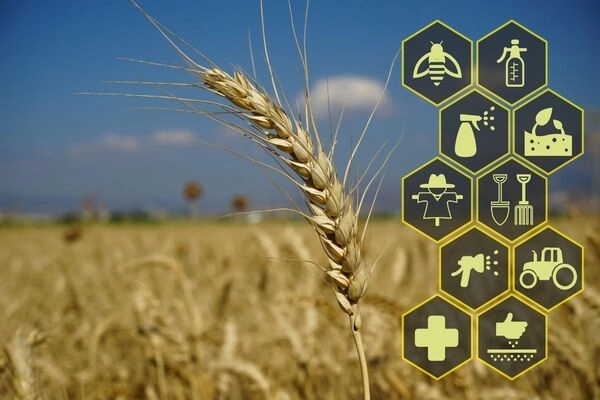
In the context of modern agriculture, Blockchain serves as a “trust infrastructure layer.” It connects IoT (Internet of Things) devices on the field with logistics systems. When a shipment of agricultural products is scanned via a QR code, its entire history is revealed transparently. This eliminates information barriers, enabling stakeholders to coordinate more seamlessly and efficiently than ever before.
2. Benefits of Blockchain in Agriculture
The application of Blockchain in agriculture delivers superior values that traditional management methods simply cannot reach. Moving beyond mere data storage, this technology restructures the entire agricultural ecosystem, providing practical benefits for both producers and consumers. Below are the most powerful transformative aspects that Blockchain brings:
2.1. Product Traceability
This is the most critical and widely adopted application of Blockchain. Previously, when food safety incidents occurred, tracing the origin of a defective shipment could take weeks. With Blockchain, this process takes only a few seconds. All information—including farm coordinates, types of fertilizers used, harvest dates, and temperature conditions during transport—is digitized.
Consumers simply need a smartphone to verify the entire journey of the food on their table, ensuring that it is truly organic or a regional specialty as advertised.
2.2. Reducing Errors and Risks
In traditional agricultural supply chains, keeping records via paper or manual spreadsheets is highly susceptible to errors, loss, or even data fraud. Blockchain eliminates this risk by automating record-keeping through Smart Contracts.
For instance, if the temperature in a container exceeds the permitted threshold, the system automatically records and issues an immediate alert. This helps minimize spoilage rates, reduce food waste, and prevent “dirty food” from infiltrating the supply chain.
2.3. Increasing Agricultural Value
Agricultural products with transparent data always command a higher value in international markets. By applying Blockchain in agriculture, farmers can provide the most convincing proof that their cultivation processes meet GlobalGAP or Organic standards.
Obtaining this “digital passport” helps agricultural products easily overcome the strict technical barriers of demanding markets such as the EU, the US, or Japan. Consequently, the selling price of the product no longer depends entirely on middleman traders but is based on its real value and verified quality.
2.4. Building Trust and Competitive Advantage
Trust is the new currency in the modern economy. In a market flooded with food of unknown origin, businesses that pioneer the application of Blockchain will create an absolute competitive advantage. Customers are willing to pay a higher price for peace of mind.
Blockchain facilitates a direct connection between producers and consumers, helping agricultural brands assert their reputation and establish a more sustainable position in the market.
2.5. Automated Agricultural Process Management
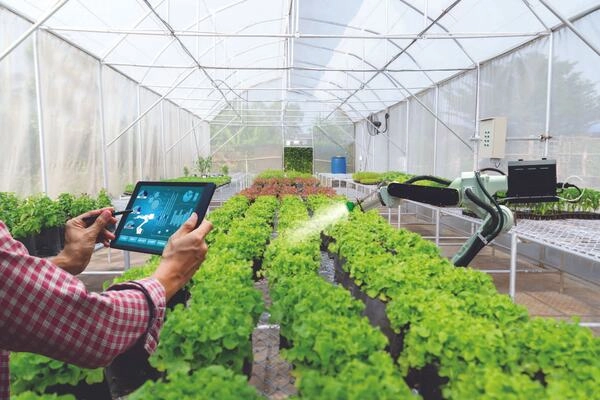
Combined with IoT sensors, Blockchain enables a high degree of farm management automation. Data regarding soil moisture, rainfall, and crop growth are continuously updated to the blockchain.
Smart contracts can automatically execute payments to suppliers or trigger shipping orders as soon as harvesting conditions are met. This optimizes human resources, reduces operating costs, and increases labor productivity for the agricultural sector.
3. Limitations of Applying Blockchain in Agriculture
Despite its immense potential, the path to bringing Blockchain in agriculture into reality still faces numerous hurdles. The transition from a traditional farming mindset to a digital one requires significant investment and synchronization from multiple parties.
- High initial investment costs: Installing sensor systems, network infrastructure, and training human resources requires significant capital, which many small-scale farming households find difficult to meet.
- Technological proficiency barriers: Farmers, the primary producers, often face difficulties in accessing and operating complex software.
- Data quality issues (Garbage In, Garbage Out): Blockchain only ensures that data cannot be altered once entered. However, if input data is entered incorrectly or intentionally falsified at the farm level, the system will still record that false information.
- Lack of legal frameworks: Currently, many countries have not yet established specific regulations regarding the legal recognition of Blockchain data in agricultural transactions.
4. The Future of Blockchain in Agriculture
Looking ahead, Blockchain in agriculture will no longer be just an option but will become a mandatory standard. As 5G technology becomes widespread and the cost of IoT devices decreases, the combination of AI (Artificial Intelligence) and Blockchain will create fully autonomous “Smart Farms.”
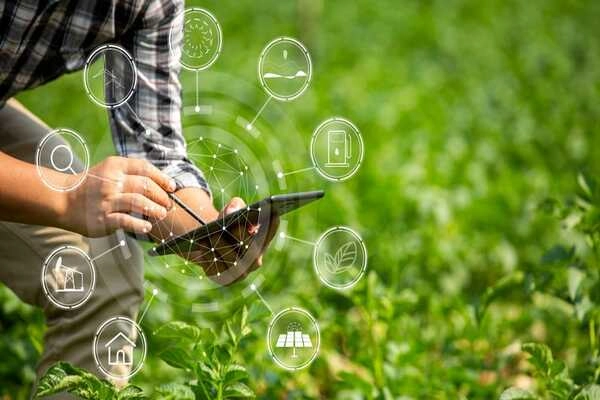
We can expect a new agricultural financial system where farmers can easily access loans based on transparent production data on the Blockchain instead of using physical assets as collateral. Direct farm-to-table trading platforms will flourish, eliminating unnecessary intermediaries, helping farmers achieve higher profits, and allowing consumers to purchase fresh products at fairer prices. Blockchain is the key to unlocking a greener, more sustainable, and more humane agriculture in the future.
Implementing Blockchain in agriculture is a long but inevitable journey. By solving the puzzles of trust and transparency, this technology not only elevates the value of Vietnamese agricultural products but also protects the health of millions of global consumers.
