



In the era of global digitalization, building an efficient, transparent, and secure public administration system is a top priority for every nation. Blockchain in e-government has emerged as a pivotal technological solution, promising to completely transform the way governments and citizens interact. Moving far beyond cryptocurrencies, blockchain is opening a new chapter for modern public governance.
What is Blockchain in E-government?
To fully grasp this concept, we must first view Blockchain as a decentralized digital ledger, where all information is recorded in an immutable manner and can be verified by all relevant parties. When applied to the e-government model, blockchain serves as the underlying infrastructure connecting government agencies, organizations, and citizens within a network of absolute trust, without the need for excessive levels of manual intermediary oversight.
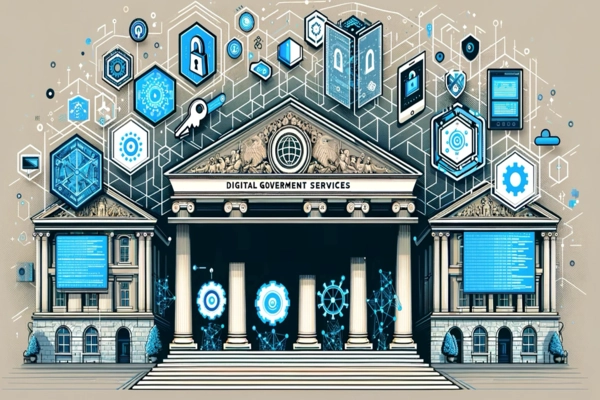
Unlike traditional database systems that are typically centralized on a single server (making them vulnerable to attacks or manipulation), blockchain distributes data across thousands of network nodes. This means that once an administrative transaction—such as the issuance of a birth certificate or a land title transfer-is recorded, it exists permanently, and no one can delete or modify it without authorization. Blockchain in e-government is essentially the utilization of decentralization, smart contracts, and encryption to automate public services, mitigate corruption, and accelerate procedural processing speeds.
Benefits of Blockchain in E-government
The implementation of blockchain delivers value that goes far beyond conventional management software. It addresses the “problem of trust,” which has always been the greatest challenge in the relationship between the state and its citizens. Below are the most practical and profound benefits that this technology brings to the national administrative system, spanning specific aspects from identity management to law enforcement.
Citizen Identity Management
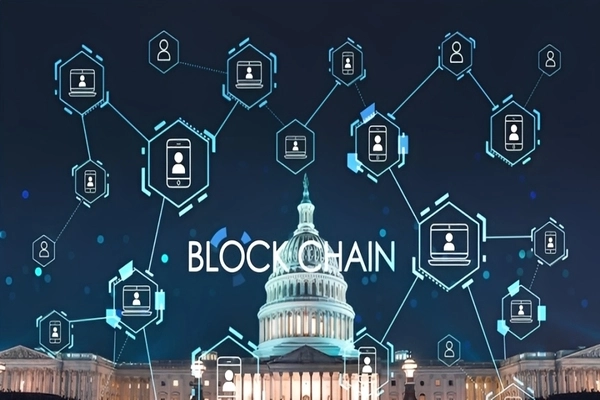
Digital Identity is the foundation of all public services. Currently, citizens often have to carry various physical documents or remember multiple accounts for different government departments. With blockchain, each individual possesses a unique, secure identifier that is recognized across the entire system.
- Consistency: Identity data is updated synchronously across departments (Public Security, Health, Education) without the need for repeated manual data entry.
- Data Ownership: Citizens have the right to decide who is permitted to view their personal information through secure cryptographic keys.
- Minimizing Forgery: Records on a blockchain are nearly impossible to forge, helping to eliminate identity fraud in financial or administrative transactions.
Privacy Protection
In an internet environment rife with cyberattacks, protecting the sensitive data of the nation and its citizens is a vital mission. Blockchain utilizes advanced encryption algorithms to ensure that even if data is accessed without authorization, an attacker cannot decrypt the content without the private key.
Furthermore, the decentralized model eliminates the “Single Point of Failure.” If a government server is attacked, the entire system continues to operate normally thanks to other network nodes, ensuring that public services are never interrupted and data remains secure at all times.
Transparency in Voting Activities
Online voting often faces skepticism regarding fairness and the potential for result manipulation. Blockchain in e-government provides an ideal solution to address this issue. Each ballot is treated as a transaction on the blockchain, encrypted and recorded publicly while still ensuring the anonymity of the voter.
- Immutability: Once a vote has been cast, no power can alter the result.
- Real-time Verification: Election results can be monitored and audited immediately by independent organizations and citizens, strengthening trust in the democratic process.
- Cost Savings: Minimizes expenses related to printing, transportation, and manual labor for counting votes.
Law Enforcement Tracking
The transparency of blockchain makes law enforcement monitoring more effective than ever. From managing judicial records and tracking the progress of complaint resolutions to managing public goods supply chains, every step leaves an indelible digital footprint.
Smart contracts can be used to automatically enforce legal terms or disburse budgets when specific conditions are met. This minimizes subjective human intervention, thereby pushing back against bureaucracy and corruption within the administrative apparatus.
Frequently Asked Questions about Blockchain in E-government
Despite its great potential, the adoption of new technology always comes with questions regarding feasibility and cost. Below are answers to the most common inquiries:
Is the cost of implementing blockchain too expensive?
While initial infrastructure investment and human resource training costs can be high, in the long run, blockchain helps save billions of dollars by eliminating cumbersome paper-based processes, reducing errors, and preventing budget leakage due to corruption.
Does blockchain slow down the administrative system?
Next-generation blockchain technologies (such as Layer 2 solutions or Private Blockchains) have significantly improved transaction speeds. They are fully capable of meeting the demand for processing millions of public records daily while still ensuring top-tier security.
Can data on a blockchain be deleted if there is an error?
Blockchain is inherently immutable, but we can perform “adjustment transactions” to correct errors. Every change is clearly recorded: who made the edit, when it was made, and why. This makes the process far more transparent than the traditional method of simply erasing all traces of an entry.
Conclusion Blockchain in e-government is no longer a distant vision but is rapidly becoming the new standard for advanced nations such as Estonia, Singapore, and Dubai. Embracing this technology not only enhances governance capacity but also builds a trusted digital society where the rights of citizens are prioritized.
