


The expansion of the Internet of Things (IoT) into modern life is undeniable, yet its most spectacular transformation is occurring within the transport sector. IoT in the automotive industry is doing more than just adding connectivity; it is fundamentally reshaping vehicle safety, performance, and the entire driving experience. This article explores how Automotive IoT is ushering in a new era of smart mobility, examining its critical applications, key challenges, and future prospects.
What is Automotive IoT?
Automotive IoT is the integration of sensors, software, actuators, and other connected devices into vehicles, allowing them to collect and exchange data over the Internet. Essentially, it transforms the traditional car into a smart device, capable of communicating not only with the driver and internal systems but also with other vehicles (V2V), traffic infrastructure (V2I), and even the power grid (V2G).
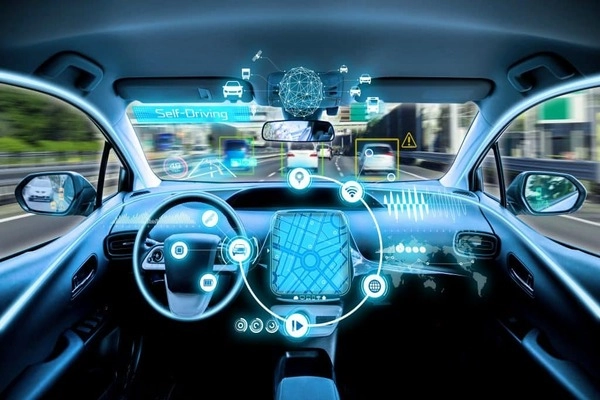
These systems utilize data collected from in-vehicle sensors (such as GPS location, speed, fuel level, engine status, and driver behavior) to perform various functions, ranging from fault diagnostics and remote software updates to supporting autonomous driving systems. This connectivity is the backbone for building a smarter, more efficient, and safer transportation ecosystem.
Benefits of IoT in the Automotive Industry
The application of Automotive IoT brings a wide range of significant benefits, impacting manufacturers, vehicle owners, and the public transportation environment.
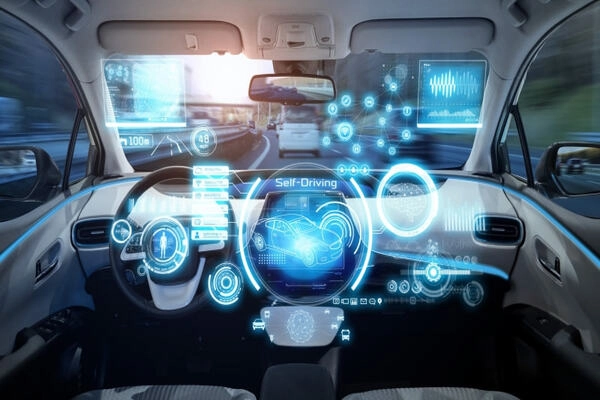
- Real-time data collection and analysis: IoT helps car manufacturers capture large volumes of data to improve design and production processes.
- Predictive Maintenance: Early detection of potential issues helps fix them before serious failures occur.
- Enhanced Vehicle Performance: Optimizing the vehicle’s operation capabilities and durability.
- Improved Driver Experience: Providing greater safety, convenience, and cost savings for users.
- Route optimization and fuel savings: Reducing fuel consumption and operating costs.
- Environmental Protection: Contributing to the reduction of traffic congestion and limiting environmental emissions.
Typical Applications of Automotive IoT
The applications of IoT in the automotive industry are diverse and are rapidly becoming standard in new car models. They are not only limited to the vehicle itself but also extend to fleet management and related infrastructure.
Autonomous Vehicles
Autonomous vehicles (or self-driving cars) are one of the most prominent achievements of Automotive IoT. Complex sensors such as LiDAR, radar, and cameras continuously collect data about the surrounding environment (such as distance to objects, lane markings, and traffic signs).
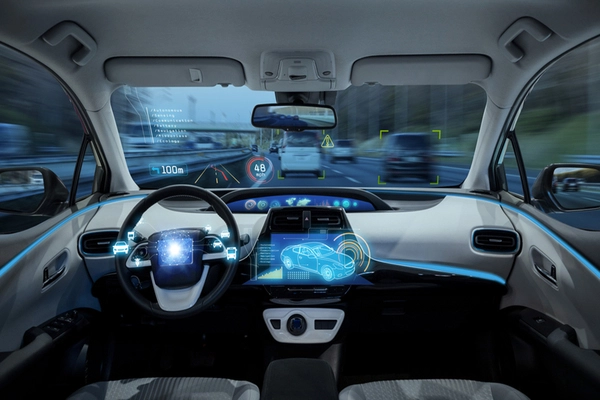
This data is processed by powerful in-vehicle processors, combined with information from the Cloud via IoT connectivity, to make real-time driving decisions. IoT provides the necessary connectivity for vehicles to communicate V2V (Vehicle-to-Vehicle) and V2I (Vehicle-to-Infrastructure), ensuring safety and optimizing traffic flow.
Driver and Fleet Management
For transportation and logistics companies, Automotive IoT is an indispensable tool for efficient fleet management. IoT devices installed in vehicles monitor everything from GPS location, speed, travel routes, to driver behavior (such as sudden braking, rapid acceleration, or continuous driving time).
This helps managers track assets, optimize routes to save fuel, ensure compliance with driving hours regulations, and improve safety through driver training and monitoring.
Real-time Vehicle Telematics
Vehicle Telematics is the core of Automotive IoT. This system collects and transmits data about vehicle performance, location, and driving behavior.
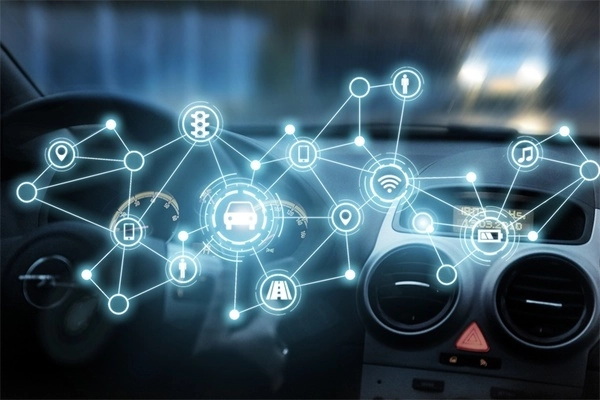
It supports crucial services such as automated emergency services (eCall), collision notification, remote diagnostics, and search/navigation. Telematics data serves as the basis for insurance companies to price premiums based on the driver’s actual risk level (Usage-Based Insurance – UBI), thus incentivizing safer driving.
Software Updates
Another revolutionary application is the capability for Over-The-Air (OTA) software updates. Similar to how your smartphone receives updates, manufacturers can remotely send bug fixes, feature enhancements, or even entire operating system updates to the car without the need for the vehicle to visit a service center.
This not only saves time and cost for both users and manufacturers but also ensures that the vehicle is always equipped with the latest safety and performance features.
Real-world Examples of Automotive Companies Implementing IoT
Many major automobile manufacturers have been actively implementing IoT solutions in the automotive industry:
- Tesla: Is a prime example. The company uses IoT connectivity to deliver frequent OTA software updates, improve battery performance, and add new autonomous driving features. The ability to collect data on the driving behavior of their global fleet is invaluable for training their Autopilot algorithms.
- BMW/Mercedes-Benz: These manufacturers offer connected services like BMW ConnectedDrive and Mercedes me connect. These services allow car owners to remotely lock/unlock their vehicles, check vehicle status, locate the car via a mobile app, and automatically call emergency services in case of an accident.
- Volvo: Has integrated connected technology to predict and warn drivers about unseen traffic hazards ahead by sharing anonymized data among Volvo vehicles.
Challenges in Deploying Automotive IoT
Despite the numerous benefits, the deployment of Automotive IoT also faces significant challenges:
- Security and Privacy: With a large volume of personal and sensitive location data being collected, securing the system against cyberattacks is paramount. A car being hacked could lead to catastrophic consequences. Strict regulations on data privacy are necessary to protect users.
- Standards and Interoperability: The lack of uniformity in connection protocol standards and data platforms among different manufacturers makes integration and interaction between various systems and vehicles challenging.
- Cost: The initial cost of equipping complex sensors, processors, and connectivity systems can increase manufacturing costs and the retail price of vehicles.
- Network Reliability: Critical applications like autonomous vehicles require 5G network connectivity with ultra-low latency and high reliability. A connection failure could be dangerous.
Development Outlook for Automotive IoT up to 2026
The outlook for IoT in the automotive industry is extremely promising. Experts predict that this market will continue to grow strongly in the coming years.
By 2026, we can expect to see breakthrough developments in the following areas:
- Widespread Adoption of 5G Technology: The broad deployment of 5G networks will solve issues related to speed and latency, accelerating the development of higher-level autonomous vehicles and more sophisticated V2X (Vehicle-to-Everything) services.
- More Sophisticated Predictive Maintenance: AI/Machine Learning data analysis capabilities will enable IoT systems to predict failures more accurately, thereby optimizing vehicle downtime and maintenance costs.
- Enhanced Personalization Experience: IoT will allow vehicles to “learn” the driver’s habits and preferences, providing more personalized settings and services, ranging from entertainment and information to safety configurations.
- Integration with Smart Cities: Automotive IoT will integrate more deeply with the infrastructure of “Smart Cities,” enabling more efficient traffic management, intelligent parking systems, and reduced congestion.
In summary, Automotive IoT is transforming the car from a simple means of transportation into a complex mobile data platform, delivering unprecedented safety, efficiency, and convenience. Although there are still hurdles to overcome, it is clear that the future of the automotive industry is a future of connectivity.
