



IoT with Arduino has become a popular choice for those looking to build intelligent systems due to its flexibility, low cost, and ease of implementation. With the ability to connect sensors, collect data, and control devices over the Internet, Arduino allows both beginners and experts to easily create smart home applications, modern agricultural systems, or automated monitoring solutions. It serves as an ideal platform to start exploring the world of IoT.
What is IoT with Arduino?
IoT with Arduino combines Internet of Things technology with the Arduino microcontroller platform to create devices capable of collecting, processing, and transmitting information over the Internet. Thanks to its wide connectivity options, ease of programming, and affordability, Arduino enables users to build automated sensor systems, remote monitoring solutions, and real-time device control with minimal effort.
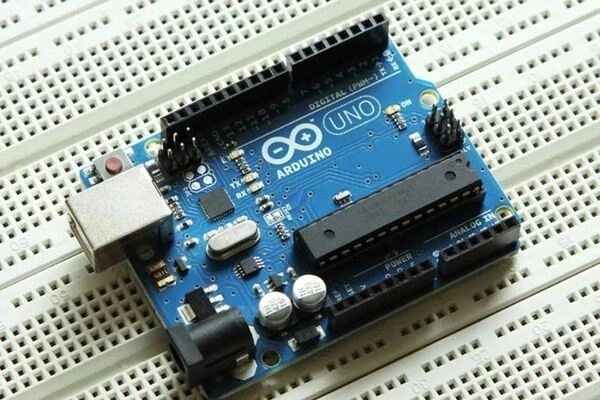
Before implementing a complete project, it is important to understand why Arduino has become a popular choice in the IoT field.
Why is Arduino suitable for IoT projects?
- IoT with Arduino is increasingly popular due to its high flexibility, low cost, and extremely easy deployment, making it suitable for everyone from beginners to professional developers.
- Its rich hardware ecosystem allows Arduino to connect seamlessly with a wide range of sensors and modules such as WiFi, Bluetooth, and LoRa, supporting both simple experimental models and complex automation systems.
- The global Arduino community is strong and active, providing extensive documentation, diverse programming libraries, and numerous sample projects, which significantly shortens development time.
- Its scalability and flexible customization make Arduino an ideal choice for all needs, from learning and research to real-world product deployment.
- Thanks to all these advantages, Arduino has become a leading platform in the IoT sector, opening up unlimited creative opportunities for users at all skill levels.
Getting started with IoT programming on Arduino
To implement a stable IoT model, you need to go through three stages: preparing hardware and software, assembling and connecting devices, and finally programming the control process. These steps form the foundation for every IoT project with Arduino, from simple prototypes to complex systems.

Preparing Hardware and Software
The first step is to choose a suitable Arduino board, such as Uno, Nano, Mega, or WiFi-enabled models like ESP8266 or ESP32. Next, gather sensors that match your project’s objectives (e.g., temperature, humidity, light, gas sensors), network modules, jumper wires, a breadboard, and the Arduino IDE software for coding. This setup forms the foundation for a smooth-running system from the very beginning.
Connecting IoT Devices to Arduino
Once all components are ready, assemble and connect the sensors to the Arduino board. Proper wiring is crucial, especially for communication pins like I2C, SPI, or UART. WiFi or Bluetooth modules also need to be connected correctly to ensure reliable data transmission. This stage is critical for the overall stability of the IoT system.
Writing and Uploading Control Programs
Finally, open the Arduino IDE to write code that reads sensor data, processes information, and sends it to IoT platforms such as Blynk, MQTT, or Firebase. After completing the program, upload the code to the Arduino board so the device can start operating. Depending on the purpose, you can control devices remotely, monitor real-time data, or automate actions based on sensor thresholds.
Popular Applications of IoT with Arduino
Thanks to its strong connectivity and simple programming, IoT with Arduino is applied across various fields in both daily life and industry. From smart homes and modern agriculture to environmental monitoring, Arduino enables the creation of efficient measurement and control systems while keeping costs low. Each of the applications below leverages Arduino’s strengths to provide convenience and high levels of automation.
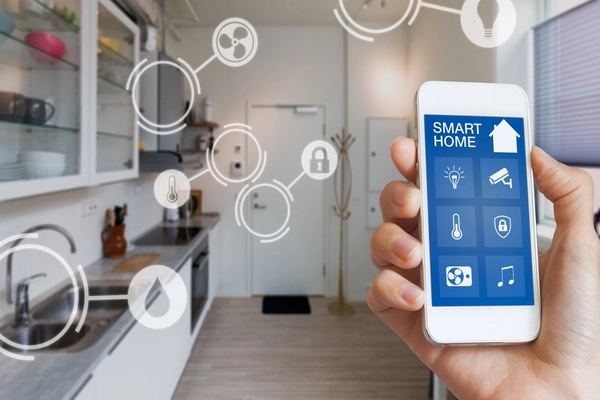
Smart Homes
In the field of smart homes, Arduino can be combined with motion sensors, temperature and humidity sensors, smoke detectors, and relays to control lights, fans, doors, and more to create automated systems. Users can monitor and control devices over the Internet via apps or IoT platforms. For example, lighting can automatically turn on when someone enters a room, smart locks can be controlled remotely, and anti-theft alerts can be sent to a phone when unusual motion is detected.
Smart Agriculture
Agriculture greatly benefits from IoT with Arduino. By measuring soil moisture, temperature, light, and air quality, farmers can better manage their growing environments. Arduino helps automate irrigation systems, water pumps, or heating lights when needed. This reduces labor, minimizes resource waste, and increases crop yield. Its low cost also allows small farms to adopt this technology easily.
Environmental Monitoring
Arduino, combined with sensors for particulate matter, toxic gases, noise, temperature, or humidity, can be used to build compact environmental monitoring stations operating in real time. These devices can send data to servers and display it on dashboards, enabling users to track the surrounding environment effectively. This is an affordable yet efficient solution for schools, residential areas, or scientific research projects that require long-term data collection.
Challenges in Developing IoT Projects with Arduino
Despite its many advantages, IoT with Arduino faces certain challenges. First, many traditional Arduino boards, such as Uno or Nano, have limited memory and processing power, making it difficult to handle large data sets or run complex programs. Internet connectivity can also be unstable at times, especially when using low-cost WiFi modules.
Data security is another important concern, as information may be exposed if not properly encrypted. Additionally, beginners may struggle with designing power supplies or wiring circuits to ensure long-term stable operation. These challenges require users to learn more about code optimization, circuit design, and IoT communication techniques.
The Future of IoT with Arduino
The future of IoT with Arduino is very promising thanks to more powerful new boards, particularly the ESP32 and Arduino Nano IoT, which feature integrated WiFi and Bluetooth. IoT platforms are becoming increasingly user-friendly, from dashboard design interfaces to cloud data management tools, making it easier than ever to develop and deploy IoT solutions.

As AI, smart sensors, and edge computing continue to advance, Arduino will remain a key player in intelligent systems, from smart cities and automated agriculture to robotics and home appliances. With its accessibility and ease of use, Arduino will continue to be an ideal tool for anyone looking to explore or implement IoT solutions in real-world applications.
IoT with Arduino offers significant opportunities to build intelligent systems at low cost with high customization. Although some challenges remain, the platform is increasingly refined and suitable for both learners and developers. With the ongoing development of sensors, connectivity, and data processing technologies, IoT with Arduino is poised to expand its applications further and become an essential tool in the digital era.
