



5G IoT is becoming a crucial foundation in the era of intelligent connectivity, as 5G technology combined with the IoT ecosystem delivers superior speeds, low latency, and the ability to support millions of devices. Leveraging technologies such as eMBB, URLLC, mMTC, and RedCap, 5G IoT enables wide-ranging applications across industry, healthcare, transportation, and smart cities, marking a significant step forward in digital transformation.
What is 5G IoT?
5G IoT is the integration of fifth-generation (5G) mobile network technology with the Internet of Things (IoT) ecosystem. This combination creates a high-speed, ultra-low-latency connectivity platform capable of supporting millions of devices within a single area. 5G IoT not only enhances data transmission performance but also opens the door to innovative applications in industry, healthcare, transportation, logistics, and everyday life.
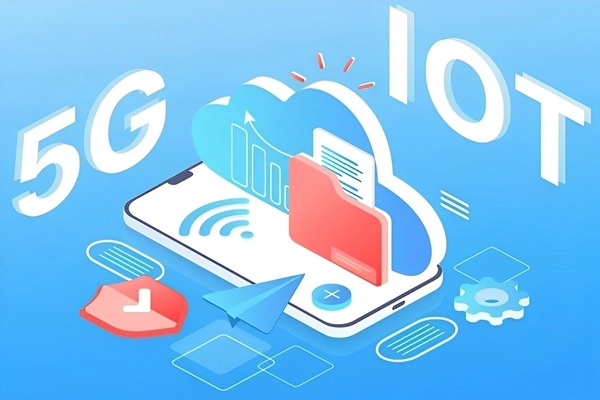
With its ability to meet a wide range of needs—from high-speed transmission to massive connectivity—5G IoT is becoming a strategic platform for future digital transformation.
Benefits of 5G for IoT services
The emergence of 5G has opened a completely new phase of development for the IoT ecosystem. Thanks to its superior transmission speeds, near-zero latency, and the capacity to connect a large number of devices simultaneously, 5G has become the foundation that enables IoT to operate more efficiently than ever before.
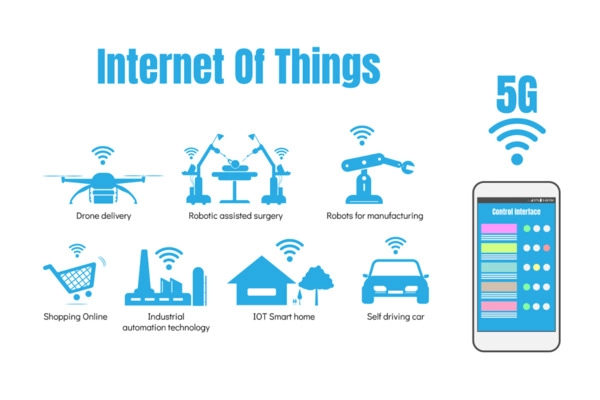
This technology not only enhances data transmission performance but also transforms the way devices interact, exchange information, and respond in real time. These advantages make 5G IoT a key enabler for deploying advanced solutions such as autonomous vehicles, automated robots, large-scale sensor networks, and numerous applications that require high precision and stability.
To better understand its impact, let us explore the different 5G technologies specifically designed for the IoT ecosystem.
Practical applications of 5G IoT
To see how 5G IoT operates in real-world scenarios, we can look at several foundational technologies that play a critical role.
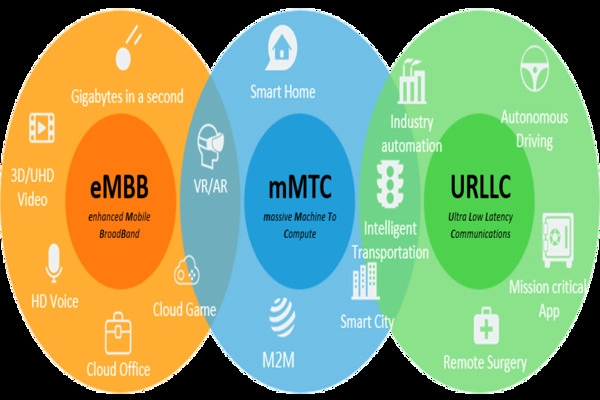
Enhanced Mobile Broadband (eMBB)
eMBB is a 5G network architecture that supports extremely high data transmission speeds, making it suitable for applications that require large bandwidth, such as 4K/8K cameras, real-time video streaming, AR/VR, and remotely controlled robots.
In IoT environments, eMBB enables devices to handle massive amounts of data smoothly, significantly reducing network congestion or signal delays. This is particularly important in automated factories, where cameras and sensors need to continuously transmit data to the control center.
Ultra-Reliable Low-Latency Communications (URLLC)
URLLC is the most critical component for IoT applications that require high precision. With latency under 1ms, URLLC allows autonomous vehicles, surgical robots, emergency response systems, and high-speed production lines to operate nearly in real time.
Its “ultra-reliable” characteristic helps minimize risks in environments where even a 1–2 second delay could have severe consequences.
Massive Machine-Type Communications (mMTC)
For IoT systems that need to deploy an extremely large number of devices, such as environmental sensors, smart meters, or agricultural monitoring devices, mMTC is the ideal choice. This technology allows hundreds of thousands of devices to operate within the same area without overloading the network, while also saving energy and optimizing deployment costs.
5G RedCap and eRedCap
5G RedCap and eRedCap are specifically designed for IoT devices with low power consumption, moderate speed requirements, and high stability.
| Technology | Purpose / Features | Typical Applications | Key Benefits |
|---|---|---|---|
| 5G RedCap | Low-power IoT devices, moderate speed, high stability | Wearable devices, industrial sensors, lightweight drones, health monitoring applications | Balances performance and cost, ensures stability for IoT devices |
| 5G eRedCap | Upgraded RedCap: supports higher data rates while remaining energy-efficient | Next-generation IoT solutions that require higher speeds but still save energy | Expands application capabilities, reduces cost, delivers higher performance |
How 5G IoT Works
To operate, 5G IoT relies on three main elements: superior data transmission speed, edge computing capabilities (MEC – Mobile Edge Computing), and network slicing.
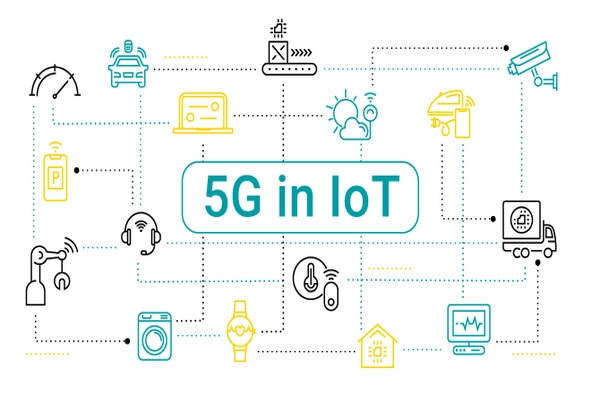
- High speeds enable rapid data transmission between devices and servers.
- Edge computing reduces the load on central servers by processing data closer to the devices, which helps minimize latency.
- Network slicing allows service providers to create multiple “network layers” with different priority levels, ensuring that critical IoT devices always have optimal connectivity.
- The combination of these elements creates a stable, fast, and flexible 5G IoT ecosystem.
Typical Use Cases of 5G IoT
With this robust foundation, 5G IoT has been applied in numerous real-world scenarios:
- Autonomous vehicles and smart transportation: Vehicles exchange data with traffic lights, cameras, and other vehicles in real time.
- Smart factories: Robots coordinate tasks, operate automatically, and are remotely monitored.
- Smart healthcare: Remote surgeries, real-time patient monitoring, and ambulances connected online to hospitals.
- Precision agriculture: Drones monitor crops, and moisture sensors automatically control irrigation systems.
- Smart cities: Smart streetlights, traffic analysis systems, and AI-based security monitoring.
All of these rely on the combination of URLLC for critical tasks, eMBB for large data transmissions, and mMTC for high-density device connections.
Challenges and Future Potential of 5G IoT
Despite its significant role, 5G IoT still faces challenges such as high infrastructure deployment costs, data security requirements, and a lack of standardization among devices from different manufacturers. Additionally, the adoption of 5G in some regions remains slow, preventing IoT from fully realizing its potential.
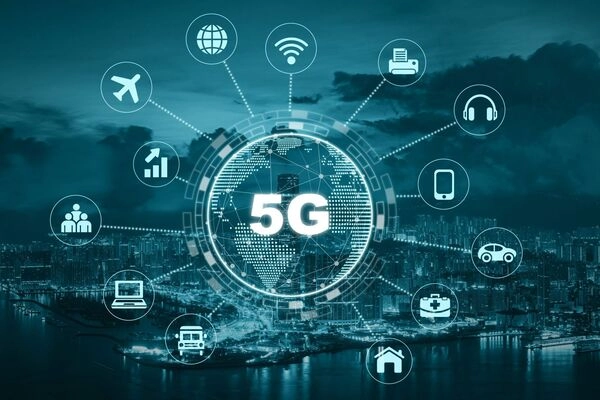
However, the future potential of 5G IoT is immense. As countries expand their 5G infrastructure, device costs decrease, and security technologies continue to improve, 5G IoT is expected to enter a period of rapid growth. Furthermore, the emergence of 6G in the future will further expand new capabilities such as deeply integrated artificial intelligence, seamless satellite connectivity, and ultra-high-speed wireless data transmission.
In a world gradually moving toward automation, 5G IoT serves as a cornerstone for realizing intelligent models-from factories, transportation systems, schools, and hospitals to entire cities.
5G IoT not only provides high speed and strong connectivity but also paves the way for the future of automation and smart urban development. With broad application potential in industry, healthcare, transportation, and daily life, 5G IoT is poised to continue growing strongly in the coming years. To explore more useful technology topics, you can visit https://technest.com.vn/.
